


A Cosmic Crime Scene
Imagine a flare so bright it briefly outshines an entire galaxy of billions of stars. That’s what astronomers witnessed when a previously dormant black hole, weighing about a million times more than our sun, suddenly revealed itself. The cause was a star that
wandered too close and was violently torn apart by the black hole's immense gravity. This phenomenon, known as a Tidal Disruption Event (TDE), is the cosmic equivalent of a forensic clue. The brilliant burst of energy, first flagged by the Zwicky Transient Facility in California, essentially lit up a crime scene, allowing observatories like NASA's Neil Gehrels Swift Observatory to swoop in and investigate this dramatic stellar death.
What Is a Tidal Disruption Event?
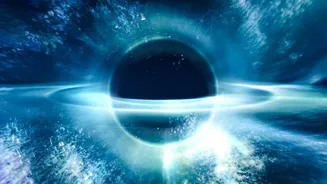
A TDE is one of the most extreme events in the universe. It occurs when a star's orbit brings it fatally close to a supermassive black hole. The black hole’s gravitational pull on the near side of the star is so much stronger than on the far side that this tidal difference stretches and pulls the star apart. This process, sometimes gruesomely called “spaghettification,” shreds the star into a long stream of gas. Some of this material is flung back out into space, but a significant portion falls toward the black hole, forming a superheated accretion disk. This disk of stellar debris glows intensely across the electromagnetic spectrum, from optical light to X-rays, creating the bright flare that telescopes can detect for months or even years.
The Off-Centre Anomaly
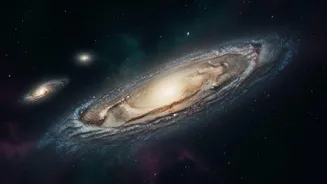
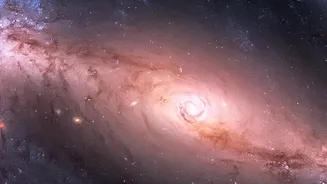
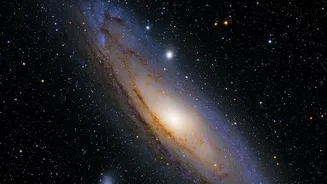
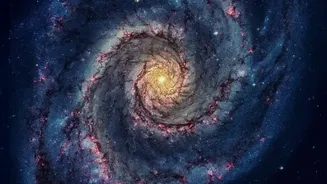
While TDEs are rare, happening only about once every 100,000 years in a given galaxy, they almost always occur at the galactic center. This is because the largest supermassive black holes are known to reside there, anchored by gravity. However, this particular event was spotted nearly 30,000 light-years away from its host galaxy's core, far out in the galactic suburbs. Discovering a TDE so far from the center is highly unusual and challenges the assumption that these cosmic monsters are always centrally located. It’s like finding a great white shark in a quiet suburban lake; it's not supposed to be there, and its presence demands an explanation.
A Tale of Galactic Collision
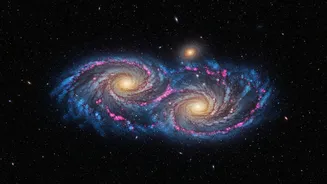
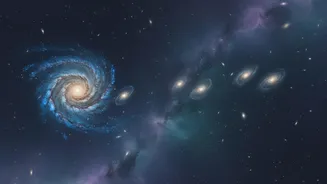
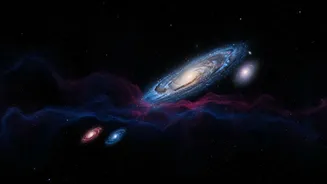
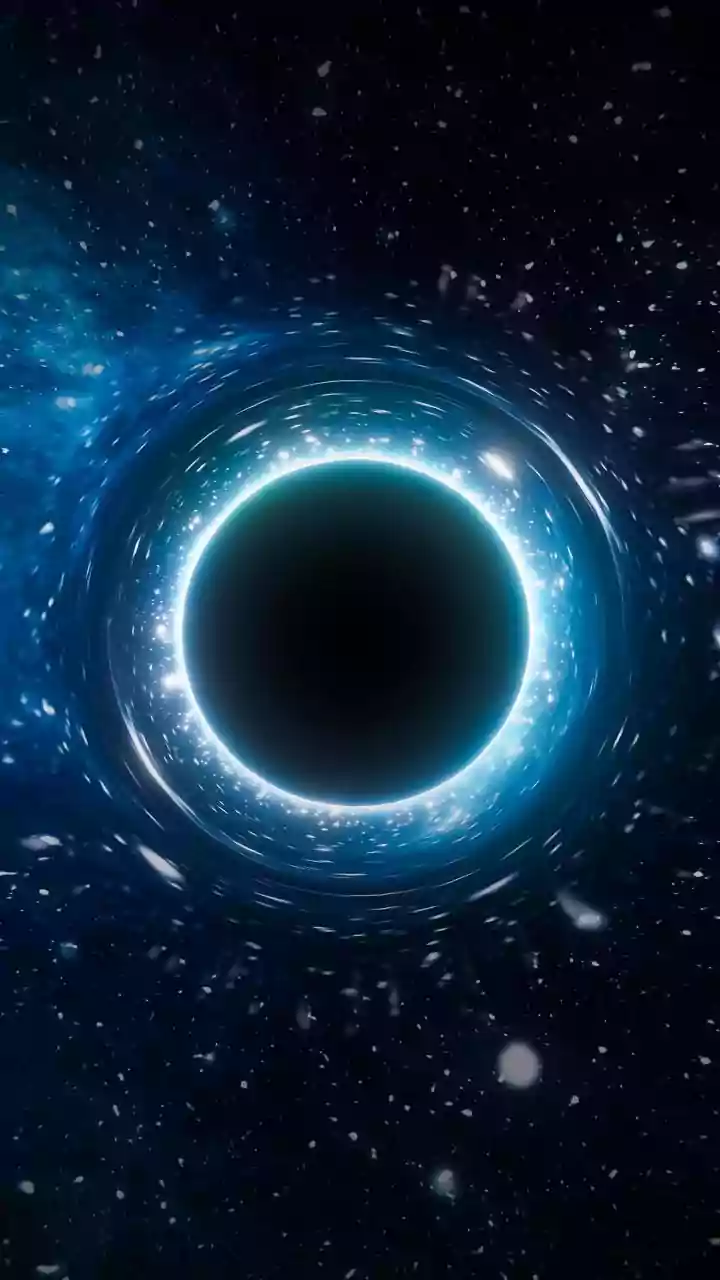
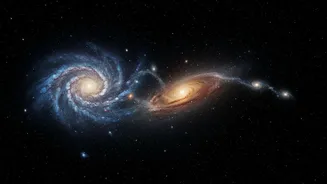
The most compelling theory for this off-centre black hole is that it’s a cosmic wanderer, a relic from a past galactic merger. When two galaxies collide and merge, their central supermassive black holes can engage in a complex gravitational dance. Sometimes, one of the black holes can be kicked out of the newly formed center and sent roaming through the outskirts of the larger, combined galaxy. These wandering black holes are predicted by models but are incredibly difficult to find because they are dormant and invisible unless they're actively feeding. By catching one in the act of devouring a star, astronomers have found the first strong evidence for one of these long-theorized rogue black holes.
NASA's Swift and the Hunt for Wanderers
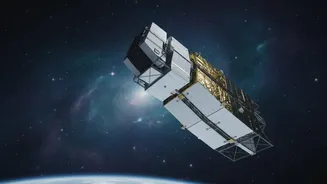
Finding these events requires a combination of vigilance and speed. Wide-field surveys constantly scan the sky for transient flashes, and when a promising candidate is found, specialized observatories like NASA’s Swift take a closer look. Swift is designed to quickly pivot to new targets and observe them in ultraviolet, optical, and X-ray light, providing crucial data to confirm the nature of the event. In this case, Swift's observations helped confirm the flare was indeed a TDE and revealed details about the black hole itself. This discovery validates a new method for finding otherwise hidden black holes: by looking for their stellar feasts not just in the centers of galaxies, but across the entire celestial map, aided by AI programs trained to spot these specific flare patterns.