







The Forbidden Hill of Kings
Long before colonial ships arrived, Fort Canning was known as Bukit Larangan, or the “Forbidden Hill.” It was believed to be the domain of ancient kings who ruled the 14th-century port settlement of Singapura. Archaeological digs have unearthed evidence
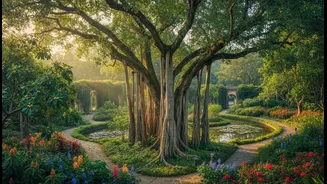
of a thriving hub with royal palaces and workshops for craftsmen working with gold and glass. Today, the Sang Nila Utama Garden offers a glimpse into this regal past. Named after the first king of ancient Singapura, the garden is a re-creation of the palace grounds, complete with Javanese-style split gates and tranquil ponds. Walking through its symmetrical layout feels like stepping back 700 years, imagining the noble ladies of the court bathing at the 'Forbidden Spring' or Pancur Larangan.
Raffles’ Spicy Ambition
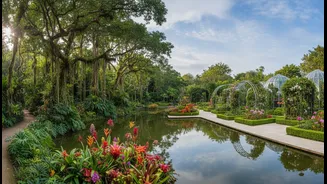
The arrival of Sir Stamford Raffles in 1819 marked a new chapter for the hill and for Singapore. A keen naturalist, Raffles saw the island's potential not just as a trading post, but as a centre for economic botany. In 1822, he established Singapore's first Botanical and Experimental Garden on the slopes of what was then called Government Hill. His primary goal was to cultivate spices like nutmeg and cloves, aiming to break the Dutch monopoly on the lucrative spice trade. At its peak, the garden boasted hundreds of nutmeg trees and clove plants. The modern Spice Garden at Fort Canning is a direct homage to this vision. Featuring over 180 varieties of plants, it allows visitors to see and smell the very commodities that once drove global empires and placed Singapore on the world map.
A Naturalist’s Living Library
Beyond the commercial drive for spices, Raffles had a deep personal passion for the region's flora. The Raffles Garden pays tribute to this lesser-known side of Singapore's founder. This part of the park showcases the diverse plant species that Raffles and his contemporaries would have encountered and studied across Southeast Asia. It serves as a living library of plants that were central to the scientific and botanical exploration of the era. Visitors can find species that Raffles himself collected or documented, offering a more personal insight into the man who saw Singapore as more than just a strategic port but also as a land of immense natural wealth and wonder. The garden stands on the same hill where Raffles built his first residence, a fitting tribute connecting the man, the hill, and his love for nature.
From Fort to Park: A Modern Green Lung
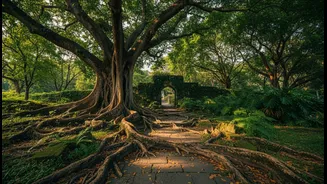
The hill's story took a military turn in the 1860s when a fort was built, giving the park its current name, Fort Canning. Though the fortress itself was largely demolished by the early 20th century, remnants like the imposing Gothic Gate still stand as silent witnesses to that era. The area was officially named Fort Canning Park in 1981, marking its transition into the public green space we know today. The National Parks Board has since masterfully woven these different historical threads together. The gardens are not just beautiful landscapes; they are carefully curated narratives. Informative panels and thoughtful designs guide visitors through the different epochs, from the ancient Majapahit kings to the colonial spice trade and its military significance, making the park an essential green lung for the city that breathes history.