



Finding Your Center
At first glance, the energetic glide of a roller skater and the gentle flow of a Tai Chi practitioner seem worlds apart. One is a dynamic workout, the other a form of meditation in motion. Yet, strip them down to their fundamentals, and you find an identical
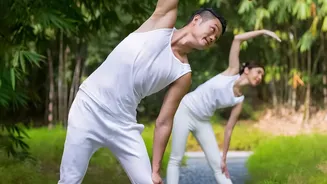
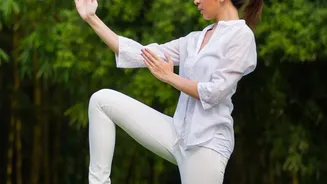
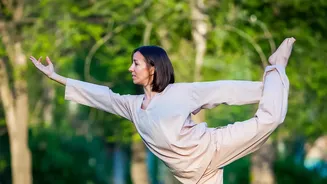
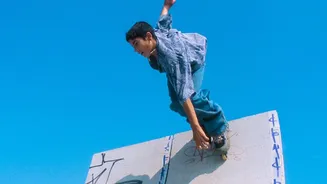
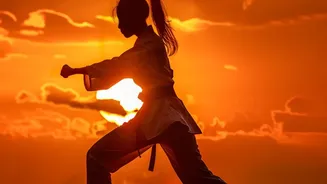
foundation: a deep, unwavering focus on the body’s center of gravity. For a roller skater, success means keeping their weight low and centered over their skates, with knees bent and core engaged to absorb bumps and maintain stability. Any beginner who stands up too straight quickly learns how easily their balance can be lost. Similarly, Tai Chi practitioners are taught to be aware of their 'dantian', a point just below the navel considered the body’s energy center. All movements originate from this core, with practitioners maintaining a rooted, stable posture. Both disciplines teach that true control comes not from rigid tension, but from a strong, flexible core that acts as an anchor.
The Sixth Sense of Movement
Both activities are powerful tools for developing proprioception—the body's ability to sense its own position in space without relying on vision. A skater must feel the texture of the pavement through their wheels, instinctively adjusting their weight to navigate cracks and curves. This constant feedback loop between the feet, body, and brain hones a sharp sense of physical awareness. Tai Chi achieves this through slow, deliberate motions that force the practitioner to pay close attention to every shift in weight and limb position. Studies have shown that this heightened awareness, sometimes called 'body awareness', is crucial for preventing falls and improving coordination. Whether you are executing a graceful spin on skates or transitioning through a Tai Chi form, you are training your body to understand where it is and what it needs to do to stay upright and in control.
Embracing the Flow
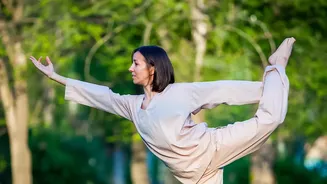
The idea of 'flow' is central to the enjoyment and mastery of both disciplines. For skaters, it’s that exhilarating feeling of gliding effortlessly, where pushing and coasting become a seamless, rhythmic motion. It requires a release of stiff, jerky movements and a trust in momentum. Tai Chi, with its continuous, flowing sequences, is designed to embody this state. The movements are never meant to be static or isolated; each one melts into the next, creating a dance-like quality. This emphasis on fluidity helps in both physical and mental relaxation. Engaging in either activity can help reduce stress and anxiety by demanding present-moment awareness. The mind must focus on the task at hand—the shifting of weight, the position of the arms, the rhythm of the breath—leaving little room for outside worries.
Learning to Yield and Recover
Falling is an inevitable part of learning to roller skate. A key skill is learning how to fall safely and get back up, which builds resilience and reduces the fear of losing control. This process teaches skaters to yield to a loss of balance rather than fighting it rigidly, which often makes things worse. Tai Chi's philosophy contains a similar principle. As a martial art, it teaches practitioners to redirect an opponent's force rather than meeting it head-on. This concept of 'yielding' and adapting is woven into the physical movements. By practicing slow, controlled weight shifts, practitioners learn to recover their balance from a stumble with minimal effort. Both activities, in their own way, teach a valuable life lesson: stability is not about being immovable, but about being adaptable and knowing how to gracefully recover when you are thrown off balance.