



A Surprisingly Sweet Find
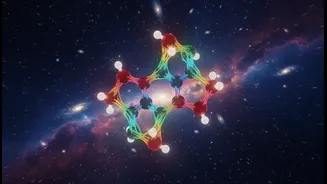
When you think of sugar, you might imagine the kind you stir into your morning chai. But the sugar found in deep space is a bit different. Scientists recently identified a molecule called erythrulose, a four-carbon sugar, floating in a molecular cloud
some 27,000 light-years from Earth. On our planet, erythrulose is found in raspberries and is even used in some self-tanning products. While other sugar-like molecules, such as the two-carbon glycolaldehyde, had been spotted in space before, this is the first detection of what chemists consider a 'true sugar'—a molecule with at least three carbon atoms—in the interstellar medium. This discovery is significant because sugars are absolutely fundamental to life as we know it; they form the backbone of DNA and RNA, the molecules that carry the genetic instructions for all living organisms.
A Nursery for New Stars
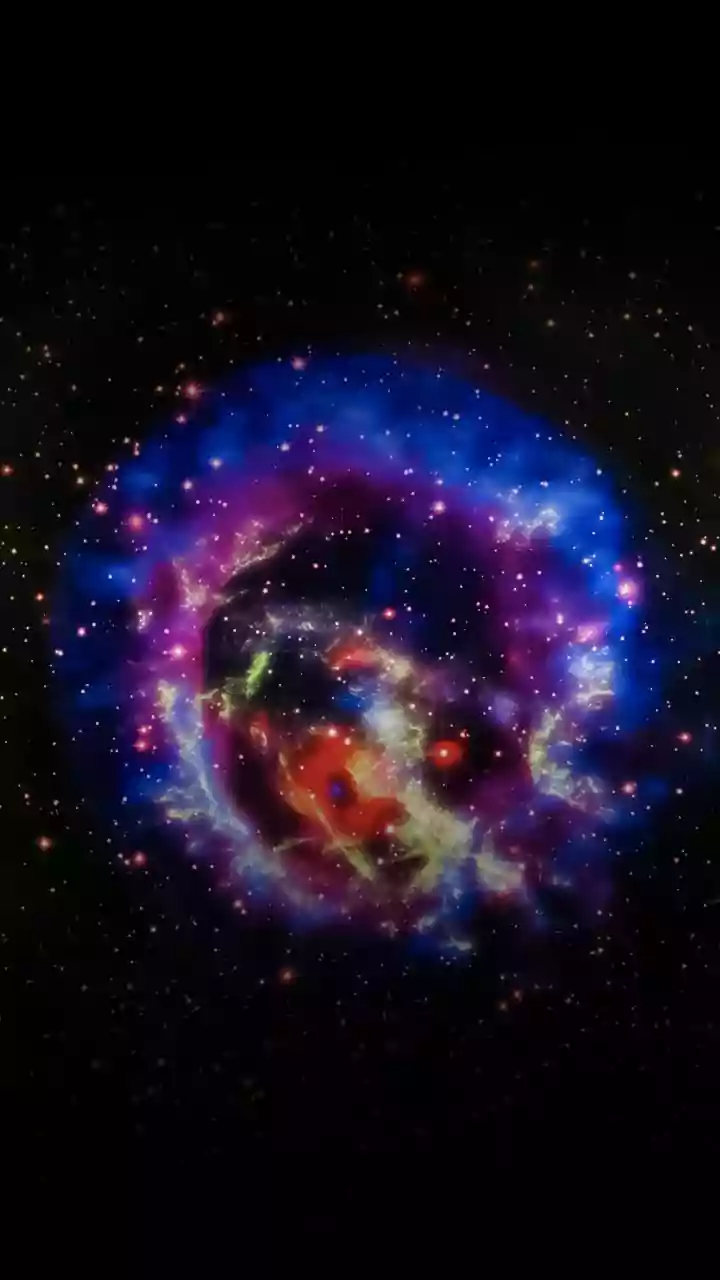
The location of the discovery is just as important as the molecule itself. The erythrulose was found in a massive, dense cloud of gas and dust known as G+0.693−0.027. These clouds are essentially cosmic nurseries where new stars and, eventually, planets are born. Finding a complex organic molecule like a four-carbon sugar here is a game-changer. For decades, a central question in origin-of-life research has been how the first sugars appeared on Earth. Laboratory experiments that try to replicate the conditions of early Earth have consistently failed to produce sugars in the large quantities needed to kickstart life. This has led many scientists to wonder if these crucial ingredients might have come from somewhere else entirely.
A Cosmic Recipe Delivered
This new finding strongly supports the theory that Earth was seeded with life's ingredients from space. Previously, scientists had found sugars inside meteorites that had crashed into Earth. This proved that such molecules could exist in our solar system's early history, but it didn't tell us where they came from before that. By finding erythrulose in an interstellar cloud—the raw material that predates stars and planets—scientists have pushed back the timeline for organic complexity. It suggests that these essential building blocks are not formed on planets, but are instead cooked up in the vast, cold expanse between stars. They are then incorporated into the gas and dust that eventually forms new solar systems, including our own. These ingredients are essentially 'delivered' to new planets from the very beginning.
Giving Life a Head Start
The implication is profound: the universe is pre-loaded with the ingredients for life much earlier than we thought. Instead of waiting for complex chemistry to slowly develop on a young, chaotic planet, the necessary components could be readily available from day one. Researchers estimate that during a period of intense asteroid and comet impacts billions of years ago, known as the Late Heavy Bombardment, millions of tonnes of this cosmic sugar could have been delivered to Earth’s surface. This would have provided a rich stockpile of raw materials for the first metabolic and self-replicating biological processes to emerge, giving life a crucial head start. The discovery also goes against the prevailing view that complex molecules grow slowly by adding one carbon atom at a time; the abundance of four-carbon erythrulose suggests a more efficient formation pathway.
The Search for More Ingredients
The detection was made by an international team using highly sensitive radio telescopes in Spain, which can pick up the faint radio 'fingerprints' that different molecules emit. This discovery of erythrulose is a thrilling step, but it is not the final chapter. The ultimate prize for astrochemists is to find even more complex sugars in space, particularly ribose, the five-carbon sugar that is a central component of RNA. Finding ribose floating in an interstellar cloud would be one of the most significant discoveries in the search for the origins of life. This latest find opens the door to that possibility, suggesting that if erythrulose is out there, other critical molecules for life might be too. As one of the study's co-authors, Carlos Briones, noted, this opens up the possibility of discovering other important molecules for the origin of life.