

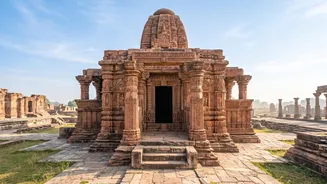

Sirpur: A Multi-Faith Metropolis
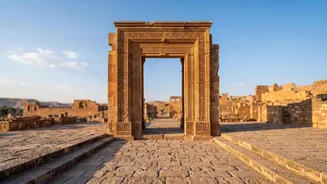
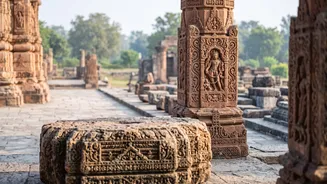
Once a thriving capital of the Dakshina Kosala kingdom, Sirpur is an archaeological treasure trove on the banks of the Mahanadi River in Chhattisgarh. Dating from the 5th to the 12th century, its ruins tell a remarkable story of religious harmony. Excavations
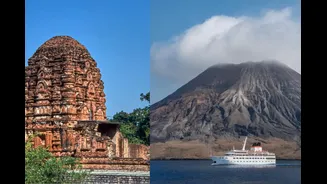
have unearthed a sprawling urban landscape where Hindu, Buddhist, and Jain monuments coexist. The site includes 22 Shiva temples, 5 Vishnu temples, 10 Buddhist viharas (monasteries), and 3 Jain viharas, all within a single, integrated fabric. Among its most celebrated structures is the 7th-century Lakshmana Temple, one of the finest examples of a brick temple in India. The Chinese traveler Xuanzang visited Sirpur in the 7th century, describing it as a major centre for intellectual and spiritual exchange. This inclusion recognizes Sirpur as an outstanding example of an early medieval riverine city, showcasing political, commercial, and religious developments that shaped Central India.
Andaman's Volcanic Wonders
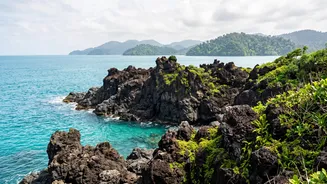
The first of the two Andaman sites is the 'Andaman Subduction Volcanoes', comprising Narcondam and Barren Islands. These are the only Quaternary period volcanoes—spanning the last 2.6 million years—in the inner volcanic chain of the massive Burma-Andaman-Java complex. Their existence is a direct result of the Indian Plate moving beneath the Burma microplate, making them a living laboratory for studying tectonic activity and volcanic processes. Barren Island is famously India's only confirmed active volcano. The isolation of these islands has also made them hotspots for unique species evolution, drawing scientific interest for over a century. Their inclusion highlights their immense geological and ecological value, offering insights into how life colonizes and develops in such extreme and isolated environments.
Baratang's Geological Marvels
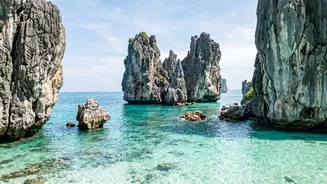
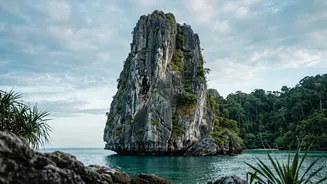
The second Andaman site is the Karst-Mud-Volcano Complex of Baratang, a unique landscape combining two distinct geological phenomena. Located between South and Middle Andaman, Baratang is known for its extensive limestone karst caves. These caves, with their stunning stalactites and stalagmites, were formed over millions of years from compressed marine life. Paired with this is the presence of active mud volcanoes, locally known as 'jalki'. Unlike magma-driven volcanoes, these vents expel cool mud, water, and natural gases from deep within the earth, pushed upwards by immense geological pressure. This rare combination of karst formations and non-magmatic mud volcanism, all governed by tectonic fault lines, gives Baratang exceptional scientific and research importance.
The First Step on a Long Journey
So, what does it mean to be on the Tentative List? It’s the crucial first step for any site aspiring to become a UNESCO World Heritage Site. The list is an inventory of properties that a country believes has 'outstanding universal value' and intends to nominate for full inscription in the coming years. A site must be on this list before it can even be considered for nomination. The next stage involves preparing a detailed nomination dossier, which outlines the site's significance, conservation plans, and management systems. This file is then submitted for a rigorous 18-month evaluation by advisory bodies like the International Council on Monuments and Sites (ICOMOS) and the International Union for Conservation of Nature (IUCN). Finally, the World Heritage Committee makes the ultimate decision on whether to grant the prestigious World Heritage status.