






A Landmark First Flight
To understand the significance of Mission-02, we first have to look back at Agnikul's historic achievement in May 2024. The company successfully launched its Agnibaan SOrTeD (Suborbital Technology Demonstrator). This wasn't just another launch; it was a collection
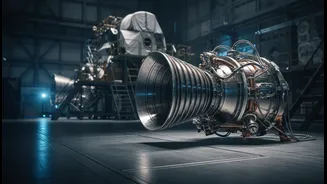
of firsts. It was the first launch from a private launchpad in India, the first to be powered by a semi-cryogenic engine, and most impressively, it featured the world's first single-piece, 3D-printed rocket engine, the Agnilet. The short, controlled flight proved that Agnikul's core technology, built entirely in-house, was sound. It gathered crucial data and demonstrated the prowess of indigenous design, setting the stage for more ambitious goals.
Mission-02: The Reusability Test
With its next flight, dubbed Mission-02, Agnikul is moving beyond a simple demonstration. The primary goal is to test the rocket's hardware for reusability, a technology that has reshaped the global space industry. Specifically, the mission will attempt India's first-ever recovery of an orbital-class rocket booster. Plans indicate the two-stage Agnibaan rocket's first stage will attempt a controlled descent and splashdown in the ocean after separation, where it can be recovered. This is a monumental step. Instead of treating rockets as disposable, one-time-use products, Agnikul aims to prove they can be flown again, drastically cutting future launch costs.
Why Reusability is a Game-Changer
For decades, launching anything into space meant building a brand new rocket, using it once, and letting it burn up or fall into the sea. This made space access incredibly expensive. Reusable rockets change that entire economic model. Think of it like the difference between throwing away an airplane after every flight versus refueling it for the next journey. By recovering and reusing the most expensive parts of the rocket, like the engines and booster stage, companies can slash the cost of reaching orbit by up to 80%. This doesn't just save money; it enables more frequent launches, making it viable to deploy large satellite constellations and undertake complex new missions. It's the key to unlocking a truly commercial and sustainable space economy.
A Two-Fold Ambition
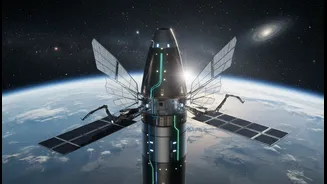
Agnikul's ambitions for Mission-02 don't stop with the booster. In a clever twist, the company also plans to test the rocket's upper stage for extended use. Typically, after deploying a satellite, the upper stage becomes space debris. Agnikul, however, has patented a design for a 'convertible upper stage'. This means that after its primary mission, the hardware could be repurposed into an in-orbit platform, capable of hosting experiments or testing other technologies. This 'waste-not' philosophy is central to the company's strategy: recover the first stage, and repurpose the second. The mission has gained such prominence that former ISRO Chairman S. Somanath has joined the company's board as an observer to guide the complex endeavor.
Powering India's Commercial Space Dreams
The success of Mission-02 would be a watershed moment for India's private space sector. While ISRO works on its own larger reusable launch vehicle, private firms like Agnikul and Skyroot Aerospace are moving quickly to demonstrate this capability on a commercial scale. Proving that a privately built Indian rocket can be reused would send a powerful signal to the global market. It would validate the country's growing startup ecosystem and its ability to compete with international players. For the numerous companies wanting to launch small satellites, a reliable and affordable Indian launch provider is a massive advantage. Agnikul's test is more than a technical trial; it's a critical step toward making India a self-reliant and competitive hub in the multi-billion dollar global space economy.