








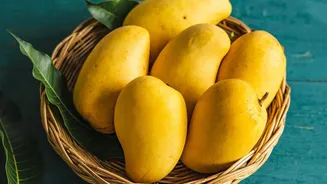
A Landmark Voyage for Indian Mangoes
In mid-2026, India achieved a significant milestone in its agricultural export history. In two separate but equally important consignments, mangoes were successfully shipped by sea to distant markets, a feat previously considered nearly impossible. One
shipment saw 12.5 tonnes of Dasheri and Langra mangoes travel from Uttar Pradesh to Dubai, while another sent 5 tonnes of Banganapalle mangoes from Andhra Pradesh to Singapore. Traditionally, such exports relied entirely on expensive air freight to ensure the highly perishable fruit arrived fresh. These successful sea voyages, orchestrated by APEDA and ICAR, have validated a new protocol that could transform the economics of India's fruit trade.
The Challenge: A Race Against Ripening
India is the world's largest producer of mangoes, yet less than 1% of its massive harvest is exported. The primary obstacle has always been the fruit's limited shelf life. Once picked, mangoes ripen quickly, leaving a very short window to get them to international consumers. This has historically locked exporters into using air cargo, which is fast but extremely expensive. Freight charges can account for 50-60% of the total export price, making Indian mangoes less competitive in global markets. Furthermore, limited cargo space and high costs have restricted the volume of exports, preventing farmers and exporters from tapping into the huge global demand.
The Solution: The Science of Cold and Slow
The breakthrough lies in a combination of cold chain management and controlled atmosphere (CA) technology. Throughout their journey, from packhouse to port, the mangoes are kept in an uninterrupted cold chain. They are transported in special refrigerated 'reefer' containers that maintain an optimal low temperature. More importantly, these containers use controlled atmosphere technology, which carefully manages the levels of oxygen, carbon dioxide, and nitrogen. This process effectively puts the mangoes into hibernation, slowing their respiration and ripening process dramatically. This technology can extend the shelf life of mangoes from a mere 10 days to over 35 days, making the longer transit times of sea travel perfectly viable.
Unlocking Economic Benefits for Farmers
The shift from air to sea freight is a financial game-changer. Shipping by sea is drastically cheaper, with some estimates suggesting it can cut transport costs by up to 90% compared to air cargo. This cost-saving has a direct and immediate impact on farmers' incomes. For the Banganapalle mangoes shipped to Singapore, farmers received nearly double the price they would have gotten in the domestic market. Similarly, the Dasheri and Langra export to Dubai enabled growers to earn an additional ₹15–20 per kg. By making exports more profitable and scalable, this innovation allows more farmers to connect with lucrative international markets, reducing their dependence on fluctuating local prices.
A New Horizon for Agricultural Exports
The success of these mango shipments signals a much wider opportunity for Indian agriculture. The same cold chain and sea freight protocols can be applied to a vast range of other perishable goods, including other fruits, vegetables, and flowers. This development strengthens India's entire agricultural export ecosystem, making it more competitive against other major suppliers from regions like Latin America and Africa. With bodies like APEDA actively promoting sea protocols, India is poised to expand its presence in existing markets in the Middle East and Southeast Asia and potentially open new, high-value markets in Europe and beyond. It marks a crucial step in reducing post-harvest losses and transforming India from a production giant into a global export powerhouse.