




A Cosmic Delivery Service
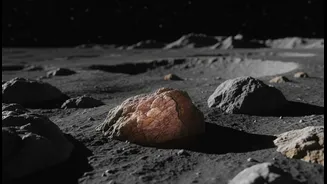
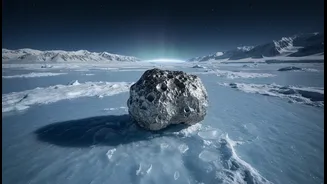
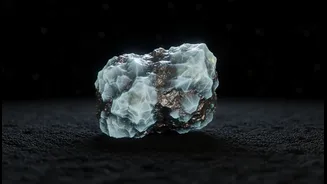
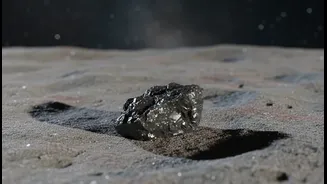
For decades, scientists have identified special rocks on Earth that didn't originate here. Found in the deserts of Africa and the ice fields of Antarctica, these are lunar meteorites—fragments of the Moon's surface. They were blasted into space by ancient
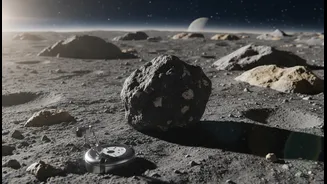
asteroid impacts, drifted through the cosmos for thousands or millions of years, and were eventually captured by Earth's gravity. The big question has always been: from where on the Moon did they come? While we had samples from the Apollo missions, these were from very specific equatorial locations. The hundreds of lunar meteorites found on Earth offer a more random, and therefore more comprehensive, sampling of the Moon, but without a return address. Linking a specific meteorite to a specific region on the Moon was a monumental challenge. That is, until Chandrayaan-3 phoned home.
Chandrayaan-3's Crucial Clues
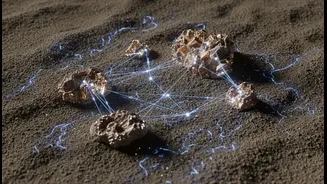
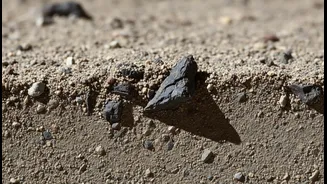
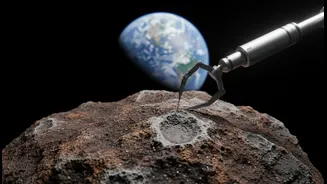
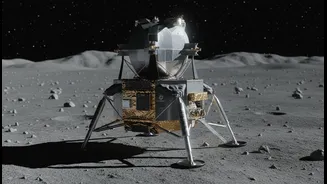
In August 2023, Chandrayaan-3's Pragyan rover made history by rolling onto the lunar surface near the south pole, a region never before explored on the ground. Its Alpha Particle X-ray Spectrometer (APXS) instrument got to work, analysing the elemental makeup of the lunar soil at its landing site, named Shiv Shakti Statio. Recently, scientists at the Physical Research Laboratory (PRL) in Ahmedabad announced a groundbreaking discovery after comparing the APXS data with the chemical profiles of 66 known lunar meteorites. They found a striking match. The soil at Shiv Shakti Statio has a chemical composition that is incredibly similar to a famous meteorite known as ALHA 81005. This rock, found in Antarctica in 1981, was the very first meteorite to be officially identified as coming from the Moon.
A Chemical Fingerprint
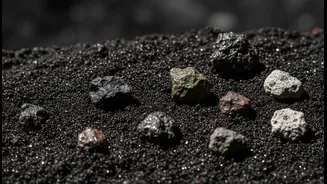
The match wasn't just close; it was specific. The soil at the Chandrayaan-3 landing site and the ALHA 81005 meteorite both showed lower levels of aluminium and higher amounts of iron and magnesium than is typical for the Moon's highlands. Both samples fit into a rare compositional category between two major types of lunar rock. Now, ISRO scientists are careful to point out this doesn't mean the meteorite came from the exact spot where Pragyan took its reading. Rather, it means that both the soil at Shiv Shakti Statio and the rock that fell in Antarctica represent the same type of geological terrain—a magnesium-rich crust that is different from the Moon's more common landscapes. This is the first time an in-situ measurement on the Moon has been so directly correlated with a specific meteorite in our collections on Earth.
Unlocking the Moon's Violent Past
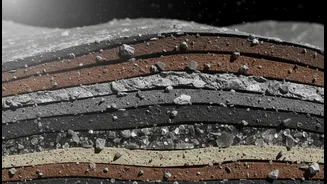
So why is this important? The discovery does more than just give a potential origin region for one famous meteorite. It helps confirm our theories about the Moon's violent history. The composition of the south pole's soil suggests it's a mix of materials from different depths of the lunar crust. Researchers believe that massive, ancient impacts—like the one that created the giant South Pole-Aitken Basin nearby—dredged up rock from deep within the Moon's mantle and scattered it across the surface. The data from Chandrayaan-3 supports the 'Lunar Magma Ocean' hypothesis: the idea that the young Moon was covered in molten rock, and as it cooled, different minerals settled at different depths. By studying the mixed-up soil at the south pole, scientists can piece together this layered history. And by matching this soil to meteorites on Earth, they can use those meteorites as direct samples of these ancient, deep lunar rocks, without having to drill kilometers into the Moon.