





More Than Just Melting Ice
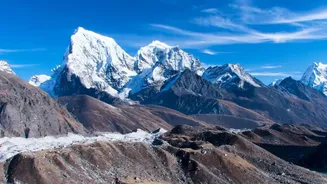
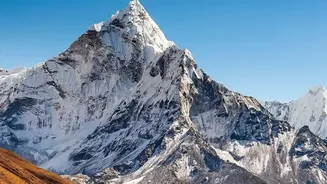
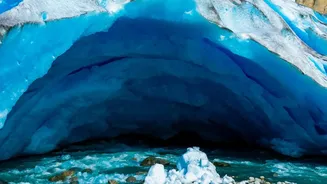
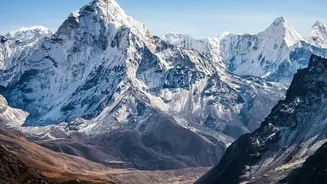
The threat unfolding in Nepal is not just about rivers swelling from melting glaciers. The primary danger identified by recent research is a far more violent and unpredictable phenomenon: a 'cascading disaster' often starting with a massive collapse of rock
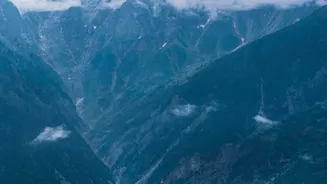
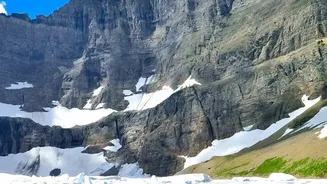
and ice. As the Himalayas warm at a rate faster than the global average, the permafrost—the frozen 'glue' holding steep rock faces together—is thawing. This weakens the mountains themselves, making them prone to catastrophic landslides. When a colossal chunk of a mountainside, sometimes carrying an entire section of a glacier with it, breaks free, it can trigger a devastating chain reaction. This debris can dam a river, creating a temporary lake that, when it inevitably bursts, unleashes a torrent of water, mud, and boulders downstream at incredible speeds.
What The New Research Reveals
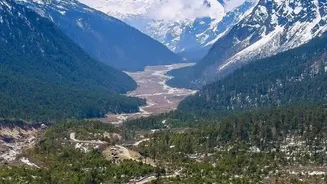
A study by the World Weather Attribution group analyzed a catastrophic flood in Nepal on August 26, 2026, which was triggered by a slope collapse from the Langtang Lirung peak. Researchers concluded that human-caused climate change was a likely contributing factor that 'preconditioned' the disaster. The analysis found that long-term warming had pushed the freezing level in the mountains about 100 meters higher per decade. This exposed previously frozen rock to thawing, while record warm temperatures in July and August 2026 further destabilized the slope. The collapse involved an estimated 110 million cubic meters of rock and ice falling into the valley below, creating a debris flood that travelled over 20 kilometers in mere minutes, leaving communities with virtually no time to react. While researchers noted that a major 2015 earthquake may have also weakened the rock, they stated that the combination of thinning glaciers and thawing permafrost made the disaster more likely.
A Nation on High Alert
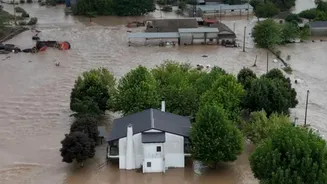
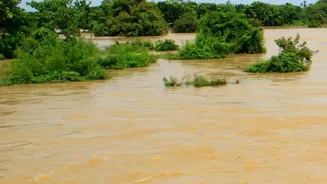
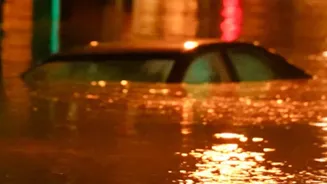
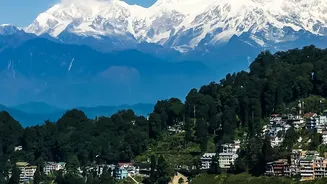
For the people of Nepal, these scientific findings confirm a terrifying reality. Communities clustered in narrow river valleys live directly in the path of these potential disasters. The August 26 event saw a surge of water rise by as much as nine meters in just 30 minutes, overwhelming existing warning systems and defenses. Over a thousand people were killed, with thousands more missing and billions of dollars in damage done to homes, roads, and crucial hydropower projects that power the nation. Nepal has experienced 26 similar, though often smaller, glacial lake outburst floods (GLOFs) since the 1970s, and experts warn that 47 glacial lakes are currently considered dangerous. This latest, massive event underscores the limitations of adaptation when faced with such rapid and powerful forces, placing the country in a state of existential threat.
A Threat That Crosses Borders
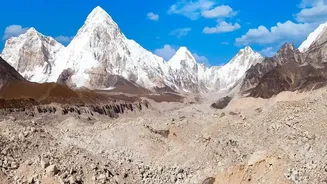
The melting of the 'Third Pole' is not just Nepal's problem. The Hindu Kush-Himalayan range provides water for over two billion people living downstream in countries like India and Bangladesh. The instability of these mountains threatens the entire region's water security, food supply, and energy infrastructure. Floods originating in one country can have transboundary impacts, as seen when glacial outburst floods in the Chinese Himalayas have flowed into Nepal. India has already seen a rise in natural disasters linked to the Himalayas, with the region accounting for a disproportionate number of floods and landslides. The increasing frequency of these events signals a new, dangerous era of climate instability that demands regional cooperation and a global response, especially as Nepal itself contributes less than 0.1% of the emissions driving the crisis.
The Race Against an Unstable Landscape
While the scale of the challenge is daunting, inaction is not an option. Experts are calling for an integrated approach to monitoring that goes beyond simple flood forecasting. This involves using satellite imagery and on-the-ground sensors to track the health of glaciers, the stability of mountain slopes, and the state of permafrost. In some cases, engineering solutions like manually draining dangerously full glacial lakes have been attempted, though these interventions carry their own risks. Ultimately, the study highlights that for events of this magnitude, adaptation has its limits. The findings serve as an urgent call for greater international support, not just for disaster preparedness in vulnerable nations like Nepal, but for aggressive global action to reduce the emissions that are fundamentally destabilizing one of the world's most critical and fragile ecosystems.