


A Tale of Two Arctic Neighbours
On the surface, Greenland and Iceland seem like they should share a similar fate. Both are large islands in the frigid North Atlantic, positioned at latitudes where one expects long, harsh winters. In fact, Greenland’s southern tip extends farther south than
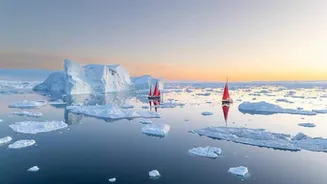
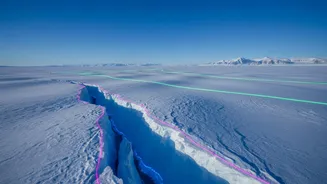
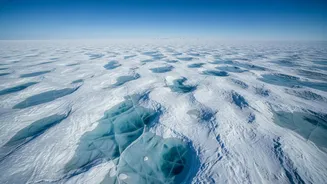
Iceland. Yet, the popular saying holds true: Greenland is overwhelmingly ice, while Iceland is comparatively green. About 80% of Greenland is covered by a colossal ice sheet, in some places over three kilometres thick, that has been accumulating for more than a hundred thousand years. In stark contrast, glaciers and permanent ice cover only about 10% of Iceland, leaving vast coastal plains, highlands, and volcanic fields exposed. This dramatic difference in landscape and habitability isn't due to a simple quirk of geography but is dictated by the immense power of deep-sea ocean currents.
The Ocean’s Climate-Controlling Conveyor
The Earth's oceans are not static pools of water. They are home to a global network of currents, often called the 'global ocean conveyor belt,' that circulates water around the planet. This system acts like a massive climate regulator, transporting heat from the tropics toward the poles. A crucial part of this system in the Atlantic is the Gulf Stream, which brings warm water from the Gulf of Mexico northeastward. As it travels, this warm, salty water eventually becomes the North Atlantic Current, a wider, slower flow that profoundly influences the climate of Western Europe and the islands in its path. It is the specific interaction—or lack thereof—with this warm current that sets Greenland and Iceland on two very different climatic paths.
Greenland’s Chilling Embrace
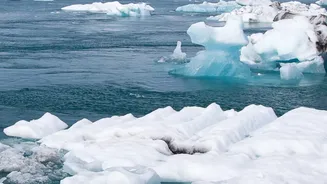
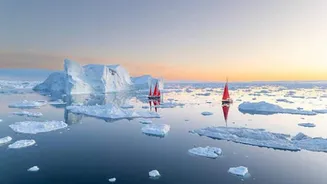
Greenland finds itself on the cold side of the oceanic divide. Its eastern coast is dominated by the East Greenland Current, a powerful, cold-water current that flows directly south from the Arctic Ocean. This current acts as the main highway for sea ice exiting the Arctic, carrying vast fields of ice along Greenland’s coast and keeping the surrounding waters frigid. The water is not only cold but also has lower salinity due to the influx of melting ice and polar river runoff. This constant bath of icy Arctic water reinforces Greenland’s glacial climate, preventing any significant warming along its eastern shores and contributing to the stability of its immense ice sheet.
Iceland’s Lifeline of Warm Water
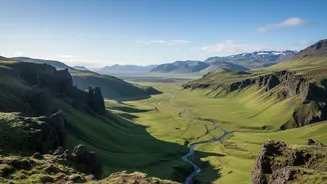
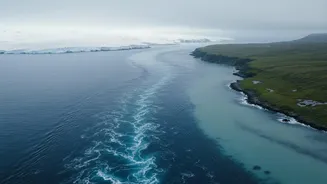
Iceland, located to the southeast of Greenland, experiences a completely different oceanic influence. It sits directly in the path of the warm North Atlantic Current and one of its key branches, the Irminger Current. The Irminger Current splits, with one part flowing west towards Greenland and another wrapping around the south coast of Iceland, bringing relatively warm, salty water from the south. This flow of warm water moderates Iceland's climate significantly, keeping its sea-surface temperatures around 6°C warmer than those surrounding Greenland. This warmth keeps Iceland’s ports largely ice-free in winter and allows for the growth of grass and other vegetation across its lowlands, creating the 'green' landscape its name ironically denies.
The Stark Climatic Consequences
The result of these duelling currents is two worlds in one neighbourhood. Greenland's Arctic climate has fostered a culture adapted to extreme cold, with most of the population living in small settlements along the ice-free western coast, which is partially warmed by a separate current. The interior remains one of the most inhospitable places on Earth. Meanwhile, Iceland's milder climate, supported by its warm ocean current and geothermal activity, has allowed for a much larger population, widespread agriculture (in a subarctic context), and a landscape that, while rugged and volcanic, is far more accessible and vegetated. The two islands serve as a dramatic, real-world lesson in how hidden oceanic forces can create profoundly different environments, even when latitude and location suggest they should be the same.