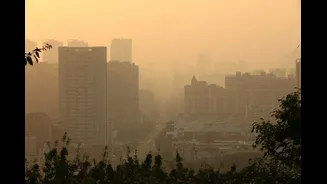








The air we breathe has long been linked to respiratory illness, but what if it also affects our brain? A massive UK study involving nearly half a million people provides some of the strongest evidence yet that air pollution is a risk factor for dementia.
What the Landmark Study Found
Researchers utilising the UK Biobank, a vast database tracking the long-term health of hundreds of thousands of Britons, have uncovered a significant connection between air pollution and brain health. One analysis involving over 400,000 participants tracked for nearly 14 years found that individuals exposed to the highest levels of fine particulate matter (PM2.5) had a 14% greater risk of developing dementia. This large-scale research adds substantial weight to a growing body of evidence suggesting that the toxins in our air are not just damaging our lungs and hearts, but also our minds. The UK Biobank studies are powerful because they follow a huge number of people over a long period, allowing scientists to identify patterns that smaller studies might miss. In this case, they found consistent associations between pollutants like PM2.5 and Nitrogen Dioxide (NO2) and several types of dementia, including Alzheimer's disease.
How Can Pollution Harm the Brain?
The primary culprits are tiny particles and gases, mainly from traffic exhaust, industrial emissions, and burning fuel. Fine particulate matter, known as PM2.5, is so small it can penetrate deep into the lungs and enter the bloodstream. From there, scientists believe the damage happens in a few ways. Firstly, pollution can trigger inflammation throughout the body and damage blood vessels. This impairs blood flow to the brain, which is a known risk factor for vascular dementia. Secondly, some evidence suggests these tiny pollutant particles may be able to cross into the brain directly, possibly through the bloodstream or even the nasal passage. Studies have found pollution-derived particles within the amyloid plaques that are a hallmark of Alzheimer's disease, suggesting they could play a direct role in the disease's progression. This means air pollution could be contributing to the physical changes in the brain that lead to cognitive decline.
The Indian Context: A Looming Crisis
While this groundbreaking research was conducted in the UK, its implications are profoundly relevant for India. With many Indian cities consistently ranking among the most polluted in the world, the population is exposed to dangerously high levels of PM2.5 and NO2. The State of Global Air (SoGA) 2025 report revealed that air pollution was linked to over 54,000 dementia-related deaths in India in 2024, highlighting a rapidly growing threat. Globally, air pollution is now considered a key modifiable risk factor for dementia, alongside issues like high blood pressure and lack of exercise. As India's population ages and life expectancy increases, the burden of dementia is set to rise dramatically. The link to air pollution adds another urgent layer to this public health challenge, affecting families, healthcare systems, and caregivers across the nation.
What Can Be Done?
The findings underscore the urgent need for stricter air quality regulations. Targeting pollutants, particularly NO2 from vehicle traffic, could be a key strategy in public health policies aimed at preventing dementia. For individuals, while you cannot control the air quality of an entire city, there are small steps that may help reduce exposure. This includes monitoring local air quality reports, avoiding strenuous outdoor exercise on high-pollution days, and considering the use of air purifiers at home. However, experts stress that individual actions are not enough. The most significant impact will come from government and industry-led efforts to reduce emissions from traffic, power plants, and factories. The World Health Organization (WHO) and other bodies have increasingly identified air pollution as a major environmental risk to brain health, signalling a global shift in understanding the far-reaching consequences of the air we breathe.