






The Science of Good Compost
At its heart, composting is a process driven by millions of microscopic workers. These beneficial microorganisms, primarily aerobic bacteria, are the engines of decomposition. The term 'aerobic' means they require oxygen to live and work efficiently.
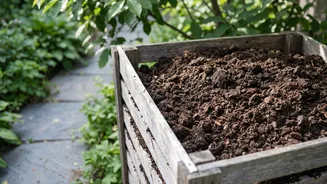
Just like us, they breathe. As they consume kitchen scraps and garden trimmings, they use oxygen to break down organic compounds, releasing heat, water, and carbon dioxide. This process not only transforms waste into valuable, nutrient-rich soil but also generates enough heat to kill off pathogens and weed seeds, ensuring your finished compost is safe and beneficial for your garden. A well-aerated pile is a thriving ecosystem, working rapidly to create the 'black gold' gardeners love.
When Good Compost Goes Bad: The Anaerobic Problem
When a compost pile becomes compacted or too wet, the tiny air pockets within it collapse. This starves the aerobic bacteria of the oxygen they need to survive. When these helpful microbes die off, a different set of microorganisms takes over: anaerobic bacteria. These microbes don't need oxygen, but their decomposition process is much slower and far less pleasant. Instead of producing harmless carbon dioxide, they release smelly compounds like hydrogen sulfide, which gives off a distinct 'rotten egg' odor, and ammonia. This is what turns a promising compost bin into a foul-smelling, slimy mess. An anaerobic pile decomposes at a fraction of the speed, sometimes slowing by as much as 90 percent, and the resulting material is often a poor-quality, sludge-like substance instead of crumbly, earthy compost.
Signs Your Compost Is Starving for Air
Your compost pile will give you clear signals when it's not getting enough oxygen. The most obvious sign is the smell. A healthy, aerobic compost pile should have a pleasant, earthy scent, like a forest floor. If you notice putrid, rotten, or ammonia-like odors, it’s a red flag for anaerobic conditions. Another key indicator is the texture. If the material is slimy, matted down, or overly wet, it means moisture has displaced the air. You might also notice that the decomposition process has stalled. If your pile isn't shrinking over time and kitchen scraps are sitting unchanged for weeks, a lack of air is a likely culprit. Finally, a cool pile can be a sign of poor aeration, as the heat-generating aerobic bacteria are not active.
How to Easily Improve Airflow
The good news is that ensuring proper aeration is straightforward. The simplest and most effective method is regularly turning your pile. Using a garden fork or a dedicated compost aerator tool to mix the contents every week or two reintroduces oxygen, breaks up compacted clumps, and distributes moisture evenly. Another crucial technique is to create good structure from the start. This involves layering your 'greens' (wet materials like kitchen scraps and grass clippings) with 'browns' (dry materials like dried leaves, straw, twigs, or shredded cardboard). These coarser brown materials act as bulking agents, creating a sturdy internal framework with plenty of natural air passages that resist compaction.
Quick Tips for a Well-Aerated Bin
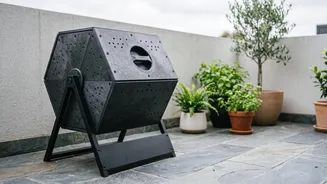
To keep your compost breathing easy, follow a few simple habits. When adding wet food scraps, always mix in a handful of a bulking agent like wood chips or ripped-up cardboard to prevent them from forming dense, airless clumps. Don't let grass clippings form thick, matted layers; mix them thoroughly with brown materials. If you're using a closed bin, ensure its air vents aren't blocked. For larger piles, you can even insert pipes with holes drilled into them to help channel air into the core. Chopping larger items into smaller pieces before adding them also helps create more surface area and air pockets. By making these small adjustments, you create an ideal environment for the beneficial microbes to do their work quickly and without any foul odors.