







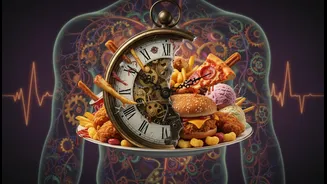


Beyond 'What' to 'When'
For decades, food diaries have been a staple of healthy living, focusing on calories, carbs, and proteins. But a new perspective is emerging that could add a surprising new column to your tracking app: wake-up time. This isn't just about ensuring you have breakfast;
it's about a field called chrononutrition, which studies how our bodies' internal clocks, or circadian rhythms, interact with the food we eat. The core idea is simple yet revolutionary: the time you eat, relative to your body's natural 24-hour cycle, can significantly impact your metabolism, weight, and overall health. Waking up is the event that kick-starts this daily rhythm, setting the hormonal and metabolic tone for the hours to follow.
Your Body's Inner Clock
Every cell in your body operates on a rough 24-hour schedule known as a circadian rhythm. This internal clock, governed by a master clock in the brain, tells your body when to sleep, wake up, release hormones, and, crucially, when to metabolise food most efficiently. Research shows that our metabolism isn't a constant, burning fire; it fluctuates throughout the day. Insulin sensitivity, for example, is typically higher in the morning, meaning your body is better prepared to handle glucose from your meal. As the day progresses and your body prepares for rest, this efficiency decreases. Eating large meals late at night, when your metabolic systems are winding down, can lead to higher blood sugar and increased fat storage.
The Dawn of a New Metric
Your wake-up time is the starting pistol for your metabolic race. It influences the release of hormones like cortisol, which helps you feel alert, and ghrelin, which signals hunger. An inconsistent wake-up time—think late mornings on weekends after early weekdays—can create a kind of 'social jetlag', confusing your internal clock. This misalignment can disrupt appetite-regulating hormones, leading to increased cravings for high-calorie foods and potentially a higher overall calorie intake. Studies suggest that people who eat earlier in the day, in closer alignment with their natural active phase, tend to have better metabolic health outcomes, including improved weight management and blood sugar control.
A Modern Twist on Ancient Wisdom
The principles of chrononutrition may feel new, but they echo ancient wisdom found in many cultures, including traditional Indian practices. The Ayurvedic concept of dining with the sun—having the largest meal in the middle of the day when digestive fire ('agni') is strongest and a lighter meal in the evening—aligns perfectly with modern circadian science. This traditional knowledge suggests an intuitive understanding that our bodies are primed for digestion during daylight hours. By tracking wake-up time, we are essentially re-learning to listen to these deep-seated biological rhythms that our ancestors followed naturally. It’s about working with our body’s programming, not against it.
Small Shifts, Big Impact
Adopting a chrononutrition-based approach doesn't require a radical diet overhaul. It's about awareness and small, sustainable shifts. Start by aiming for a consistent wake-up time, even on weekends, to stabilize your circadian rhythm. Pay attention to your hunger cues in the morning and try to consume a significant portion of your daily calories earlier in the day. Limiting late-night eating, by finishing your last meal two to three hours before bedtime, can also have a profound effect on sleep quality and metabolic health. The goal isn't rigid restriction but a gentle alignment of your eating patterns with your body's natural, daily clock, starting from the moment you open your eyes.