





From Blueprint to Reality: What Is Phase B?
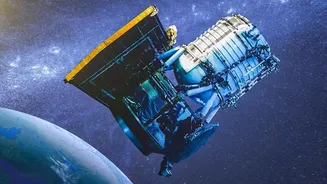
In the world of big-budget space exploration, projects move through a series of official phases, each with its own rigorous reviews. NASA has officially advanced the PRobe far-Infrared Mission for Astrophysics, or PRIMA, into Phase B. This isn't just
bureaucratic paperwork; it’s a sign of serious commitment. Phase A is where concepts are born and initial studies are conducted. Phase B, however, is where the mission gets real. During this stage, engineers complete the preliminary design, finalise the necessary technology, and create detailed plans for construction and implementation. It involves turning the ambitious scientific goals into a complete and consistent technical, cost, and schedule baseline. For PRIMA, this means NASA is confident enough in the concept to invest in its detailed architectural planning, moving it a significant step closer to its targeted 2033 launch. This phase will culminate in a confirmation review, where the mission's readiness to proceed to final design and fabrication (Phase C) will be assessed.
A New Window on the Cosmos
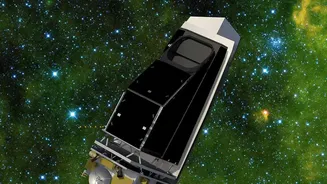
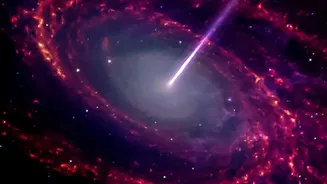
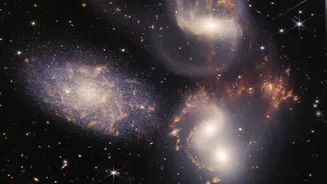
So, why is PRIMA generating so much excitement? The telescope is designed to see the universe in far-infrared light, a spectrum that is largely invisible to other observatories like the James Webb Space Telescope (JWST). While JWST excels at near- and mid-infrared, PRIMA will bridge the gap between it and ground-based radio telescopes. This unique capability will allow scientists to peer through cosmic dust and observe phenomena that have been previously obscured. According to NASA officials, PRIMA will be humanity's next window into the deep universe, helping to answer fundamental questions about our cosmic origins. The mission's primary objectives are ambitious and wide-ranging. Scientists hope to understand how galaxies and their central black holes grow, how cosmic dust and heavy elements build up over time, and, perhaps most compellingly, the origins of planets and the water on Earth.
The Science of Finding Another Earth
One of PRIMA's most captivating goals is to study the formation of planets outside our solar system. Specifically, it will investigate the role water plays in creating new worlds. By observing protoplanetary disks—the swirling clouds of gas and dust where planets are born—in the far-infrared, PRIMA can detect the spectral signatures of water and other key elements. This is something even the powerful JWST cannot do, as the necessary spectral lines are only visible at the longer wavelengths PRIMA is designed to see. This will help scientists determine the total mass of these disks and the abundance of elements like carbon and oxygen, providing crucial clues about where and how exoplanets form. The data gathered by PRIMA could finally help explain how Earth obtained its water, a key ingredient for life as we know it.
A New Class of Mission
PRIMA is not just another telescope; it's the first in a new class of missions called Probe Explorers. This program, part of NASA's long-running Explorers Program, was recommended by the scientific community to provide more frequent, medium-cost missions to answer pressing questions in astrophysics. PRIMA was selected after a detailed evaluation of concept studies, beating out a proposed X-ray satellite. With a project cost capped at $1.2 billion (not including launch), it represents a more sustainable model for developing powerful scientific instruments compared to flagship missions like JWST, which cost around $10 billion. Managed by NASA's Jet Propulsion Laboratory, PRIMA is a massive international collaboration, with partners from the space agencies of Canada, France, Germany, Japan, and others, ensuring a global effort in its development and future discoveries.