


The Preservation Myth
Fermentation is an ancient method of food preservation, but it doesn't make food immune to spoilage. While the acidic environment created during fermentation helps inhibit the growth of many harmful microbes, these foods are still very much 'alive'. Their
flavour and texture continue to evolve, and without proper care, they can still go bad. Treating them with the same food safety diligence as fresh foods is essential for enjoying their benefits without the risks. This means paying close attention to temperature, using clean utensils, and storing them in appropriate containers.
Dairy Delights: Yogurt, Dahi, and Kefir
Fermented dairy products like dahi, yogurt, and kefir are particularly sensitive to temperature. They must be kept refrigerated at a consistent temperature, ideally between 1°C and 4°C, to slow down further fermentation and prevent spoilage. Leaving them at room temperature for more than two hours (or one hour if it's hotter than 32°C) can allow harmful bacteria to grow. Always use a clean spoon each time you serve from a container to avoid introducing new bacteria. If you notice a bit of liquid (whey) on top, it's usually normal and can be stirred back in, but any signs of mould, strange colouring, or a foul smell mean it should be discarded immediately.
Plant-Based Powerhouses: Kimchi and Sauerkraut
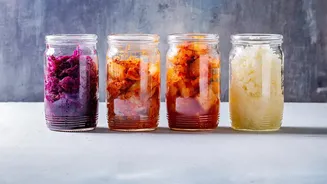
Fermented vegetables such as kimchi and sauerkraut are more stable than dairy but still need proper care. Once opened, they should be stored in an airtight container in the refrigerator. Glass jars are an excellent choice as they are non-reactive. A key rule is to ensure the vegetables remain fully submerged beneath their brine. This creates an anaerobic (air-free) environment that prevents exposure to oxygen, which can lead to mould and spoilage. Use a clean fork or spoon every time and press the vegetables down after each use to keep them covered by the liquid. While kimchi can last for months in the fridge, its texture will soften and flavour will become more sour over time.
The Kombucha Question: Handling Fermented Drinks
Fermented drinks like kombucha are unique because they can continue to produce carbon dioxide, especially if they are unpasteurized and contain live cultures. This can lead to a dangerous buildup of pressure in a sealed bottle, posing a risk of leakage or even breakage. For this reason, kombucha should always be stored upright in the refrigerator. The cold temperature slows fermentation, which helps manage carbonation and preserves flavour. Homemade kombucha requires particular care; it's vital to use food-grade glass containers and monitor the pH to ensure it reaches a safe level of acidity (below 4.2) to inhibit pathogens. Never use ceramic containers unless you are certain they are free of lead, which can leach into the acidic drink.
Red Flags: How to Spot Spoilage
Trust your senses. While the natural aroma of fermented foods is tangy and sour, a truly foul, putrid, or sewage-like smell is a clear sign of spoilage. Visually, look out for fuzzy mould in any colour (black, green, pink, or orange); this is different from the harmless, thin white film of kahm yeast that can sometimes form and be skimmed off. Other warning signs include a slimy texture in vegetables, significant discoloration, or a bulging, leaking, or cracked container, which indicates excessive pressure buildup. When in doubt, the safest choice is always to throw it out.