


The Planet's Fiery Belt
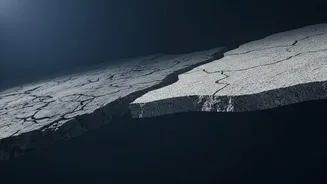
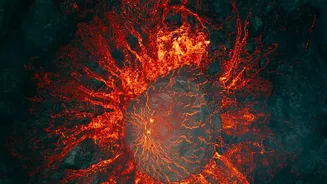
The Ring of Fire is a massive horseshoe-shaped path around the Pacific Ocean, stretching for about 40,000 kilometres. It's not a single line, but a vast zone where many of Earth's major tectonic plates crash into, slide under, or grind past one another.
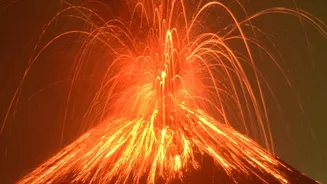
This intense geological friction is why the Ring of Fire is home to roughly 75% of the world's volcanoes and is the site of about 90% of all earthquakes. Countries from New Zealand to Indonesia, up through the Philippines and Japan, and down the west coast of the Americas are all situated along this volatile belt.
A Collision of Four Plates
Japan's location is particularly precarious because it sits at the junction of four major tectonic plates: the Pacific, North American, Eurasian, and Philippine Sea plates. The immense Pacific Plate moves westwards, sliding beneath northern Japan, while the Philippine Sea Plate subducts under the south. This constant grinding and pressure build-up along the plate boundaries is the direct cause of the country's frequent and sometimes powerful seismic events. It's a relentless geological dance that shapes the nation's landscape, from its mountainous terrain to its numerous volcanoes like the iconic Mount Fuji.
Living with Daily Tremors
For the people of Japan, earthquakes are a fact of life. The country experiences around 1,500 quakes that are strong enough to be felt each year, with some form of seismic activity being recorded almost constantly. While most are minor tremors, the potential for a major disaster is ever-present. The Great East Japan Earthquake of March 2011, a devastating magnitude 9.0 event, triggered a massive tsunami and served as a powerful reminder of the forces at play. That event caused parts of Japan's coastline to shift by up to four metres. This constant threat has forged a national mindset of preparedness and resilience, deeply embedding disaster awareness into the culture.
Engineering for Survival
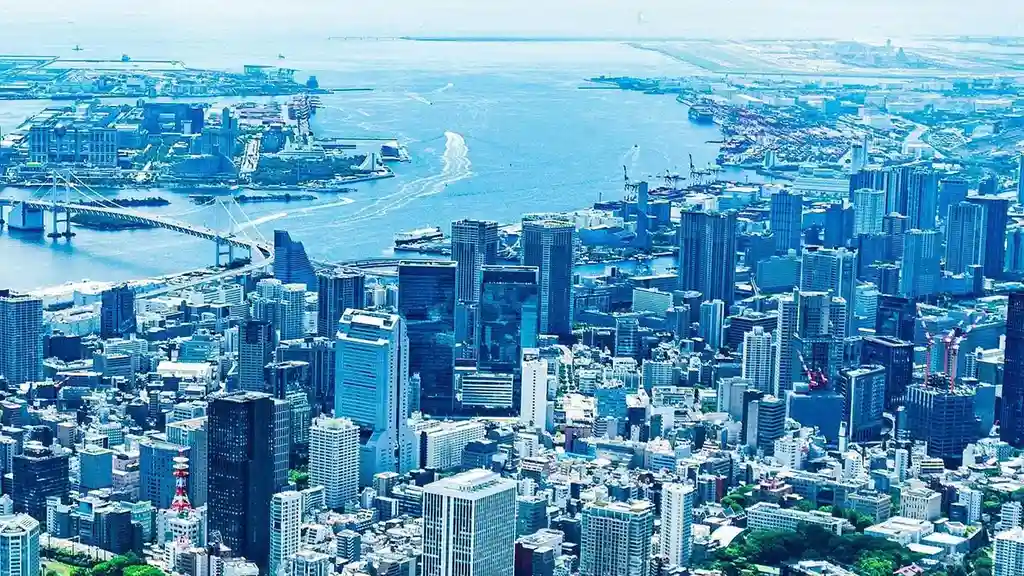
In response to its geological reality, Japan has become a world leader in earthquake-resistant engineering. Modern building codes, significantly strengthened after 1981, are among the strictest in the world. Structures are designed not just to avoid collapse, but to manage and dissipate the immense energy of a quake. Technologies fall into three main categories: basic resistance (taishin), which uses reinforced columns and walls; damping (seishin), which uses shock absorbers to absorb tremors; and the most advanced, base isolation (menshin), which separates the building from the ground with layers of rubber and lead, allowing the earth to move while the structure remains relatively still. Skyscrapers in Tokyo can be seen swaying during a quake, a feature designed to prevent them from breaking.
A Culture of Preparedness
Technology is only one part of the solution. Japanese society is built on a foundation of preparedness. The country boasts one of the world's most sophisticated Earthquake Early Warning (EEW) systems, which detects the initial tremors (P-waves) and sends alerts to mobile phones, TV, and radio seconds before the more destructive shaking (S-waves) arrives. These precious seconds can be enough to slow high-speed trains, halt factory lines, and allow people to take cover. Furthermore, regular disaster drills are conducted in schools and workplaces, and many households maintain emergency kits, ensuring that from a young age, citizens know exactly how to react when the ground begins to shake.