

Introducing the PUFFINS Mission
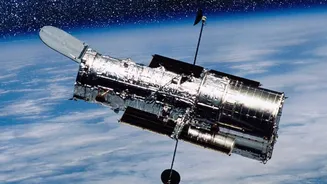
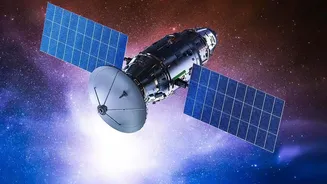
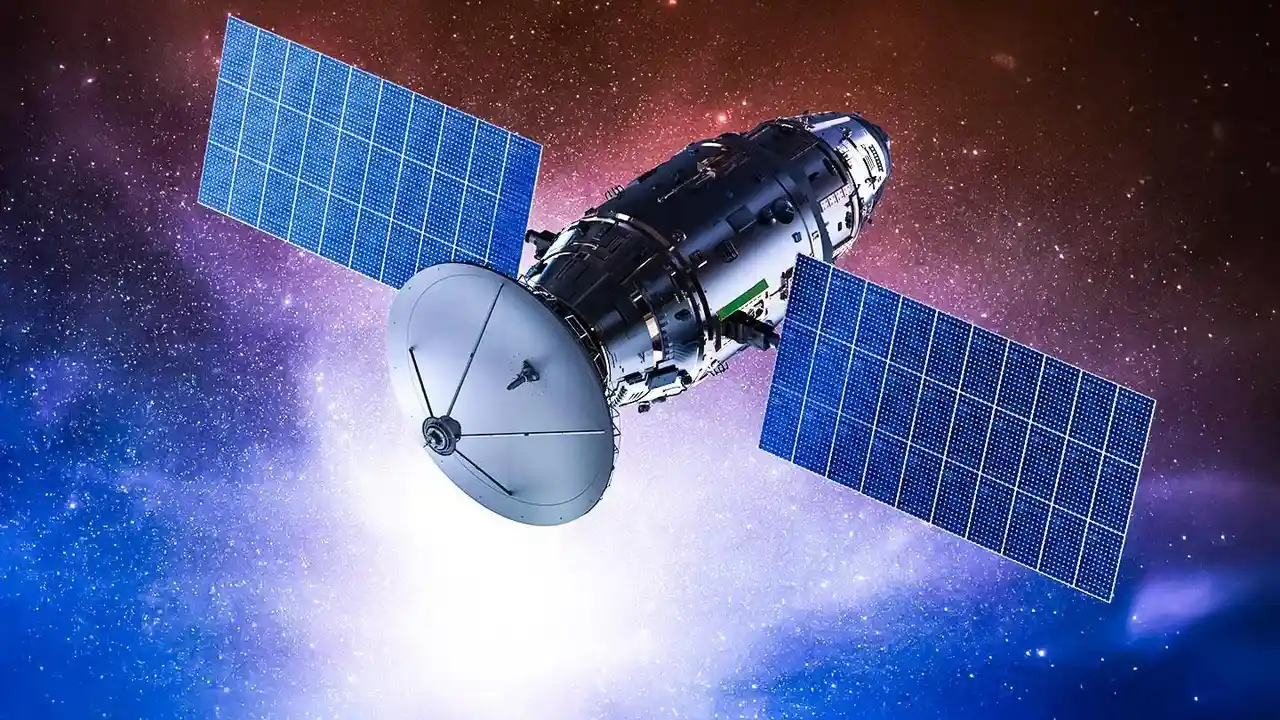
To better understand this crucial cosmic component, NASA is funding the PUFFINS mission, a small satellite set to launch around 2030. The name is an acronym for 'Polarimetry in the Ultraviolet to Find Features in INterStellar dust'. Led by Principal Investigator
Dr. Ramya Anche from the University of Arizona's Steward Observatory, this $20 million project will use a specialized 10-inch telescope to get a new perspective on these tiny, elusive particles. The mission falls under NASA's Astrophysics Pioneers program, which focuses on small-scale, high-impact science projects.
Why Study Cosmic Dust?
Interstellar dust may seem insignificant, with grains as small as a virus particle, but it plays a massive role in the galaxy. These particles absorb and scatter starlight, influencing how light travels through the cosmos. More importantly, they are the raw materials from which new stars and planetary systems are built. Understanding the dust's composition, size, and behaviour is essential for completing the story of how galaxies evolve and how the building blocks of life itself are distributed across space. The PUFFINS mission aims to solve a 50-year-old mystery about how this dust contributes to building new worlds.
Seeing the Invisible with UV Light
So how do you study something so small and spread out? PUFFINS will use a technique called ultraviolet spectropolarimetry. Certain types of dust grains align themselves with the galaxy's magnetic fields like microscopic compass needles. As ultraviolet light from a distant star travels through clouds of this aligned dust, its light waves become polarized—meaning they start to vibrate in a specific direction. By measuring this polarization, scientists can deduce the properties of the dust grains that the light passed through. This method is particularly sensitive to the smallest dust particles, which are essentially invisible to optical and infrared telescopes.
A Targeted Look at 70 Stars
The mission will point its telescope at approximately 70 different stars. This isn't a random sample; the target stars are located in diverse cosmic environments, including nearby stellar nurseries and our galactic neighbors, the Magellanic Clouds. By observing how starlight is affected in these different regions, the mission will create a detailed map showing how the properties of interstellar dust vary across the sky. This will provide a much larger dataset than previously available, as this specific technique has not been used in space for nearly three decades, and only about 30 stars were studied in this way before.
Building a Bridge to Future Discoveries
The PUFFINS mission is a collaborative effort involving multiple universities and researchers, including institutions in India. While it's a small satellite, its scientific goals are ambitious. The data it gathers will fill a long-standing gap in our knowledge and help refine the technology of ultraviolet polarimetry. In doing so, PUFFINS will act as a crucial scientific and technological stepping stone for NASA's next-generation flagship space telescope, the Habitable Worlds Observatory, which is planned for the 2040s. The mission is not just about dust; it's about perfecting the tools we need to ask even bigger questions about the cosmos.