






The Great Soaking Debate
Soaking dals before cooking is a practice passed down through generations, and for good reason. It’s not just an old wives' tale; there are tangible benefits. Soaking rehydrates the dried lentils, which significantly reduces cooking time, saving both
fuel and effort. More importantly, it improves digestibility. Lentils contain complex sugars and compounds that can be difficult for our bodies to break down, often leading to bloating and gas. Soaking helps to dissolve these compounds, making the dal much gentler on the stomach. Furthermore, the process helps to enhance nutrient absorption by reducing anti-nutrients like phytic acid. Always remember to discard the soaking water and rinse the lentils before cooking to wash away the very compounds you’re trying to remove.
Not All Moong Dal is Created Equal
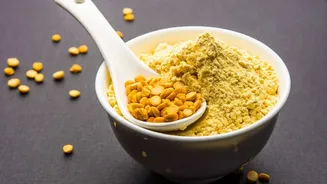
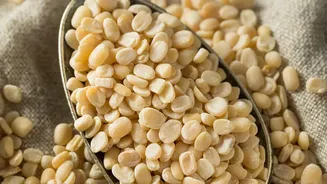
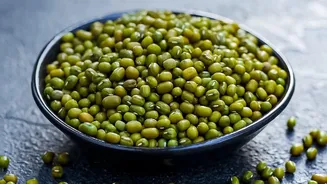
The confusion around moong dal often stems from the fact that it comes in two primary forms, and they couldn't be more different in their needs. First is the split and hulled yellow moong dal (dhuli moong). This is the version most commonly used for simple dal tadka or khichdi. Because its protective skin has been removed, it's incredibly quick to cook and digest. On the other hand, we have whole green moong (sabut moong), which retains its fibrous skin. This outer layer makes it heartier and more robust but also means it requires more preparation to become tender and digestible. The soaking time for these two types varies dramatically, and knowing which one you're using is the key to a perfect dish.
Your Guide to Perfect Soaking Times
So, how long is long enough? The answer depends entirely on the type of moong dal you're cooking. For the split yellow moong dal, a very short soak is often sufficient. Many cooks find that 15 to 30 minutes is plenty to soften the lentils, though some skip soaking altogether with good results. An hour-long soak is also a great option if you have the time, as it will make the dal even softer. For whole green moong, a much longer soak is essential. To break down its tough outer skin, you should plan to soak it for at least 4 to 6 hours. Soaking it overnight is even better, especially if you plan to make sprouts or want to ensure maximum digestibility.
More Than Just Softening
The benefits of soaking go beyond just texture and cooking time. The process kicks off important biological changes within the lentil. Dried seeds contain phytic acid, an anti-nutrient that binds to minerals like iron, zinc, and calcium, preventing your body from absorbing them. Soaking helps to neutralize phytic acid, which in turn boosts the bioavailability of these crucial minerals. This is particularly important in diets that rely heavily on grains and legumes. Additionally, soaking activates enzymes that begin to break down the complex starches and proteins in the dal, essentially jump-starting the digestion process before it even hits the stove.
No Soak? No Problem
Life gets busy, and it's easy to forget to soak the dal. If you find yourself in this situation, don't panic. For split yellow moong, you can often get away with just rinsing and cooking it a little longer. For the more stubborn whole green moong, there are a few effective workarounds. The quickest method is the hot soak: simply rinse the dal, cover it with boiling water, and let it sit for about an hour. This will soften it considerably. Alternatively, you can turn to your pressure cooker for help. Just add a little extra water to your recipe and cook the unsoaked dal for a longer duration until it reaches the desired tenderness. A tiny pinch of baking soda can also speed up softening in a pinch, but use it sparingly as it can affect the dal's taste and texture.