



The Ultimate Safety Checklist
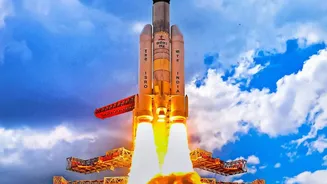
Human spaceflight is an endeavour of monumental complexity and risk. For the Indian Space Research Organisation (ISRO), the Gaganyaan mission represents the pinnacle of this ambition: sending Indian astronauts into a 400 km orbit and bringing them back
safely. This goal hinges on a philosophy of 'human-rating'—a rigorous process of engineering, testing, and certification to ensure every component is as reliable as humanly possible. Unlike a satellite launch, where the primary goal is mission success, a crewed mission prioritises astronaut survival above all else. This safety-first doctrine is vividly demonstrated in the meticulous testing of the systems designed to separate different parts of the spacecraft at critical moments. Recently, ISRO successfully completed three such qualification tests for the Gaganyaan Crew Module, moving another significant step closer to the first uncrewed test flights.
Deconstructing the Separation Sequence
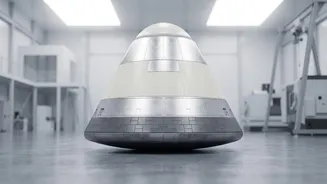
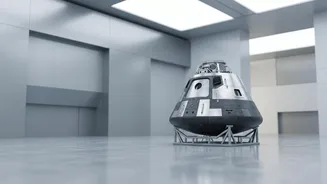
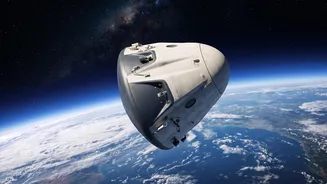
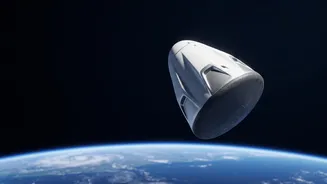
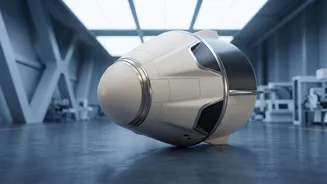
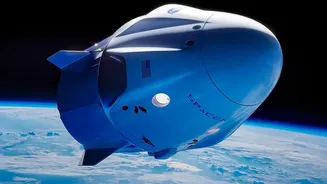
A spacecraft isn't a single entity but a series of modules with specific jobs. The Orbital Module, for instance, consists of the Crew Module (CM), where astronauts live, and the Service Module (SM), which provides power and propulsion. Getting the CM and its crew home safely requires these modules to separate flawlessly at precise moments. The recent tests focused on key separation events that are crucial for the return journey. One test validated the structural integrity of the CM when the apex cover is jettisoned. This cover protects the precious parachute system during ascent and orbit, and it must be blown away cleanly for the parachutes to deploy. Another test confirmed the clean separation of the umbilical cord connecting the CM and SM, which carries vital electrical and life-support connections. These are not just routine checks; they are high-stakes manoeuvres that must work perfectly every time.
Why 'Separation' is a Science
Separation events in space are controlled, explosive processes. The apex cover, for example, is separated using pyrotechnically actuated thrusters. To ensure the main structure of the Crew Module can withstand this force, ISRO engineers subjected a test article to loads approximately 1.75 times higher than what's expected during an actual flight. Similarly, the umbilical disconnect system must separate without damaging the structural stability of the crew module's panels. The third major test involved the Crew Module Up-righting System (CMUS). After splashing down in the ocean, the capsule could be unstable or even upside down. The CMUS uses a cold gas system to rapidly inflate flotation bags, ensuring the module stays upright, which is a critical safety requirement for the crew post-landing. Testing these systems on the ground demonstrates that the designs are robust and have the required safety margins.
The Parachute Gauntlet
The most visually dramatic separation system is the parachute sequence, which has been undergoing its own extensive series of tests, known as Integrated Air Drop Tests (IADT). The Gaganyaan module uses a complex array of ten parachutes in total. The sequence begins with apex cover separation parachutes, followed by two drogue parachutes to stabilise and initially slow the module from high speeds. Afterwards, three pilot parachutes are deployed to pull out the three main parachutes, which slow the capsule to a safe landing speed for splashdown. ISRO has conducted multiple drop tests using aircraft like the IL-76 to release dummy masses equivalent to the crew module's weight from high altitudes, validating the performance of this critical deceleration system.
A Statement of Maturity
This intense focus on qualification tests and redundancy reveals a core philosophy at ISRO: test for failure on Earth so you don't experience it in space. Every successful ground test builds confidence in the systems that astronauts will depend on during the most perilous phases of their mission—re-entry and landing. This methodical push, from validating the engines and escape systems to qualifying every nut, bolt, and parachute, is what 'human-rating' truly means. It shows that India's approach to joining the elite club of spacefaring nations capable of human spaceflight is not about speed, but about an unwavering commitment to safety and precision. The successful completion of these tests is a clear signal that the Gaganyaan programme is progressing with the caution and maturity required for such a historic undertaking.