





In the global race for clean, reliable energy, nuclear power is making a powerful comeback. Once viewed with caution, it is now seen as a crucial tool for energy security and decarbonisation. But what is its actual role in our global electricity mix?
The Global Picture in 2025
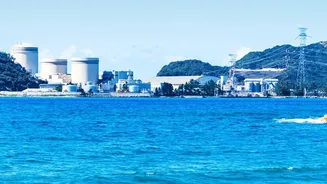
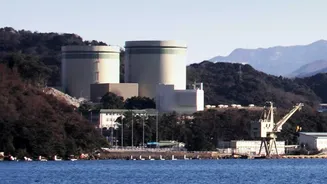
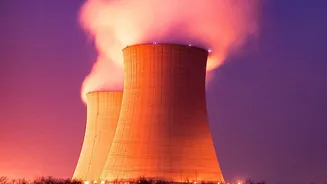
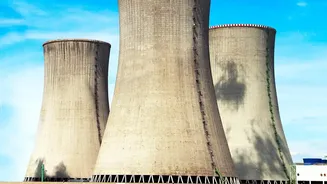
According to the latest data from global nuclear watchdogs, 2025 was a landmark year for nuclear energy. The world's fleet of more than 400 reactors across 30-plus countries generated a record amount of electricity. This output accounted for roughly 9-10% of the world's total electricity, making it the second-largest source of low-carbon power after hydropower. As noted by the International Atomic Energy Agency (IAEA), this solidifies nuclear power's position as a significant and stable contributor to the global grid, providing a quarter of all clean electricity. While a single-digit percentage may seem modest, the sheer volume of reliable, 24/7 power it represents is immense, avoiding gigatonnes of carbon emissions that would have come from fossil fuels.
Why Momentum is Building
The renewed enthusiasm for nuclear is not accidental. For several years running, the IAEA has revised its long-term growth projections for nuclear power upwards. This reflects a major shift in global thinking, driven by three key factors. First, the urgent need for energy security has pushed nations to seek stable, domestic power sources that are not subject to volatile international fuel markets. Second, the global push towards net-zero emissions has highlighted nuclear's ability to produce massive amounts of carbon-free electricity. Finally, surging electricity demand, partly from the rapid growth of data centres and artificial intelligence, is forcing governments and tech companies to look for reliable power sources that renewables alone cannot always provide.
A Tale of Two Strategies
The global nuclear story is not uniform; it's a tale of two different approaches. The most visible and rapid expansion is happening in Asia. China is leading this charge, with nearly half of all reactors currently under construction globally located there. The country is on track to overtake both the US and Europe in total installed nuclear capacity before the end of this decade. In contrast, many advanced economies in North America and Europe, which operate the world's largest but also oldest fleet of reactors, are taking a different path. Their focus is primarily on extending the operational lifetimes of existing plants—a cost-effective way to retain clean energy capacity. At the same time, they are aggressively investing in the next generation of nuclear technology, particularly Small Modular Reactors (SMRs).
India's Great Nuclear Ambition
Within this global context, India's nuclear energy plan stands out for its sheer ambition. Currently, nuclear power accounts for about 3% of the nation's electricity from an installed capacity of just under 9 GW. However, the government has laid out a multi-decade mission to transform this. The immediate goal is to triple the capacity to nearly 22.5 GW by 2031-32. But the long term vision, a key part of India's goal to achieve net zero emissions by 2070, is even more staggering: to reach 100 GW of nuclear capacity by 2047. This represents more than a tenfold increase from today's levels. To achieve this, the government has initiated the Nuclear Energy Mission and passed new laws to encourage investment and streamline development, signalling that nuclear power is no longer a peripheral player but a central pillar of the country's future.
The Promise of New Technology
Much of the future excitement around nuclear energy, both in India and abroad, is tied to innovation. Small Modular Reactors, or SMRs, are at the forefront of this trend. These are smaller, factory built reactors that promise to be cheaper, faster to construct, and more flexible than their gigawatt scale predecessors. They can be deployed in remote areas, power industrial hubs, or even produce hydrogen. The IAEA's high case growth scenarios for 2050 depend significantly on the successful deployment of SMRs, which could make up nearly a quarter of all new nuclear capacity. India is actively pursuing its own SMR designs as part of its 2047 vision, seeing them as a way to accelerate its ambitious nuclear rollout.