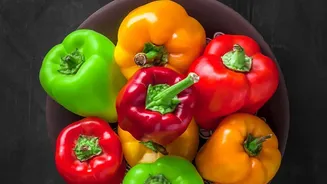









It’s a kitchen staple, adding crunch to salads and flavour to curries. But the colourful bell pepper holds a secret: botanically, it isn't a vegetable at all. This culinary chameleon challenges everything we think we know about fruits.
The Scientific Definition
To understand the
bell pepper's true identity, we have to look at botany, the science of plants. From a botanical perspective, a fruit is the structure that develops from the ovary of a flowering plant and contains the seeds necessary for reproduction. If you slice open a bell pepper, you’ll find a core full of seeds. This is the key giveaway. The pepper itself grows from the plant’s flower, ticking all the boxes to be classified, scientifically, as a fruit. In fact, botanists classify bell peppers, along with tomatoes and cucumbers, as a type of berry.
Why We Call It a Vegetable
If it's a fruit, why does everyone from chefs to supermarket aisle markers call it a vegetable? The answer lies in the culinary world, where classifications are based on taste and usage rather than biology. In the kitchen, a vegetable is generally any plant part that has a savory flavour and is used in main courses, soups, or salads. Fruits, by contrast, are typically sweet or tart and are reserved for desserts or eaten as snacks. Because bell peppers have a mild, savory taste and are almost always used in savory dishes, they fit perfectly into the culinary definition of a vegetable. This practical, flavour-based system is what we use in our everyday lives.
A Legal Precedent
This very debate once reached the highest court in the United States. In the 1893 case of Nix v. Hedden, the U.S. Supreme Court had to decide whether a tomato was a fruit or a vegetable for the purpose of import tariffs. At the time, imported vegetables were taxed, but fruits were not. While the plaintiffs argued the correct botanical definition—that the tomato is a fruit—the court sided with the common understanding. Justice Horace Gray ruled that since tomatoes were served with dinner and not as a dessert, they should be classified as vegetables in 'the common language of the people'. This case cemented the idea that two definitions can exist, one for science and one for the kitchen.
Other Fruits in Disguise
Bell peppers and tomatoes are far from the only botanical fruits masquerading as vegetables. You might be surprised to learn just how many other items in your salad bowl or on your dinner plate are technically fruits. This list includes cucumbers, aubergines (eggplant), olives, avocados, pumpkins, and all types of squash, like zucchini and butternut squash. Even okra, corn kernels, and green beans fit the botanical definition of a fruit because they develop from the plant's flower and contain its seeds. Like the bell pepper, their savory profile and culinary use have placed them firmly in the vegetable category in our minds and our recipes.
So, What Is the Right Answer?
Ultimately, both classifications are correct, just in different contexts. A botanist will tell you a bell pepper is a fruit, and they would be scientifically accurate. A chef will tell it's a vegetable, and they would be correct from a culinary standpoint. This isn't a matter of one being right and the other being wrong; it's about two valid systems of classification serving different purposes. One is for scientific understanding of the natural world, and the other is for practical application in how we eat and cook. The difference is more of a fun fact than a rule you need to follow in the kitchen.