




Decoding the Forecast
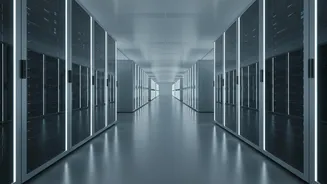
The core of the issue lies in the unprecedented growth of data centres, the physical brains behind our digital world. According to a recent report from energy consultancy Wood Mackenzie, global data centre power demand is set to soar. The firm projects
this demand will jump from 460 terawatt-hours (TWh) in 2026 to 1,280 TWh by 2030, and an astonishing 3,700 TWh by 2040. To put that into perspective, the 2026 demand alone is equivalent to half of Japan's total power generation. This represents a 703% increase from current levels, growing at a rapid clip of 16% per year. This explosion in energy use is primarily driven by the computational needs of artificial intelligence, which requires far more power than traditional computing tasks.
The Generative AI Engine
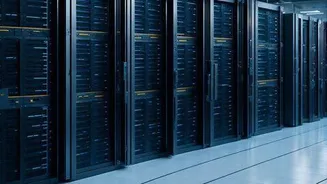
While data centres have been growing for years, the recent spike is almost entirely attributable to the rise of generative AI. Training and running large language models like those that power advanced chatbots and other AI applications is incredibly energy-intensive. An AI-optimised server rack can consume between 30 to over 100 kilowatts (kW), a massive leap from the 5-15 kW used by traditional server racks. Wood Mackenzie notes that the next generation of AI agents could demand 10,000 to 40,000 times more computing power per task than today's versions. This exponential increase in compute requirements translates directly into a higher demand for electricity, creating a dual challenge of scaling both computing infrastructure and the power needed to run it.
A Grid Under Pressure
This surge in demand places enormous strain on national power grids, which were not designed for such concentrated and rapid growth. In the United States, data centres are projected to consume as much as 20% of the nation's electricity by 2035, up from around 6% today. This tightening market is creating bottlenecks, with multi-year queues for new grid connections becoming a major roadblock for data centre developers. In some regions, the committed load for data centres already exceeds the accredited generation capacity in the development pipeline, raising serious questions about grid stability and reliability. This can lead to increased electricity prices for all consumers, as the cost of upgrading transmission lines and building new generation capacity gets passed on.
The Search for Power
In response to these constraints, the tech industry is in a frantic search for power. Some large hyperscale companies are exploring 'bring-your-own-generation' models, which involves building dedicated power plants, often using natural gas, to circumvent grid connection delays. However, this option is only practical for a handful of companies with immense financial resources. More radical solutions are also being explored, including the concept of orbital data centres powered by space-based solar. While this remains economically and technically challenging—costing over three times more than a terrestrial facility—the fact that it's being seriously considered highlights the severity of the terrestrial power crunch. Meanwhile, in India, data centre electricity demand is also forecast to grow significantly, projected to reach 191 TWh by 2040 and account for 7% of the nation's total electricity demand.
The Path Forward
The challenge is clear: balancing the transformative potential of AI with its enormous energy and infrastructure requirements. The solution will likely involve a multi-pronged approach. This includes significant investment in upgrading and expanding power grids, and a faster deployment of new energy sources, including renewables, next-generation nuclear, and geothermal power. Simultaneously, there is a push for greater efficiency in both AI models and data centre operations. Ironically, AI itself could be part of the solution, with the potential to help design and manage more efficient and resilient power systems. The coming years will be a crucial test of whether innovation in the energy sector can keep pace with the exponential growth of artificial intelligence.