







The Superfood and Supplement Myth
The modern wellness market is flooded with products that promise miraculous health benefits. From exotic berries to powdered greens, these 'superfoods' come with premium price tags and compelling marketing. Studies show that many consumers instinctively
believe that a higher price equals a healthier product. This belief can lead us to overlook the nutritional powerhouses that are both affordable and locally available. For example, the humble amla often contains significantly more Vitamin C than imported acai or goji berries. Similarly, local millets offer a protein and mineral profile comparable to quinoa but at a fraction of the cost. The term 'superfood' itself is more of a marketing tool than a scientific classification, designed to make certain foods seem irreplaceable when their benefits are often available in more common produce.
The True Power of a Diverse Plate
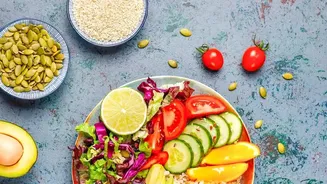
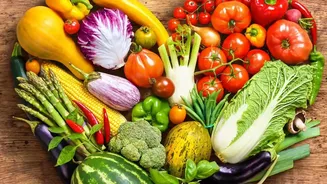
True nutritional strength comes from variety. No single food, no matter how 'super', can provide all the nutrients your body needs to thrive. A diet rich in a wide range of foods ensures you get a complete spectrum of macronutrients (proteins, fats, carbs) and micronutrients (vitamins, minerals). This is the principle behind the traditional Indian thali, which combines grains, lentils, vegetables, and dairy to create a balanced meal. Different foods also provide unique phytonutrients—beneficial compounds in plants that work together to support your health. This concept, known as food synergy, means that the nutrients from a diverse meal work in concert, enhancing each other's absorption and effectiveness in ways that isolated nutrients cannot. For instance, the vitamin C in a tomato can help your body absorb the iron from a serving of lentils more effectively.
Why Supplements Can't Replace Whole Foods
Dietary supplements can feel like a convenient shortcut to good health, but experts agree they should not be the primary source of your nutrients. Whole foods offer a complex matrix of fibre, antioxidants, and other compounds that supplements cannot replicate. Your body is generally better at absorbing and utilising nutrients when they come from food. While supplements have a role in treating specific, diagnosed deficiencies, they can't compensate for a poor diet. Research has shown that nutrients from food are associated with better long-term health outcomes, a benefit not seen with nutrients from supplements alone. Furthermore, the supplement industry is not as strictly regulated as pharmaceuticals, leading to potential issues with quality, potency, and safety. Over-reliance on supplements can also lead to an excessive intake of certain vitamins, which can be harmful.
Building Your Affordable, Nutrient-Dense Pantry
Eating well on a budget is entirely possible by focusing on variety and local availability. Building a well-stocked Indian pantry is the first step. Staples like dals (lentils), chana (chickpeas), and rajma (kidney beans) are excellent sources of protein and fibre. Millets like jowar, bajra, and ragi are gluten-free grains packed with nutrients. Don't forget seasonal vegetables and leafy greens like moringa (drumstick leaves) and spinach, which are dense in vitamins and minerals. Spices like turmeric and ginger not only add flavour but also have anti-inflammatory properties. Combining these staples allows for endless variety. A simple meal of dal, rice, and a seasonal vegetable sabzi provides a complete protein, complex carbohydrates, and a host of vitamins. By prioritising these affordable staples, you can create a diverse and nutritious diet that far surpasses the benefits of a few expensive, imported products.