






A Groundbreaking First Look
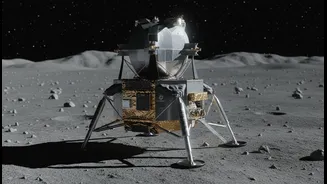
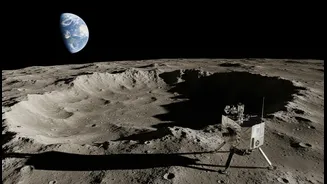
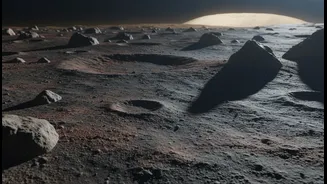
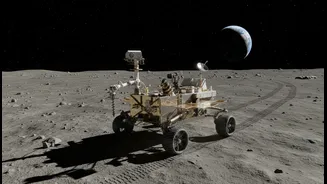
When the Vikram lander touched down at its "Shiv Shakti" point in August 2023, it deployed a suite of instruments designed to perform the first-ever in-situ analysis of the Moon's south polar region. While orbiters can give us a broad overview, landing
provides 'ground truth'—the direct measurement of what's actually there. The mission's Pragyan rover and the lander itself carried tools like the Laser-Induced Breakdown Spectroscope (LIBS) and the Alpha Particle X-ray Spectrometer (APXS) to analyse the elemental makeup of the lunar soil, known as regolith. Another key instrument, Chandra’s Surface Thermophysical Experiment (ChaSTE), was designed to take the Moon's temperature. These tools were set to uncover secrets buried just beneath the surface.
Unexpected Elements and Temperatures
The findings were immediate and intriguing. The LIBS instrument fired a laser at the soil, vaporising a tiny amount into plasma and reading the light to identify its components. It unambiguously confirmed the presence of sulphur, a feat that wasn't possible with orbital instruments. It also found expected elements like aluminium, iron, calcium, and silicon. Meanwhile, the ChaSTE probe revealed a surprisingly steep temperature gradient. While the surface baked at around 60°C, just 10 centimetres below, the temperature plunged to a frigid -10°C. This massive difference suggests the top layer of lunar regolith is an incredibly effective thermal insulator, a property that has major implications for future lunar construction and for understanding how water ice might be preserved just beneath the surface.
Connecting a Landing Site to Earth
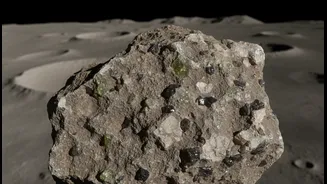
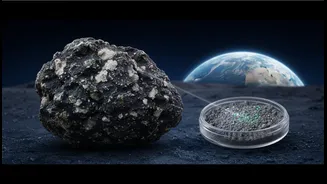
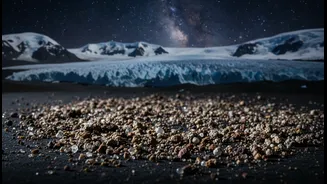
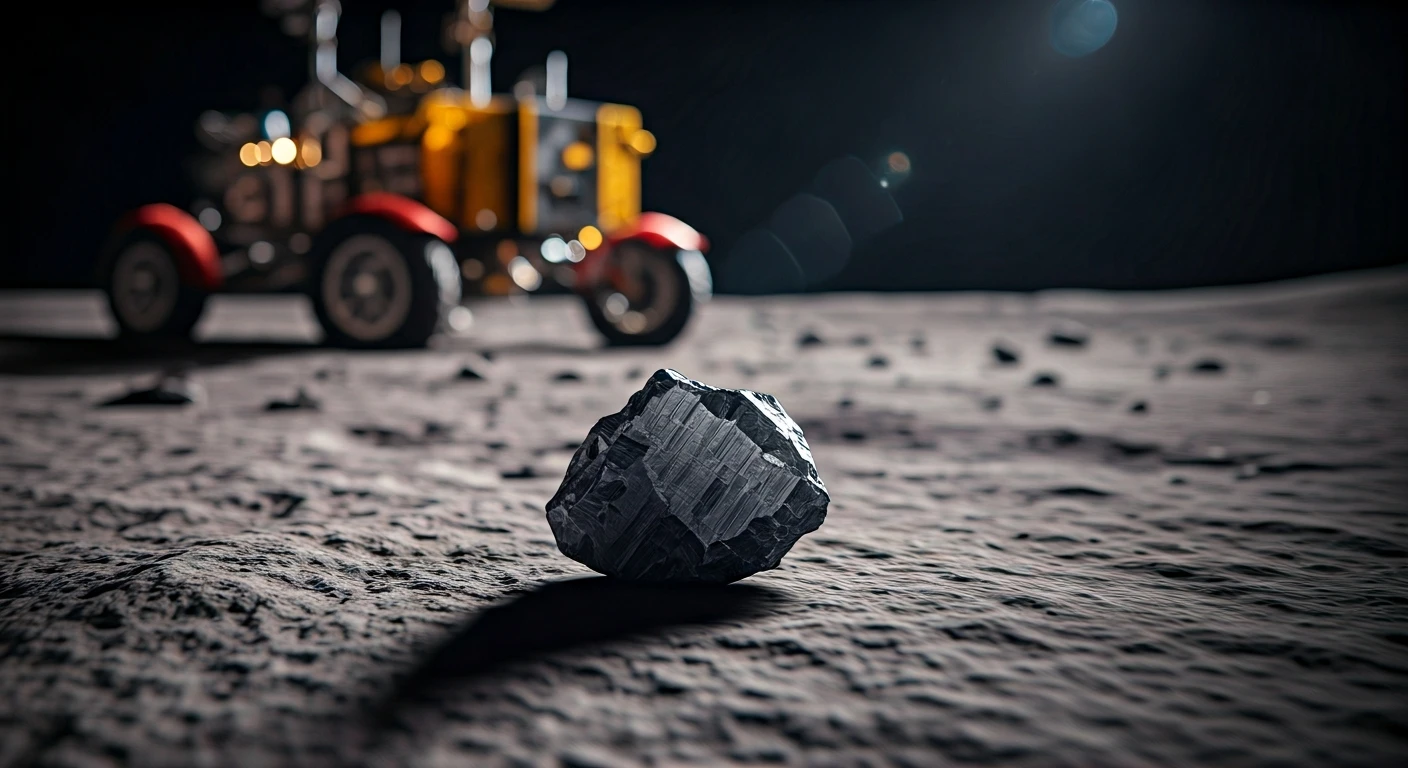
More recently, in July 2026, scientists from the Physical Research Laboratory (PRL) in Ahmedabad published a stunning analysis. They compared the elemental composition data from the APXS instrument with the profiles of 66 known lunar meteorites found on Earth. They found an almost perfect match. The soil at Shiv Shakti Statio has a geochemical signature strikingly similar to a meteorite named ALHA 81005, which was discovered in Antarctica in 1981 and was the very first rock confirmed to have originated from the Moon. This doesn't mean the meteorite came from that exact spot, but it shows both represent a similar, magnesium-rich type of lunar crust that is different from typical highland areas. This created a powerful bridge between a specific location on the Moon and a sample we can study in labs on Earth.
From Local Data to Global Models
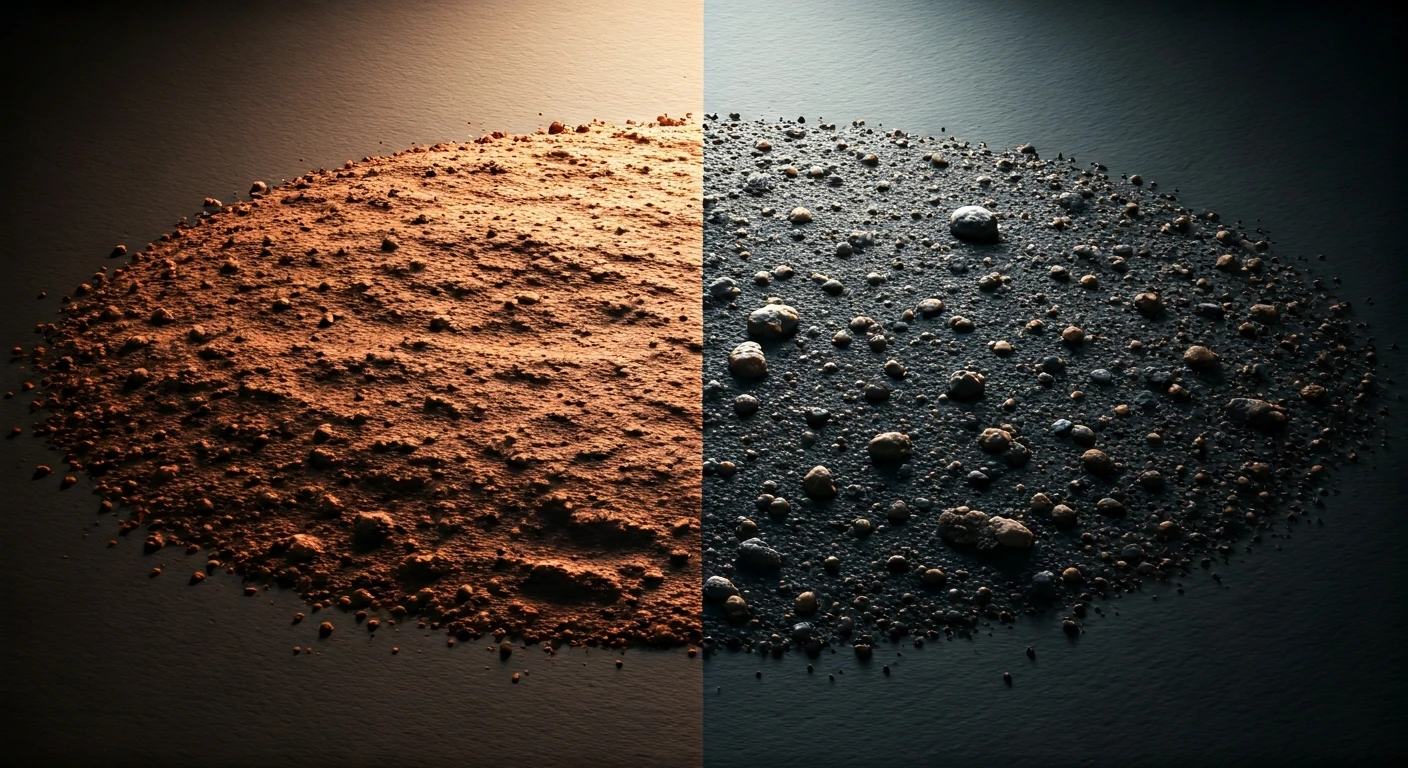
The headline's promise lies in this critical step: how do these specific points of data inform our view of the whole Moon? The answer is in computer modelling. Scientists use ground-truth data from landing sites like Chandrayaan-3's as anchor points to calibrate and refine their global models. The surprising sulphur reading and the unique soil composition at the south pole suggest that previous models, based largely on data from equatorial landings by the Apollo missions, were incomplete. The south pole's soil appears to be a mixture of materials, including some potentially thrown up from deep within the Moon's mantle by the ancient impact that formed the vast South Pole-Aitken basin. By feeding this new, diverse data into complex models, researchers can create a more accurate and nuanced map of the entire Moon's geology and resource potential, essentially using a local clue to solve a global puzzle.
Paving the Way for a Lunar Future
These findings are not just academic. Understanding the soil's composition and thermal properties is vital for what's known as In-Situ Resource Utilisation (ISRU). Knowing that sulphur is present, for example, opens up scientific questions about the Moon's volcanic history and its potential link to water ice. The soil's incredible insulating properties, revealed by ChaSTE, will directly influence the design of future lunar habitats, which will need to be protected from extreme temperature swings. The data on soil density and cohesiveness, refined by Vikram's 'hop' experiment, informs how to build stable foundations and how rovers should be designed to move across the surface. Chandrayaan-3's localised readings have provided a globally significant blueprint for the next generation of lunar explorers.