



A Catastrophe in Real Time
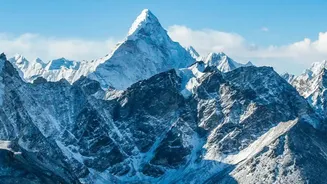
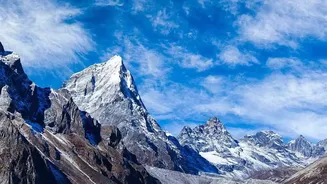
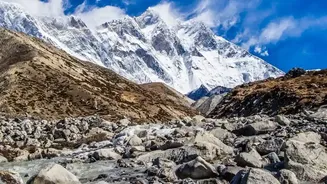
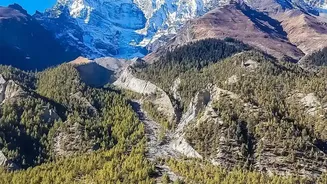
In late August 2026, a catastrophic event unfolded along the Nepal-Tibet border. A massive section of a mountain, including glacial ice and bedrock, broke away from Langtang Lirung peak. This ice-rock avalanche plunged into the valley below, generating
a seismic signal equivalent to a magnitude 5.2 earthquake and unleashing a torrent of water, mud, and debris. The resulting flash flood tore down the Trishuli River valley, wiping out villages, bridges, and critical hydropower infrastructure. The death toll tragically climbed into the thousands, with many more missing, highlighting the extreme vulnerability of communities living in the shadow of these frozen giants. This disaster was not caused by a typical glacial lake outburst but by a slope failure, a terrifying new dimension of risk in a warming climate.
The Science of a Destabilized Landscape
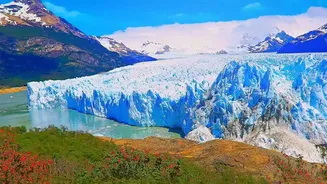
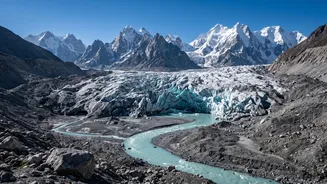
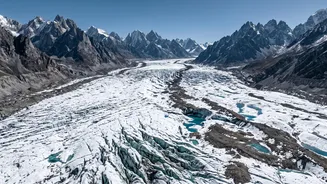
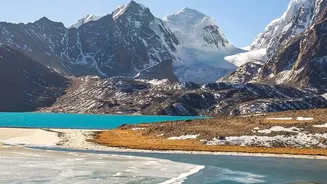
For decades, the primary concern has been Glacial Lake Outburst Floods (GLOFs), where lakes formed by meltwater breach their natural dams. While this remains a significant threat—Nepal has over 2,000 glacial lakes, with at least 21 considered dangerous—the August disaster points to a more complex and immediate danger. Scientists explain that rising temperatures are not just melting the surface of glaciers; they are thawing the permafrost, the frozen 'glue' that holds mountain slopes together. As this subterranean ice melts, entire rock faces become unstable. When they collapse, they can take the glaciers sitting on top of them, creating an avalanche of rock and ice that generates immense friction and heat, rapidly melting the ice into a destructive flood.
More Than Just Melting Ice
The equation is brutally simple: as temperatures rise, glacier melt accelerates. Studies show that glaciers in the Hindu Kush Himalaya region are melting at a rapidly increasing pace, with the rate doubling since the late 20th century. This has a dual effect. Firstly, it feeds the growth of potentially dangerous glacial lakes. Secondly, it contributes to the overall instability of the high-altitude environment, increasing the frequency of rockfalls and landslides, even in areas without large glacial lakes. The disaster on the Trishuli River was a cascade of hazards—an ice-rock avalanche that triggered a debris flow and flash flood—demonstrating how interconnected these risks have become. The mountains themselves are becoming less predictable.
The Human Cost and a Regional Warning
The impact on human life is staggering. Beyond the immediate casualties, thousands are displaced, homes are destroyed, and livelihoods built around agriculture and hydropower are washed away. The August floods destroyed or damaged thousands of homes, numerous government buildings, and critical infrastructure, with preliminary damages estimated in the billions of dollars. For Nepal, which relies heavily on hydropower, the destruction of power plants is a massive blow to its development. This event serves as a stark warning for the entire Himalayan region, including India, where experts estimate that hundreds of glaciers could be precariously positioned. The disaster underscores the urgent need for a better inventory of high-risk formations and enhanced monitoring across the shared mountain ecosystem.
The Race for Resilience
Preventing glaciers from melting requires global action on climate change, a long-term goal. In the immediate term, the focus is on adaptation and mitigation. The challenge is immense, as events like the Langtang Lirung collapse are incredibly hard to predict compared to the slower development of a GLOF. However, efforts are underway to build resilience. This includes establishing better early warning systems that can detect seismic signals from landslides, allowing for precious minutes of evacuation time. It also involves international cooperation, with rescue teams and scientists from China, India, and beyond assisting Nepal in its response. Ultimately, experts stress the need for continuous monitoring, better risk mapping, and incorporating local and indigenous knowledge about land use to guide safer development in the mountains.