





A Puzzling Postcard From the Red Planet
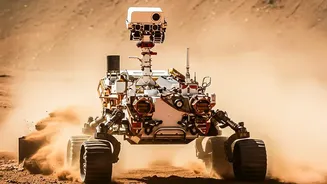
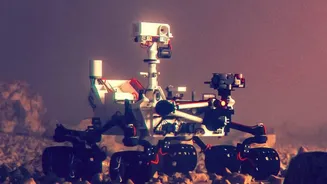
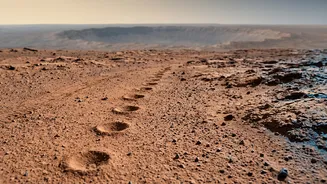
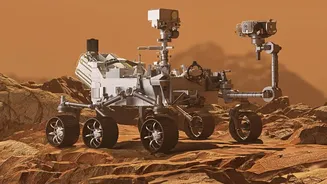
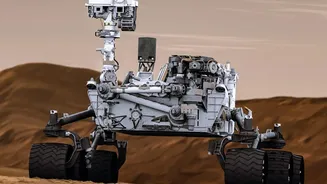
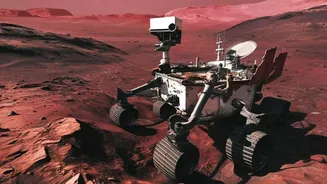
NASA's Curiosity rover, a car-sized mobile science laboratory, has been traversing the rugged terrain of Gale Crater since 2012. Its primary mission is to determine if Mars ever had the right environmental conditions to support microbial life. While climbing
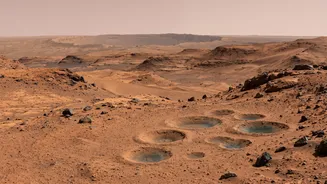
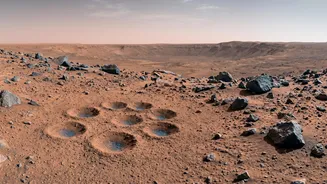
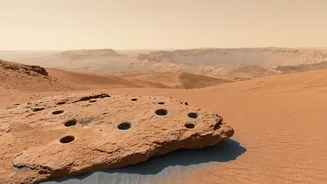
the slopes of Mount Sharp, a massive mountain in the center of the crater, the rover came across something unexpected. Dotting the ground in a region known as Valle Grande were a series of peculiar pits in the bedrock. Mars is, of course, covered in holes, most of them the result of meteorite impacts over billions of years. But these were different, prompting the science team to halt the rover for a closer look.
What Makes These Holes So 'Strange'?
The pits that caught the scientists' attention are unlike any seen on Mars before. They are unusually broad and shallow, with some measuring about a centimeter in diameter. The typical explanation for small pits in Martian rock involves a process of erosion. A harder pebble or mineral nodule gets embedded in softer surrounding rock; over eons, the softer rock erodes away, and the harder pebble eventually falls out, leaving a cavity behind. The mystery here is that these new holes don't fit that model. Scientists have noted that there are no obvious pebbles or nodules nearby that look as though they once occupied the depressions. This lack of a clear culprit is what makes the discovery so intriguing and has sent researchers hunting for a new explanation.
The Hunt for a Geological Explanation
With the most common theory unlikely, scientists are considering other geological possibilities. The holes could be the result of a unique erosion process not yet documented on the planet, or perhaps they stem from an unusual property within that specific layer of rock. The area where the holes were found is already of high interest, as the rover is ascending through layered sulfate rocks that preserve a record of changing environmental conditions on ancient Mars. Nearby rock beds show rapid changes in appearance, with some gray layers resisting erosion differently from their neighbors. Scientists speculate that the pits could be linked to these rapid transformations in how the rock was formed millions or billions of years ago. Other possibilities for holes on Mars in general, though not specifically confirmed for these pits, include collapsed lava tubes or fractures from tectonic stress. For now, NASA has not suggested any link to biological activity.
How Science Investigates From Millions of Miles Away
Investigating a mystery from another planet is a slow and meticulous process. The rover team at NASA's Jet Propulsion Laboratory used Curiosity's advanced suite of instruments to gather more data. The rover's robotic arm positioned the Mars Hand Lens Imager (MAHLI) to take detailed, close-up photos of the pits. Simultaneously, the Mastcam, a set of cameras on the rover's mast, captured overlapping stereo images of the surrounding area. By combining these images, scientists on Earth can create detailed three-dimensional models of the surface. These models will allow them to precisely measure the shape and depth of the pits, which are crucial clues for working backward to figure out how they formed. The rover also has instruments like ChemCam, which can zap rocks with a laser to analyze their chemical composition, helping to reveal the history written in the stone.