





India’s Answer to GPS
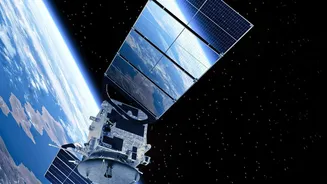
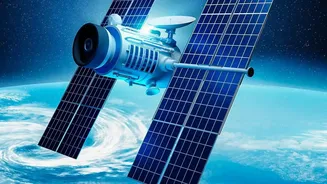
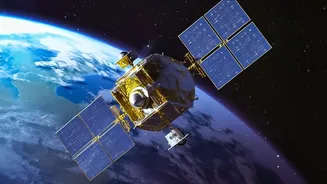
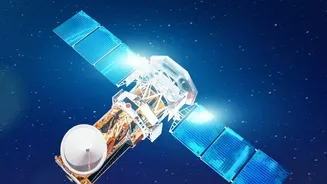
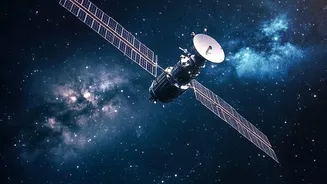
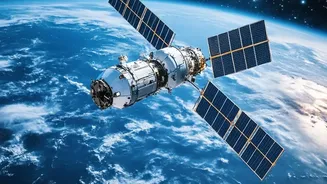
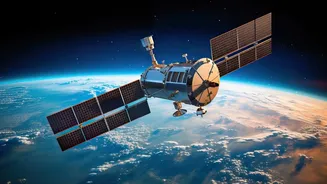
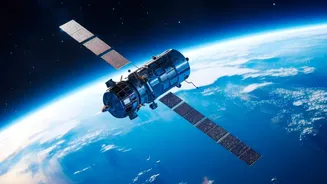
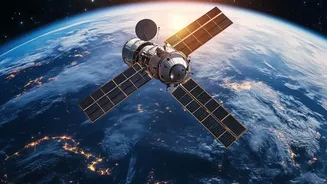
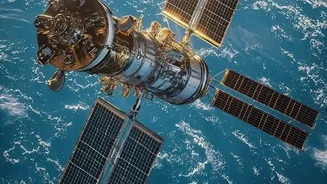
Navigation with Indian Constellation, or NavIC, is ISRO’s ambitious project to provide the country with its own independent satellite navigation system. Think of it as India’s very own GPS. Designed to provide accurate real-time positioning and timing
services, its coverage extends over India and a region stretching 1,500 kilometres beyond our borders. This capability is not just a matter of convenience; it’s a cornerstone of strategic autonomy. NavIC provides two tiers of service: a Standard Positioning Service (SPS) for all civilian users and a highly accurate, encrypted Restricted Service (RS) for authorized users, including the military. In a world where access to foreign-owned navigation systems like the US-operated GPS could be denied or degraded during a conflict, having our own reliable system is non-negotiable for national security.
The Trouble with Time
In recent times, the NavIC constellation has been significantly weakened. To provide an accurate position, a minimum of four satellites must be visible to a receiver on the ground. However, due to a series of technical issues, the number of fully functional NavIC satellites has dropped to just three. The primary culprit behind this degradation has been the premature failure of imported rubidium atomic clocks aboard the first generation of IRNSS satellites. These clocks are the heart of any navigation satellite, providing the ultra-precise time signals needed to calculate a user's location. Even a nanosecond of error in timing can translate to a significant error in positioning on the ground. With several of the original satellites now past their design life or hobbled by clock failures, NavIC currently cannot provide standalone positioning, though its timing services remain active.
Enter the New Generation
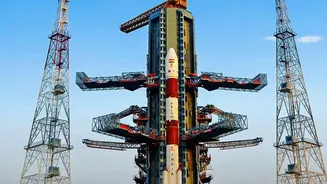
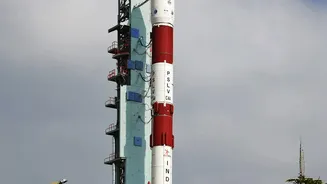
To address this critical shortfall, ISRO is deploying a second generation of NavIC satellites, known as the NVS series. These new spacecraft are designed to be more robust and capable. The most important upgrade is the inclusion of an indigenously developed rubidium atomic clock, a direct lesson learned from the failures of the imported components. The first of this new series, NVS-01, was successfully launched in May 2023. However, a setback occurred in January 2025 when the follow-up mission, NVS-02, failed to reach its final orbit after a successful launch due to a propulsion issue. Now, all eyes are on the next mission: the launch of NVS-03. ISRO is targeting a launch window between October 15 and 20, 2026, aboard a GSLV-MkII rocket. This satellite will not only bring the constellation back to the required minimum but also bolster it with newer technology.
More Than Just Maps
The importance of a fully functional NavIC cannot be overstated. For the military, it ensures reliable navigation for aircraft, ships, and ground troops, as well as precise guidance for munitions, without fear of foreign interference. But its applications are just as vital for the civilian population. NavIC is crucial for emergency services for coordinating disaster response, for logistics companies tracking their vehicle fleets, for fishermen requiring alerts and positioning at sea, and for providing precise timing signals that underpin banking and digital transactions. While most modern receivers can use signals from multiple constellations like GPS and NavIC simultaneously, the loss of a sovereign Indian option represents a strategic vulnerability. The upcoming NVS-03 launch is therefore a crucial step in safeguarding India’s interests across defence, commerce, and public safety.