







The Great Greening Effect
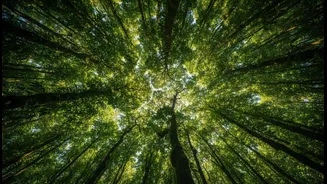
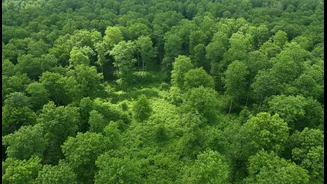
For decades, satellite data has shown that the Earth is getting greener. From a quarter to half of the planet's vegetated lands have seen a significant increase in leaf cover over the last 35 years. The primary driver is the 'carbon fertilization effect':
with more atmospheric carbon dioxide (CO2), a key ingredient for photosynthesis, plants have been supercharged. This process, where plants use sunlight to turn CO2 and water into food, is becoming more efficient, leading to faster growth and more biomass. On the surface, this appears to be a powerful natural buffer against climate change, with forests absorbing a significant chunk of human-caused carbon emissions.
A Problem of Plenty
The complication arises when we look closer at what this rapid growth means. It turns out that more photosynthesis doesn't always equal more growth, and it certainly doesn't always equal a healthier ecosystem. Think of it like a human diet: consuming vast amounts of sugar without other essential nutrients leads to problems. For trees, CO2 provides the 'sugar' (carbohydrates), but they also need nutrients like nitrogen and phosphorus from the soil to build healthy tissues. These soil nutrients aren't increasing along with atmospheric CO2, creating a critical imbalance. This leads to a situation where trees may grow faster, but the quality of that growth is compromised.
The Junk Food Effect on Forests
When trees gorge on CO2 without a corresponding increase in soil nutrients, they produce wood and leaves that are carbon-rich but nutrient-poor. This change in plant chemistry has cascading effects throughout the food web. The C/N (carbon-to-nitrogen) ratio in leaves increases, meaning they become less nutritious. For the insects and herbivores that feed on these leaves, it's like their primary food source has been replaced with a less healthy alternative. This can lead to declines in insect populations, which in turn affects the birds and other animals that prey on them. The very foundation of the forest food web is weakened by this subtle, invisible change.
From Rich Diversity to Monotony
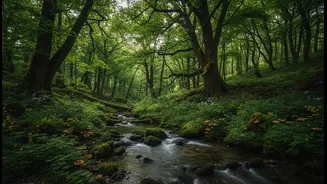
Beyond the food web, this new dynamic can also harm biodiversity within the plant kingdom itself. Not all tree species respond to increased CO2 in the same way. Fast-growing, carbon-hungry species may thrive and expand, outcompeting slower-growing species that are often crucial for a balanced ecosystem. This can shift a diverse, resilient forest towards a more uniform, monotonous state. A forest with fewer types of trees is less resilient to threats like disease, pests, and drought. Moreover, recent research shows a strong global link between tree species richness and a forest's overall photosynthetic capacity. Therefore, losing that diversity could eventually compromise the forest's ability to store carbon in the long run.
Redefining a Healthy Forest
This complex reality forces us to rethink how we measure the health of a forest. Simply looking at satellite images and celebrating 'greening' is not enough. A truly healthy forest is not just a collection of fast-growing trees; it's a complex, interconnected system defined by its biodiversity, nutrient cycles, and resilience. Recent studies have even shown a decoupling of photosynthesis and growth; trees can continue absorbing CO2 long after they have stopped adding woody biomass for the season. This suggests that much of the extra carbon being absorbed might not be locked away in long-lasting wood but used for short-term processes, a finding that could reshape climate models. True conservation, therefore, must focus on protecting and restoring the intricate web of life, from the microbes in the soil to the diversity of tree species, that makes a forest robust.