


The Global Grounding of 2010
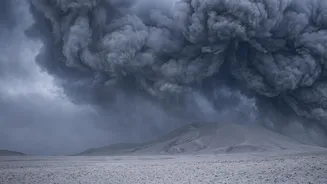
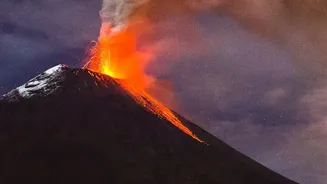
In April 2010, a volcano in Iceland with a nearly unpronounceable name—Eyjafjallajökull—became a household word. It wasn't the eruption's explosive power that was historic, but the colossal disruption it caused. As a vast plume of fine volcanic ash billowed
into the upper atmosphere, it drifted directly over Europe, home to some of the world's busiest airspace. The concern was that the abrasive ash particles could melt in jet engines, causing them to fail. Precautionary measures led to an unprecedented shutdown of European airspace for six days. Over 100,000 flights were cancelled, stranding millions of passengers and halting global commerce. The airline industry lost an estimated $1.7 billion, and the ripple effects were felt worldwide. Kenyan farmers had to destroy tonnes of fresh flowers that couldn't be flown to European markets, while manufacturers like BMW faced production stoppages due to interrupted supply chains. The event was a stark lesson in the fragility of our interconnected world, demonstrating how a single, remote event could trigger a global logistical crisis.
The Atmospheric Shockwave of 2022
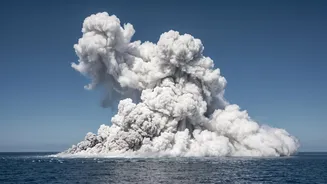
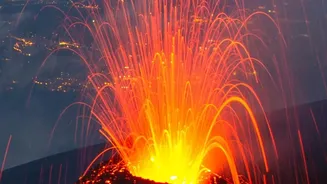
The eruption of the Hunga Tonga-Hunga Haʻapai submarine volcano in January 2022 was, by many measures, the largest of the 21st century. Its explosion was hundreds of times more powerful than an atomic bomb and sent a pressure wave that circled the Earth multiple times. But its most significant impact was invisible. The blast injected an unprecedented amount of water vapour—equivalent to over 58,000 Olympic-sized swimming pools—directly into the stratosphere, something never before observed on this scale. This massive injection of water, a potent greenhouse gas, had scientists concerned about its potential to temporarily warm the Earth's surface. However, subsequent analysis showed its effect on global temperatures was minor, while it caused a temporary cooling in the stratosphere. The event also provided a unique natural laboratory, revealing surprising chemical reactions, including the rapid formation of ozone-depleting aerosols and even a process that broke down some of its own methane emissions. Hunga Tonga provided invaluable data, forever changing our understanding of how submarine eruptions interact with our atmosphere.
The Human Cost on Densely Populated Slopes
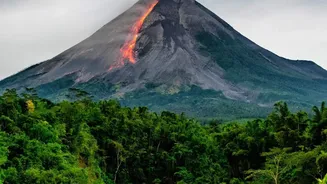
While some eruptions capture global attention for their atmospheric or economic effects, others are defined by their devastating human toll. The 2010 eruption of Mount Merapi in Indonesia was one such event. Located in a densely populated region of Java, the eruption displaced 350,000 people and resulted in over 350 fatalities. Unlike the ash cloud of Eyjafjallajökull, Merapi's danger came from pyroclastic flows—fast-moving currents of hot gas and volcanic matter—that swept down its slopes. The eruption buried entire villages and dramatically altered the landscape, forcing communities to rebuild and re-evaluate their relationship with the active volcano. The disaster highlighted the acute vulnerability of populations living in the shadow of active volcanoes. It also sparked long-term social and economic changes, as some farming communities transitioned to a new, booming tourism industry centred around the eruption's aftermath.
Lessons For a Volcanic Planet
Each major eruption of this century has served as a critical, if costly, learning experience. The Eyjafjallajökull crisis spurred major reforms in how aviation authorities assess and manage volcanic ash risks, leading to new guidelines that aim to prevent a similar total shutdown. The Puyehue-Cordón Caulle eruption in Chile in 2011, which also caused widespread air travel disruption in the Southern Hemisphere, reinforced the need for global coordination. Meanwhile, the incredible data gathered from the Hunga Tonga eruption is refining climate and atmospheric models for years to come. And the recurring tragedies at volcanoes like Merapi underscore the urgent, ongoing challenge of disaster preparedness and risk reduction for the millions who live near these powerful forces of nature. These events are not just historical footnotes; they are active drivers of scientific discovery and policy change.