







A Modern Welcome to the Top of the World
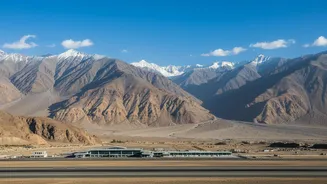
For years, arriving at Leh's Kushok Bakula Rimpochee Airport, one of the highest commercial airports globally, was a unique but often challenging experience. The existing infrastructure struggled to keep up with the soaring tourist numbers and strategic
importance of the region. Now, a state-of-the-art new terminal building is nearing completion, promising to redefine the travel experience to this Himalayan frontier. Spread over approximately 19,000 square metres, the new facility is a quantum leap from its predecessor, designed to handle a massive increase in passenger traffic efficiently and comfortably. This ambitious project is set to turn the airport into a world-class gateway that reflects both Ladakh's unique heritage and India's commitment to modernising its aviation infrastructure.
Upgrades You Can See and Feel
The headline features—more counters, carousels, lifts, and escalators—are just the beginning. The new terminal will feature up to 20 check-in counters and a modern inline baggage handling system to streamline the departure process. For arriving passengers, two spacious new baggage carousels will reduce the often-lengthy wait for luggage. To ensure smooth movement through the multi-level structure, the building is equipped with 15 lifts and 12 escalators, a significant upgrade that enhances accessibility. Phase II of the project includes plans for three aerobridges, which will allow passengers to board and deplane directly without exposure to the harsh weather, a much-needed comfort at an altitude of over 10,600 feet.
Boosting Capacity for a Growing Demand
The numbers behind the upgrade are impressive. The new terminal is designed to handle up to 3.5 million passengers annually, a dramatic increase from the previous capacity. During peak hours, it will be able to manage 2,000 passengers—1,000 arrivals and 1,000 departures simultaneously. This expansion will also allow for a tripling of flight operations, from the current 18 flights per day to a potential 54. This increased capacity is crucial for boosting tourism, which is a cornerstone of Ladakh's economy, and for providing reliable connectivity for residents and strategic movements.
Sustainable Design Meets Cultural Heritage
This isn't just another glass-and-steel structure. The airport's design is deeply rooted in Ladakhi culture, with architectural elements that reflect the region's Buddhist heritage. Visitors will be greeted by features inspired by local monasteries, stupas, and prayer wheels, offering an authentic glimpse into Ladakh's rich traditions from the moment they arrive. Furthermore, the project is a pioneer in sustainable technology. It will be among the first airports in India to use a hybrid system of geothermal and solar power for its heating, cooling, and hot water needs. A large-scale gradient floor heating system using geothermal energy and a 700 kWp rooftop solar plant will significantly reduce the airport's carbon footprint, a vital consideration in this ecologically sensitive region.
When Will It Be Ready?
The project, whose foundation stone was laid in early 2019, has seen revised timelines due to the pandemic and challenging working conditions. However, construction has been progressing at a fast pace. As of July 2026, the project was reported to be 83% physically complete. More recent updates from August 2026 indicate that the majority of the construction work is expected to be finished by September 15, 2026. While earlier targets aimed for a July 2026 opening, officials are now working diligently to complete the remaining interior finishing, utility integration, and landscaping to make the terminal operational as soon as possible.