




From Mowers to Munchers
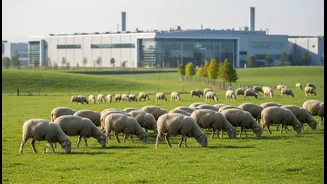
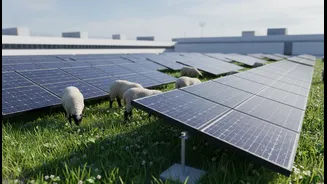
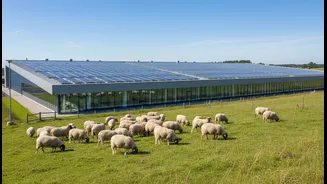
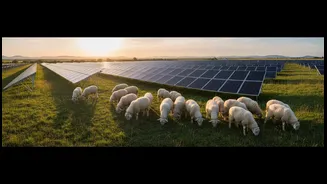
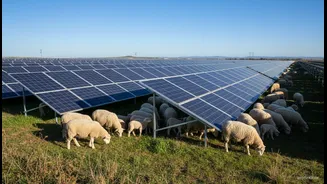
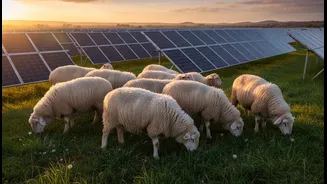
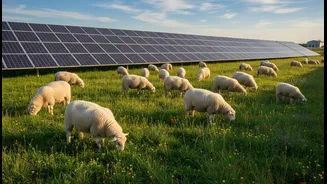
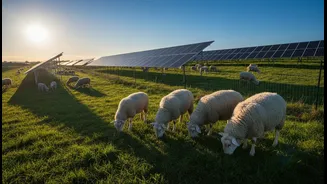
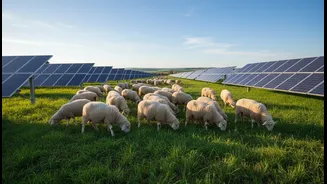
At Volkswagen's manufacturing plant in Poznań, Poland, the familiar buzz of lawnmowers has been replaced by the quiet munching of 100 sheep. These new woolly employees are tasked with keeping the grass short beneath more than 31,000 solar panels. This
solar farm, which helps power the production of vehicles like the VW e-Crafter van, is now the site of an innovative experiment in what's known as agrivoltaics. This approach, which combines agriculture with solar energy production on the same piece of land, aims to solve a major challenge for renewables: land use conflict. Instead of seeing solar panels and nature as competitors for space, Volkswagen's project treats them as partners.
What Exactly Are Agrivoltaics?
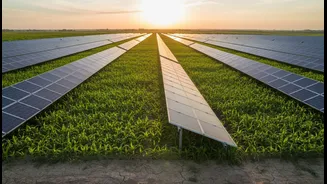
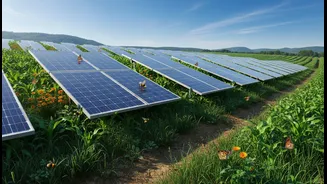
Agrivoltaics, also called dual-use solar, is the practice of co-locating solar panels and agricultural activities. This can take many forms, from growing shade-tolerant crops under elevated panels to creating habitats for pollinators or, as in VW's case, using livestock for grazing. The concept isn't just about efficient mowing; it creates a symbiotic relationship. The solar panels provide shade, which can protect crops and animals from extreme heat and reduce water evaporation from the soil. In turn, the plants or animals help manage the land, and the cooler microclimate created by vegetation can even increase the efficiency of the solar panels themselves. This dual-use strategy can boost land productivity by 60% or more compared to using separate plots for energy and agriculture.
More Than Just Green Energy
Volkswagen's Poznań project is more than a cost-saving measure on landscaping. It's a full-scale scientific study in partnership with Poznań University of Life Sciences. Researchers are closely monitoring how the sheep fare, as well as the project's impact on soil quality, vegetation, and the local microclimate. The early results are promising. The flock owner reports that the sheep feel safe and have adapted well, using the shade from the panels to their advantage. Marzena Pillich-Grońska, a director at Volkswagen Poznań, noted that the solar farm has become a place that supports biodiversity, local agriculture, and scientific research, proving that modern industry can work in harmony with nature.
A Boost for Biodiversity
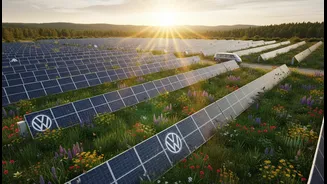
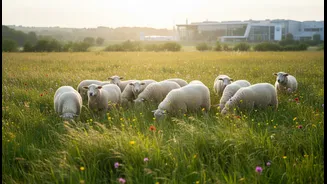
One of the most significant findings from agrivoltaics projects globally is the positive impact on biodiversity. By creating varied habitats, these sites can become havens for wildlife. Rather than a sterile field of panels, a well-managed agrivoltaic site can feature native grasses and wildflowers, attracting pollinators like bees and butterflies. These insects, in turn, support local bird populations. The relatively undisturbed environment provides shelter for small mammals, turning what could have been an industrial zone into a thriving ecosystem. Studies have shown that solar farms managed with biodiversity in mind can host a greater number and variety of species, including threatened ones, compared to surrounding agricultural land.
The Bigger Picture
As India pushes forward with ambitious renewable energy goals, the question of land use becomes increasingly critical. Large-scale solar projects are essential, but they can compete with land needed for farming and natural habitats. Agrivoltaics offers a promising path forward, turning a potential conflict into an opportunity for synergy. Volkswagen's experiment is part of a growing global movement demonstrating that we don't have to choose between clean energy and healthy ecosystems. By rethinking the design and purpose of solar farms, it's possible to generate electricity, support local agriculture, conserve water, and foster biodiversity—all on the same piece of land.