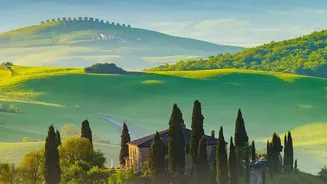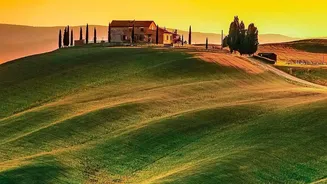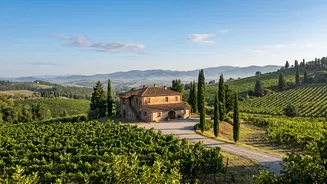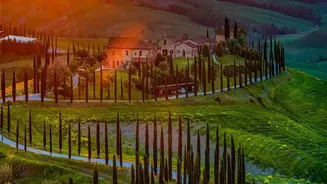


Planning Your Tuscan Drive
A successful, leisurely road trip through Tuscany begins with a little preparation. The best times to go are typically May, June, September, and early October, when the weather is pleasant and the summer crowds have thinned. Rent the smallest car that
will comfortably fit your party and luggage; narrow village streets and tight parking spots will make you glad you did. Before you set off, familiarise yourself with the term 'ZTL' (Zona a Traffico Limitato). These are restricted traffic zones in historic city and town centres, enforced by cameras. The golden rule for a stress-free trip is to park outside the ancient walls of any town you visit and explore on foot. This simple habit prevents nearly all driving-related headaches and fines that can arrive months after your holiday. Also, be sure to download offline maps, as mobile signals can be unreliable in rural valleys.
Florence to the Heart of Chianti
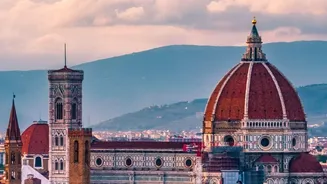
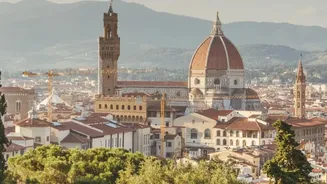
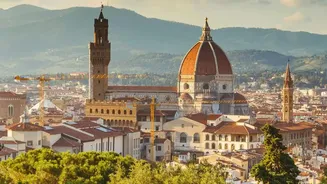
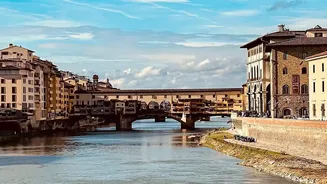
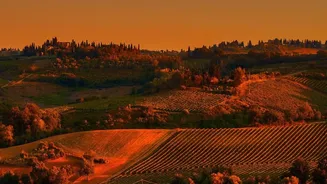
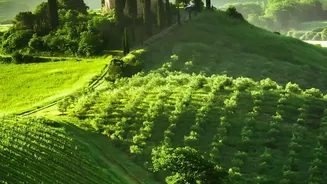
Begin your journey in Florence, the cradle of the Renaissance. After immersing yourself in its art and history for a few days, pick up your rental car (preferably at the airport to avoid driving in the city's ZTL) and head south. Your route is the famous SR 222, also known as the Via Chiantigiana, a road that winds through the heart of the Chianti Classico wine region. This isn't a highway for speed; it's a route for meandering. Your first major stop should be Greve in Chianti, often called the gateway to the region. Its unique, triangular main square, Piazza Matteotti, is lined with arcades, artisan shops, and cafes. A short, uphill walk or drive from Greve leads to the tiny, fortified medieval village of Montefioralle, which offers stunning panoramic views over the vineyards and olive groves.
Wandering Through Chianti's Hilltop Towns
Continuing south from Greve on the SR 222, the road invites you to explore a series of enchanting hilltop towns. Panzano, located about halfway between Florence and Siena, is a perfect spot for lunch, known for its incredible views and a famous butcher shop. Further along is Castellina in Chianti, a town with ancient Etruscan roots and a formidable medieval fortress. A must-do here is a stroll along the Via delle Volte, a covered stone walkway built into the town's walls that offers a unique perspective and cool shade. While towns like Radda and Gaiole in Chianti are also wonderful, the key is not to overschedule. Pick one or two villages to explore deeply, allowing time for a leisurely coffee in a quiet piazza or an impromptu wine tasting at a local estate. The true joy of this drive is found in these unhurried moments.
Medieval Towers and Fortified Walls
As you near Siena, two unforgettable stops lie just off the main path. The first is San Gimignano, a UNESCO World Heritage site famous for its skyline of medieval towers. While it can be busy, its historical significance and beauty are undeniable. A good tip is to arrive early or late in the day to avoid the main crush of tour buses. Climbing the Torre Grossa provides a breathtaking view of the town and surrounding Elsa Valley. Your next stop should be Monteriggioni. This perfectly preserved medieval fortress is encircled by intact defensive walls and 14 towers. It’s a small village you can walk through in under an hour, but stepping inside its gates feels like stepping back in time. It serves as a magnificent prelude to the grandeur of Siena, which is just a short drive away.
Siena: The Grand Finale
Upon arriving in Siena, park your car in one of the designated lots outside the city walls and embrace the final leg of your journey on foot. Siena, a historic rival to Florence, is a Gothic masterpiece built across three hills. Its heart is the magnificent, shell-shaped Piazza del Campo, where the famous Palio horse race is held twice a year. Dedicate at least two days to exploring Siena without a strict agenda. Wander through its narrow, winding streets, discover hidden courtyards, and marvel at the black-and-white striped Duomo, one of Italy's most spectacular cathedrals. The city is best experienced at a relaxed pace, allowing you to absorb the atmosphere that has captivated visitors for centuries. It’s the perfect, unhurried conclusion to a road trip designed to celebrate the journey itself.