





From Private Jets to Private Speeds
The traditional symbols of travel status—a lie-flat bed in first class, or the keys to a Gulfstream—are no longer the exclusive domain of the global elite. As wealth has broadened, so has access to these perks. For the new class of billionaires and millionaires,
many minted by the recent artificial intelligence boom and blockbuster IPOs like SpaceX's, differentiation is key. They aren't just looking for comfort; they're looking for an edge. And the ultimate edge is time. This shift has ignited a new race, not for more opulent cabins, but for technology that can shrink the globe, turning a 12-hour journey into a three-hour hop. The focus has moved from the luxury of the vehicle to the luxury of the schedule it enables.
The Supersonic Comeback
Leading the charge is a revival of supersonic travel, a concept dormant since the Concorde's retirement in 2003. Companies like Boom Supersonic are developing airliners designed to fly at speeds of Mach 1.7, more than twice as fast as today's commercial jets. Their Overture aircraft aims to connect cities like New York and London in under four hours, with an all-business-class cabin. Major carriers including United and American Airlines have already placed orders and pre-orders, signaling confidence that a market exists for those willing to pay a premium to save hours. Boom projects its jets could service over 600 profitable routes, making supersonic flight a viable, if expensive, reality by the end of the decade. The target audience is clear: those for whom time saved is worth more than the price of the ticket.
Hypersonic and Earth-to-Earth Rockets
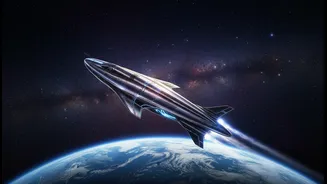
Beyond supersonic lies the even more ambitious realm of hypersonic flight and rocket travel. Atlanta-based startup Hermeus is developing autonomous aircraft for defense applications that could eventually lead to passenger travel at speeds exceeding Mach 5. After successful supersonic test flights of its Quarterhorse prototypes, the company is aiming to push the boundaries of high-speed travel. But the most audacious vision comes from SpaceX. The company's Starship, designed for missions to the Moon and Mars, has a secondary, Earth-bound application: point-to-point travel. Elon Musk has touted the ability to fly between any two points on the globe in under an hour, for example, turning the Los Angeles to New York slog into a 25-minute trip. While the technological and regulatory hurdles are immense, the concept represents the absolute pinnacle of speed, transforming global travel into a series of short-haul hops for those who can afford it.
Fueled by the AI Gold Rush
This demand for speed is being supercharged by a massive wealth creation event: the AI revolution. Recent analyses show the AI boom has created dozens of new billionaires and hundreds of thousands of millionaires from soaring company valuations and stock options. This new money, concentrated in tech hubs like San Francisco, is being spent differently. The new tech elite often prioritizes experiences, innovation, and efficiency over traditional luxury goods. Instead of just buying another supercar, they're investing in a professional volleyball team or buying meteorites. For this demographic, a jet that cuts a trip from eight hours to three isn't an indulgence; it's a productivity tool and a symbol that they are at the forefront of the future. The surge in private jet flights and shared ownership programs, particularly out of tech-heavy regions, is an early indicator of this trend.
Time as the Ultimate Commodity
Ultimately, the race for speed is about the monetization of time, life's only non-renewable resource. For an executive or investor, saving eight hours on a round trip across the Pacific is more than just a convenience; it's an extra day of work, an extra meeting, or an evening at home with family. As one observer put it, true luxury is the ability to own your time. The emerging technologies from SpaceX, Boom, and Hermeus are not just selling transportation; they are selling the ability to compress geography and master the clock. While the dream of flying from Dubai to Bangkok in 27 minutes is still on the horizon, the fortunes being built in the world of AI are creating a powerful customer base ready to make it a reality.