



First, A Quick Guide to Ripeness
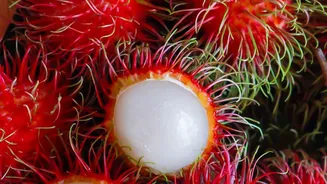
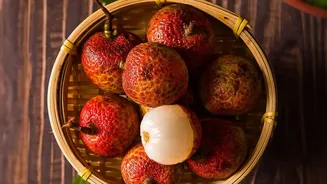
Before we dive into varieties, let's talk about ripeness. Lychees are non-climacteric fruits, which means they don't ripen after being picked. So, what you see is what you get. For any variety, look for a vibrant, uniform colour. The skin should be firm
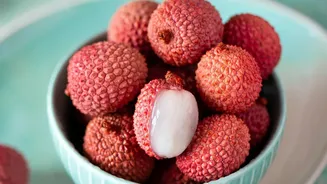
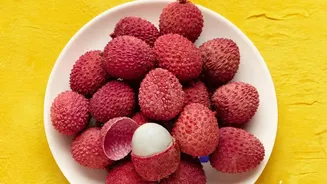
but yield to gentle pressure. If it’s rock-hard and green, it's unripe and will taste bitter. If it's mushy or has dark brown spots, it’s likely overripe. A sweet, floral fragrance is also a great indicator of a delicious, ready-to-eat fruit. The bumps on the skin, called tubercles, also flatten out as the fruit swells with juice, signalling peak ripeness. Now, let’s look at how colour signals the specific variety.
Shahi: The Crimson Royal
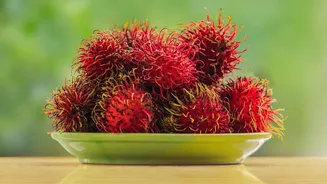
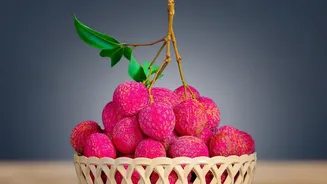
Perhaps the most celebrated lychee in India, the Shahi from Muzaffarpur, Bihar, is a true showstopper. It boasts a stunning crimson-red colour, often with deep red tubercles on what can start as a greenish background. This GI-tagged variety is known for being incredibly juicy and sweet, with a pulp that almost melts in your mouth. Its signature feature is a distinct rose-like aroma that has earned it the nickname 'Rose Scented' in some circles, although a separate 'Rose Scented' variety also exists. Shahi lychees are typically oval or heart-shaped and are one of the first to arrive in May, kicking off the season in grand style.
China: The Orange-Red Contender
Also hailing from the Muzaffarpur region, the China (or 'Chini') variety offers a different experience. Its colour is a mixture of red and orange hues, making it less uniformly red than the Shahi. The fruits are more globe-shaped or rounded compared to the Shahi's conical form. While the Shahi is prized for its melt-in-the-mouth texture, the China variety is known for its intense sweetness, making it a favourite for desserts. It tends to ripen around the same time as the Shahi, leading to a friendly rivalry in the marketplace, but is generally considered slightly less sweet and juicy than its royal counterpart.
Dehradun: The Bright Rose-Pink Delight
Grown in the foothills of Uttarakhand, the Dehradun lychee is famous for its attractive bright rose-pink shell. These medium-sized, heart-shaped fruits are valued for their juicy pulp and pleasant, sweet flavour. The pulp is typically greyish-white and soft. While it’s considered a premium variety, it has one weakness: the skin is susceptible to cracking, especially with changes in weather. This variety, which sometimes goes by 'Dehra-Rose', ripens later in the season, typically in the third week of June, extending the lychee love for a few more precious weeks.
Purbi and Kasba: The Shades of Plum and Brown
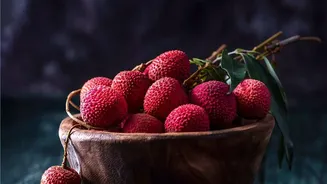
Venturing into deeper colours, we find varieties like Purbi and Kasba from Eastern Bihar. The Purbi ripens with red tubercles on a pinkish-brown background, giving it a muted, dusky look. It's known for having a wonderful balance of sweetness and tartness. The Kasba, on the other hand, is heart-shaped and develops red tubercles on an overall reddish, sometimes deep reddish, background that can approach a plum-like hue at full maturity. These varieties showcase the true diversity of the lychee's colour palette, proving that great flavour isn’t limited to bright reds and pinks.
Gulabi: The Late-Season Pink
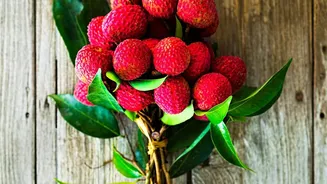
As its name suggests, the Gulabi lychee has a distinct pinkish hue. Specifically, it matures with mandarin red tubercles on a shrimp-red or carmine-red background, giving it a vibrant and multi-toned appearance. This late-season variety, ripening in the last week of June, is known for being a prolific producer. The pulp is firm and sweet, making it a delightful end to the lychee season. It's primarily grown in North India, offering one last chance to enjoy fresh lychees before the monsoon fully sets in.