




What is V2V Communication?
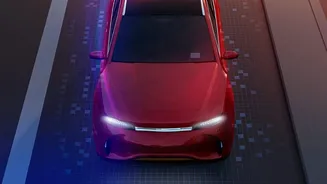
At its heart, Vehicle-to-Vehicle (V2V) communication is a system that allows cars to talk to each other wirelessly. Think of it as a social network for vehicles, but instead of sharing updates, they share critical safety information. Using a dedicated,
short-range radio signal, cars can broadcast and receive data about their speed, position, direction, and braking status multiple times per second. This creates a 360-degree awareness of the immediate traffic environment, extending far beyond what a driver can see or what a car's individual sensors can detect. The entire process is anonymous and designed to not track the vehicle or driver, focusing solely on exchanging safety messages to prevent collisions.
Giving Your Car X-Ray Vision
The true magic of V2V lies in its ability to 'see' the invisible. Current Advanced Driver-Assistance Systems (ADAS) rely on cameras and radar, which are limited by line of sight. They can't see through other cars or around buildings. V2V overcomes this by using radio waves that can travel around corners and through obstructions. This means a V2V-equipped car can receive a warning about a vehicle that has braked suddenly several cars ahead in traffic, even if it's completely blocked from view. It could also be alerted to a car about to run a red light at an intersection that is obscured by a large building. This provides precious extra seconds for the driver—or the car's automated systems—to react and avoid a potential disaster, effectively giving the vehicle a form of 'x-ray vision' for nearby traffic.
A Potential Game-Changer for Indian Roads
In a country with some of the world's most challenging and congested roads, the benefits of V2V are immense. India faces a tragic number of road fatalities annually, many of which are caused by poor visibility and delayed reaction times. V2V technology could directly address many common accident scenarios. For instance, it could warn drivers on winding ghat roads of an oncoming vehicle, alert a car entering a highway about fast-approaching traffic, or prevent pile-ups caused by a single vehicle braking suddenly. The Indian government has taken note, proposing a mandate for V2V systems in new vehicles. Recent draft notifications suggest a phased rollout, potentially starting with voluntary compliance in 2027 and becoming mandatory for all new cars, two-wheelers, and commercial vehicles by October 2028.
The Technology Behind the Talk
The system works using either Dedicated Short-Range Communications (DSRC) or Cellular Vehicle-to-Everything (C-V2X) technology. DSRC is an older standard based on Wi-Fi, while C-V2X uses modern cellular technology for more robust connections. India's proposed standard, AIS-230, is based on C-V2X technology. The government has already set aside a specific radio frequency band (5.9 GHz) for this purpose, ensuring that these crucial safety messages don't have to compete with mobile phone data or other signals. This dedicated channel allows for extremely fast and reliable communication, which is essential when a few milliseconds can be the difference between a close call and a collision.
Roadblocks to a Connected Future
Despite its massive potential, a nationwide rollout in India faces significant hurdles. The primary challenge is the 'network effect'; the system is only truly effective when a large majority of vehicles on the road are equipped with it. There's also the cost. Initial estimates suggest the onboard unit could add ₹5,000 to ₹7,000 to a vehicle's price, a considerable amount in India's price-sensitive market. Automakers will need time to integrate and test the systems to ensure all cars, regardless of brand, can communicate with each other seamlessly—a major challenge of interoperability. Finally, concerns about data privacy and cybersecurity must be addressed to ensure that this safety-critical information cannot be hacked or misused.