




Understanding the Gold Standard
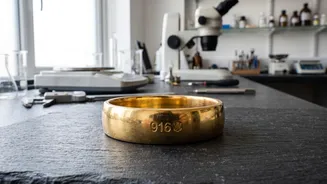
For generations, Indian families have relied on hallmarks as a guarantee of gold purity. The most sought-after standard is '916 gold', which signifies that the item is 22-karat, or 91.6% pure gold. The remaining 8.4% consists of other metals like silver
or copper, added to give the jewellery strength and durability, as 24-karat pure gold is too soft for intricate designs. The Bureau of Indian Standards (BIS) is the government body that regulates these purity standards. To bring more transparency and traceability into the system, the BIS made hallmarking mandatory and introduced a new system called HUID.
What is HUID and Why Does It Matter?
HUID stands for Hallmark Unique Identification. It is a six-digit alphanumeric code that is unique to every single piece of jewellery. Think of it as an Aadhaar card for your ornament. This code is laser-engraved onto the jewellery at a government-approved Assaying and Hallmarking Centre (AHC) after it has been tested for purity. Since April 1, 2023, it has been mandatory for all new gold jewellery to carry a HUID mark along with the BIS logo and the purity grade (e.g., 22K916). This system creates a digital trail for each item, linking it to the jeweller and the testing centre, making it much harder for fraudulent items to enter the market.
The Reported Purity Concerns
Despite the robust HUID system, recent reports and industry discussions have raised alarms about potential loopholes. Concerns have emerged about instances where the purity stated on the hallmark does not match the actual gold content. Some investigative reports allege that sophisticated methods of adulteration are being used, where cheaper heavy metals like rhenium are mixed with gold. This adulterated gold can reportedly pass some initial purity tests, but the final product has a lower gold content than the 22-karat (91.6%) standard promised to the customer. These allegations have prompted calls for increased consumer awareness and stringent verification at the time of purchase.
Your Defence: The BIS CARE App
As a consumer, your most powerful tool is the official 'BIS CARE' app, provided free by the Bureau of Indian Standards. It allows you to verify the HUID of any piece of jewellery in seconds. Simply download the app from the Google Play Store or Apple App Store, register with your mobile number, and select the 'Verify HUID' option. You will need to carefully enter the six-character code engraved on the jewellery. Most jewellers will provide a magnifying glass to help you read the tiny laser inscription.
How to Read the Verification Results
Once you enter the HUID, the app should display crucial details about the item. You should check the following information: the jeweller's name and registration number, the AHC that certified the piece, the article type (e.g., ring, chain), and, most importantly, the declared purity. Ensure that the purity displayed in the app (e.g., 22K916) matches what is stamped on the jewellery and what the seller has told you. If there is any mismatch, or if the HUID is not found in the database, it is a major red flag. Do not proceed with the purchase until the jeweller provides a clear and satisfactory explanation.
What to Do if You Find a Mismatch
If you discover a discrepancy after purchase or suspect the purity is not as stated, you have recourse. The BIS CARE app itself has a section for lodging complaints. You can report the issue with the HUID details and a copy of your purchase bill. According to BIS rules, if a hallmarked item is found to have a lower purity than marked, the customer is entitled to compensation. This compensation can be up to two times the value of the purity difference. You can also get your jewellery tested at any BIS-recognized Assaying and Hallmarking Centre to get an official report. This empowers you to hold sellers accountable and protect your investment.