



An Insurance Crop for a Changing Climate
Grass pea, or Lathyrus sativus, is an incredibly hardy plant. It's what agricultural scientists call an 'insurance crop' because it can produce a reliable yield even when other staples like wheat or rice fail. Its defining feature is its tolerance to extreme
weather—it can withstand prolonged drought and survive in waterlogged fields. This makes it an ideal candidate for climate-smart agriculture, especially in regions of India prone to erratic monsoons. Furthermore, grass pea is a legume that fixes atmospheric nitrogen, reducing the need for expensive synthetic fertilizers and improving soil fertility for subsequent crops. Its deep root system allows it to grow in a wide range of poor-quality soils, making it a low-input, high-resilience option for farmers.
The Dark Side of a Wonder Crop
Despite its agricultural benefits, grass pea has a controversial history. Known locally as khesari dal, its sale for human consumption has been prohibited in India since 1961. The reason is a neurotoxin called ODAP (β-N-oxalyl-L-α,β-diaminopropionic acid) naturally present in the seeds. Prolonged and excessive consumption of traditional, high-ODAP varieties as a staple food, often during times of famine when little else is available, can lead to a debilitating, irreversible neurological condition called neurolathyrism. This disease causes paralysis of the lower limbs, characterized by muscle stiffness and weakness. This risk is why the crop, despite its resilience, became stigmatized and its use restricted, even as cultivation for animal fodder continued.
A Path to Redemption Through Science
The story of grass pea is now entering a new chapter, thanks to dedicated scientific research. For decades, plant breeders have been working to develop new varieties with significantly lower levels of the ODAP neurotoxin. These efforts have been successful, resulting in the creation of low-toxin varieties like 'Ratan', 'Prateek', and 'Mahateora' in India, which contain less than 0.1% ODAP. Scientists are also exploring methods to reduce the toxin further, potentially to zero, by using modern genetic tools and cross-breeding grass pea with its wild relatives that have naturally low or no ODAP. In addition to breeding, simple processing methods like soaking, cooking thoroughly, or fermenting can also help reduce the toxin levels in the seeds, making them safer for consumption.
Nutritional Powerhouse and Future Food
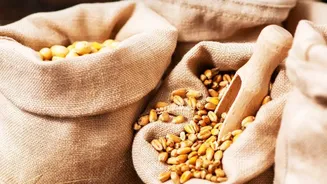
Beyond its resilience, grass pea is a nutritional powerhouse. Its seeds are rich in protein, with content ranging from 18% to 34%, which is higher than field peas and faba beans. They are a good source of essential amino acids like lysine, though they are low in others like methionine. This makes grass pea a valuable tool in combating protein malnutrition, especially in low-income communities. As researchers work to ensure its safety, the crop is being rediscovered for its potential in a variety of foods, from traditional dals and stews to innovative products like protein-rich crackers and flours. It also contains L-homoarginine, a compound studied for potential benefits in cardiovascular health.