

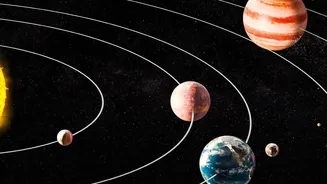


A Groundbreaking Arrival
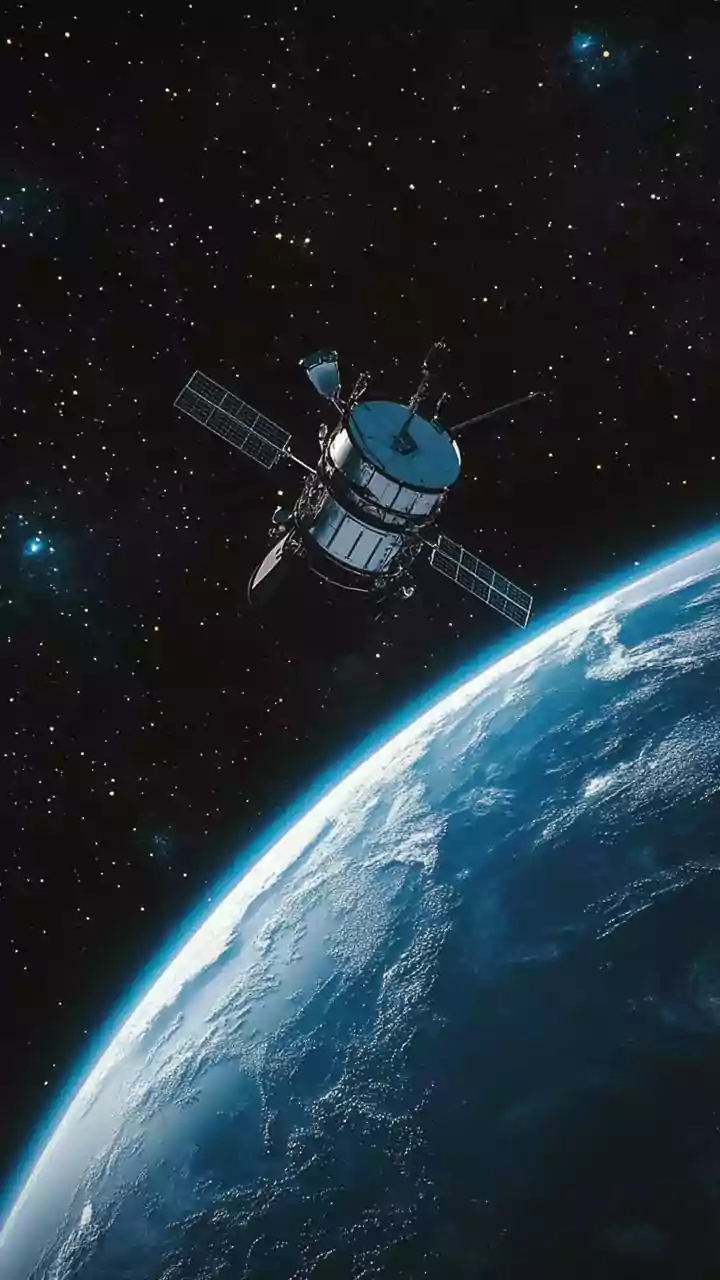
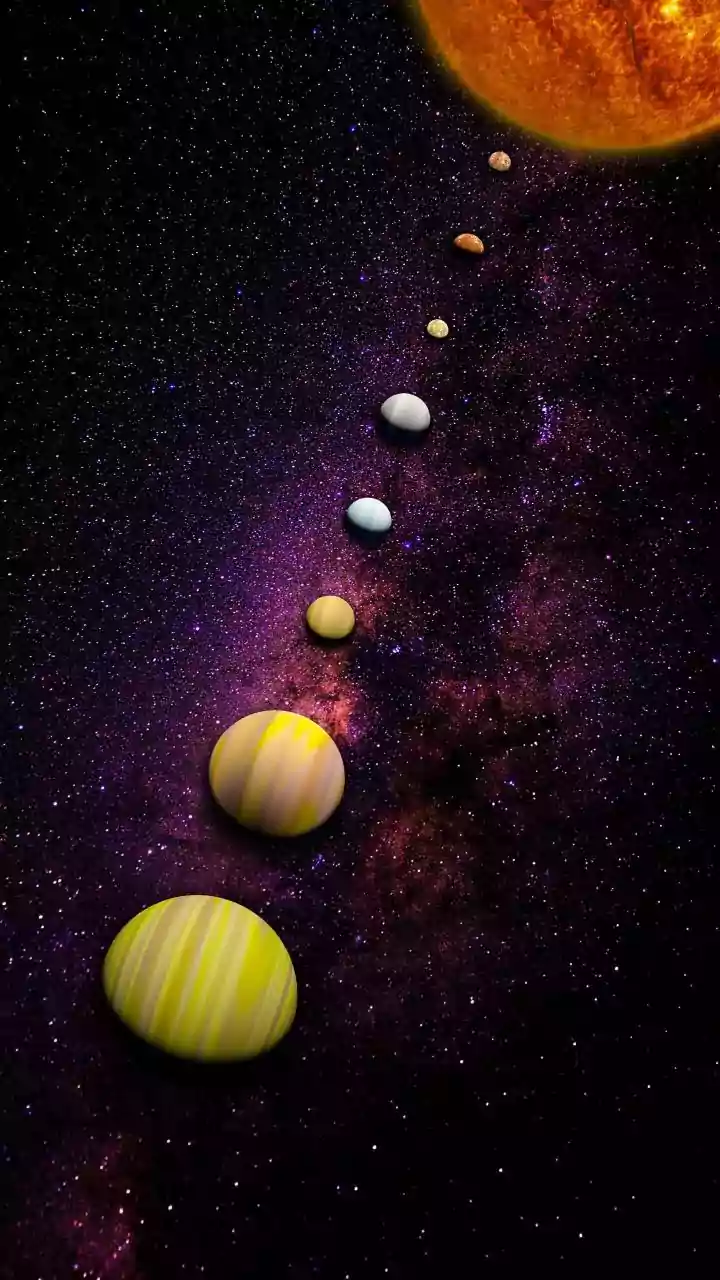
After launching in October 2021, the Lucy probe has spent half a decade navigating the solar system, using Earth for gravity assists to build momentum. As of late 2026, it has successfully reached the L4 Lagrange point, a gravitationally stable region
in space where thousands of asteroids lead the giant planet Jupiter in its orbit around the sun. This marks a major milestone for the $981 million mission, which is now on the cusp of its primary scientific phase. While the spacecraft has already performed successful flybys of main-belt asteroids Dinkinesh in 2023 and Donaldjohanson in 2025, the main event is about to begin. The team at NASA is preparing for the first close encounter with a Trojan asteroid, scheduled for August 2027.
What Are the Trojan Asteroids?
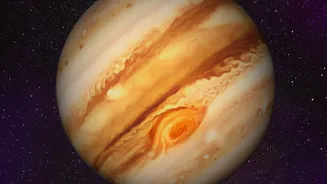
The Trojan asteroids are two large groups of space rocks that share Jupiter's orbit. One group, known as the 'Greek camp', travels about 60 degrees ahead of Jupiter at the L4 Lagrange point. The other, the 'Trojan camp', trails the planet at the L5 point. These locations are unique gravitational sweet spots where the pull of the Sun and Jupiter balances out, trapping these asteroids for billions of years. Because of this stability, scientists consider the Trojans to be 'fossils' of planetary formation. They are believed to be leftover materials from the creation of the outer planets like Jupiter, Saturn, Uranus, and Neptune, preserved in a deep freeze far from the sun. Studying them up close is like opening a time capsule from over four and a half billion years ago.
Lucy's Epic Itinerary
Lucy's tour is unprecedented, aiming to visit a record-breaking number of asteroids. Now that it has entered the Greek camp, its schedule is packed. The first official Trojan flyby will be (3548) Eurybates and its small satellite, Queta, in August 2027. This will be followed just a month later, in September 2027, by a visit to (15094) Polymele, which also has its own moonlet. In 2028, Lucy will encounter (11351) Leucus in April and (21900) Orus in November. This diverse set of targets includes different types of asteroids—classified as C-type, P-type, and D-type—which have different compositions and colors, suggesting they may have formed in different parts of the solar system before being captured in their current orbits.
The Science of Discovery
The mission, named after the fossilized human ancestor 'Lucy', aims to revolutionize our understanding of our solar system's origins. Onboard the spacecraft are a suite of powerful instruments designed to map the asteroids in incredible detail. A high-resolution imager (L'LORRI), a color camera and infrared spectrometer (L'Ralph), and a thermal infrared spectrometer (L'TES) will work together to achieve the mission's goals. NASA scientists plan to map the geology, color, and composition of each asteroid's surface. They will look for minerals, ice, and organic materials, while also determining the asteroids' mass, density, and internal structure. The team will also be on the lookout for any undiscovered rings or satellites. Each piece of data will help scientists piece together the story of how planets form.
What Comes Next?
Even after completing its tour of the Greek camp in 2028, Lucy's journey is far from over. The spacecraft will use another gravity assist from Earth in 2030 to slingshot itself across the solar system toward Jupiter's trailing swarm of asteroids. In March 2033, Lucy will arrive at the L5 point to perform its grand finale: a flyby of the fascinating binary pair (617) Patroclus and Menoetius, two large asteroids orbiting each other. This 12nd year mission is a complex, longnd term investment in fundamental science, pushing boundaries of exploration to answer some of biggest questions about where we came from.