







An Unprecedented Tech Gold Rush
The generative AI boom has ignited a global arms race, but the weapons are not tanks or planes; they are servers, semiconductors, and data centers. The headline claim of "hundreds of billions" is not an exaggeration. Analyst firms are tracking a massive
surge in capital expenditure from the world's largest technology companies. According to IDC, spending on AI infrastructure alone, which includes servers and storage, is forecast to hit $487 billion in 2026, a 53% jump from the previous year. Other analysts, like Gartner, take a broader view, projecting total AI spending—including software and services—to reach a colossal $2.7 trillion in 2026. Of that total, AI infrastructure is the single largest component, expected to be nearly $1.5 trillion. This spending spree represents what Gartner analyst John-David Lovelock calls "the largest infrastructure project humanity has ever undertaken."
What Exactly Is AI Infrastructure?
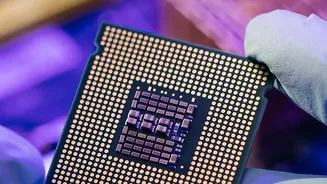
At its core, AI infrastructure is the physical foundation required to train and run complex artificial intelligence models. The vast majority of the cost, around 60%, is for the specialised computer chips, primarily Graphics Processing Units (GPUs), that are uniquely suited for the parallel processing AI requires. These powerful chips are housed in AI-optimized servers, which make up the bulk of infrastructure spending. The rest of the investment goes into building and equipping massive data centers— sprawling, high-tech warehouses filled with rows upon rows of these servers. This includes the physical construction, advanced networking gear to connect everything, and, crucially, the enormous power and cooling systems needed to keep the hardware from overheating. The cost is immense, with a single large AI data center potentially costing billions of dollars to build and equip.
The Titans of Tech Are All In
This investment is being led by a handful of 'hyperscale' companies: Amazon, Google, Microsoft, and Meta. Their capital expenditure plans for 2026 are astronomical. Combined, these four giants are expected to spend over $700 billion on AI infrastructure in 2026, a massive increase from previous years. Amazon is projected to lead the pack with around $220 billion in capital expenditure, followed by Google and Microsoft. This spending is a strategic necessity. Companies are locked in a fierce competition to build the most powerful AI models, like OpenAI's GPT series (backed by Microsoft) and Google's Gemini, and to offer the most capable AI services through their cloud platforms like AWS, Azure, and Google Cloud. The goal is to capture a dominant share of a market that Bain & Company estimates will need to generate nearly $6 trillion in annual revenue to justify the current buildout.
The Hidden Costs: Power and Planet
Beyond the eye-watering cost of chips and construction lies a growing challenge: energy consumption. AI data centers are incredibly power-hungry. By 2030, electricity consumed by data centers could match the entire current usage of India, the world's third-largest electricity user. The International Energy Agency projects that global electricity demand from data centers could double between 2022 and 2026, largely fueled by AI. This places an enormous strain on national power grids, sometimes forcing utility companies to undertake costly upgrades that can be passed on to all consumers. Furthermore, the environmental impact extends to water, which is used extensively for cooling these facilities. The UN has warned that by 2030, the water footprint of AI could equal the annual domestic needs of 1.3 billion people, raising serious sustainability questions.