


Two Paths for an Icon
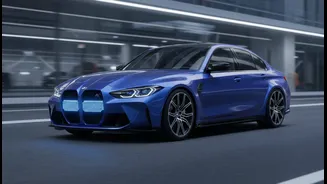
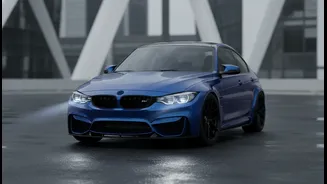
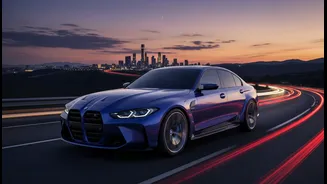
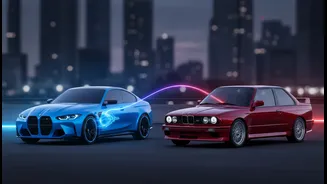
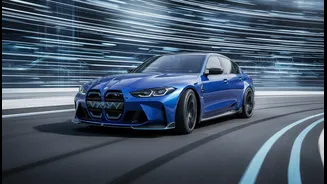
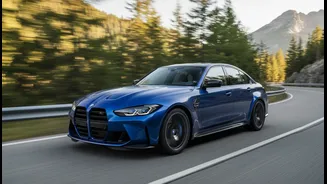
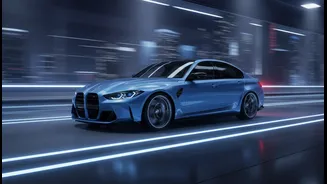
The BMW M3, a legend born on the racetrack, is approaching a monumental fork in the road. As the automotive world pivots to electrification, BMW’s M division is preparing not one, but two distinct successors to the current M3. One will be an all-electric
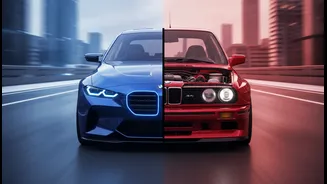
powerhouse built on the new 'Neue Klasse' architecture, expected to arrive in 2027. In a surprising move, however, BMW M boss Frank van Meel has confirmed that a petrol-powered M3 will also continue, featuring a revised version of the beloved S58 inline-six engine to meet new emissions standards. This dual-path strategy is a significant statement from BMW. It acknowledges the inevitable electric future while refusing to abandon its combustion-engined heritage just yet. Instead of forcing its loyal fanbase into an electric-only future, it’s giving them a choice, effectively pitting the old guard against the new in a battle for the M3's soul.
The Promise of Electric Performance
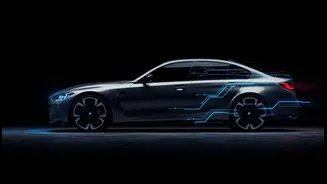
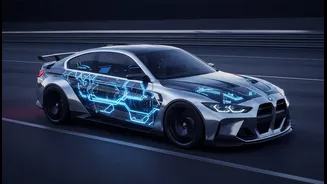
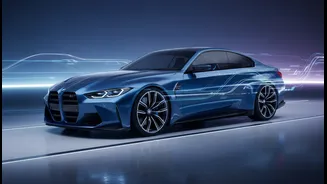
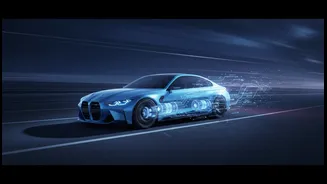
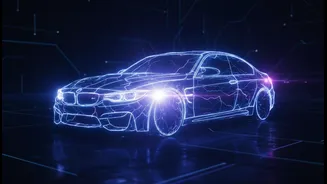
The all-electric M3, previewed by the striking M Concept Neue Klasse, is poised to redefine performance benchmarks. It will be a technological showcase, featuring a quad-motor setup—one for each wheel—and a sophisticated control unit that BMW insiders have nicknamed the 'Hand of God'. This system will allow for instantaneous and incredibly precise torque vectoring, managing power delivery within milliseconds to maximize grip and agility. While official figures are still under wraps, rumors suggest a power output that could approach 1,000 horsepower, all supported by an 800-volt architecture for rapid charging and a battery pack exceeding 100 kWh. The goal isn’t just straight-line speed; BMW insists the focus is on creating a new dimension of driving dynamics and track-ready capability that surpasses even its legendary predecessors.
What is 'M-Car Character'?
The biggest question looming over the electric M3 isn't about its speed, but its soul. For enthusiasts, an M-car’s character is an emotional cocktail of sensations: the sound of a high-revving engine, the mechanical feedback through the steering and chassis, and the nuanced feel of a car on the edge of its limits. This is what BMW M CEO Frank van Meel identifies as the core challenge: ensuring drivers feel emotionally attached to the car. Every generation of M3 has faced skepticism, whether it was moving from four to six cylinders, adding turbochargers, or adopting all-wheel drive, but each has ultimately proven its merit. The leap to electric is the largest yet. Without the roar of an inline-six or the vibration of an engine, can an EV truly deliver the raw, visceral experience that has defined the M3 for over 35 years? The debate isn’t about performance, which is virtually guaranteed, but about feeling.
Can Electrons Replicate Emotion?
BMW’s engineers are acutely aware that raw power isn’t enough. Their task is to translate the beloved analogue sensations of driving into a digital format. The company is developing advanced synthetic sounds and even simulated gear shifts. The goal isn't just to mimic an old engine, but to provide the driver with crucial feedback. As van Meel explained, hearing gear changes helps a driver gauge speed and position on a track. The 'Hand of God' control system plays a vital role here, not just in maximizing performance but in shaping the car's personality. Engineers can program it to be heavily rear-biased, even allowing the front motors to be disengaged for a classic rear-wheel-drive feel. The mission is clear: use software to craft a driving experience that is not only fast and precise but also engaging and, crucially, feels like a true M car.
The Enthusiast's Dilemma
When the electric M3 arrives, it will present a fascinating dilemma. On one hand, it will offer a level of performance previously unimaginable in a production sedan. On the other, the traditional, combustion-powered M3 will still be available, likely complete with a manual transmission option that M division is fighting to keep. This sets up a direct choice: embrace the future with its staggering power and digital precision, or stick with the familiar analogue thrill of a petrol engine. The fact that the electric version will simply be called 'M3'—not 'iM3'—is a bold statement of intent from BMW. They believe it is a worthy successor. The ultimate verdict, however, will come from the enthusiasts who have built the M3 legend, deciding with their wallets whether the character of an M-car can be powered by electrons.