


A Lion in the Cosmos
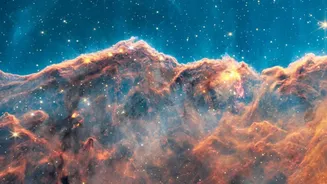
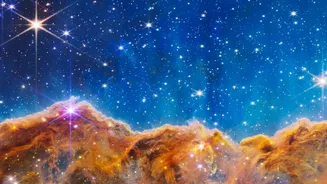
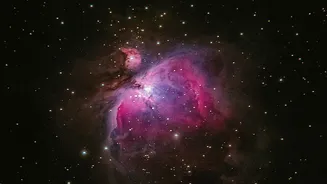
Located roughly 10,000 light-years away in the constellation Cepheus, the Lion Nebula is a vast cloud of glowing gas and dust. Its official designation is Sh2-132, but it earned its nickname because its swirling filaments and structures, particularly
when viewed in specific wavelengths of light, resemble the majestic mane of a lion. This is not an object you can spot with the naked eye; it is incredibly faint, requiring long photographic exposures to reveal its intricate beauty. The nebula itself is a dynamic region where new stars are being born, with the glowing gas primarily composed of hydrogen that has been energised by intensely hot, young stars within and nearby.
The Sculptor and the Interloper
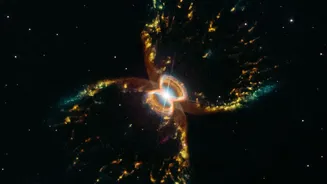
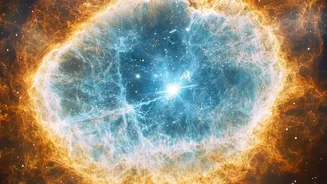
The story behind this image involves two key stellar characters. The first is a white dwarf, the super-dense remnant of a sun-like star that died long ago. When that star reached the end of its life, it puffed its outer layers into space, creating the beautiful, expanding shell of gas we now see as a planetary nebula. At the heart of this ghostly structure is the white dwarf, a tiny, hot core that continues to illuminate the material it once shed. However, the scene is complicated by a second, much more massive and brilliant star, a Wolf-Rayet star. These rare and volatile stars are nearing the end of their own, much more dramatic lives. They blast out powerful stellar winds that are now crashing into and reshaping the older nebula created by the white dwarf.
Anatomy of a Star's Final Act
For a star like our Sun, the end is a process that unfolds over millions of years. After exhausting the hydrogen fuel in its core, it swells into a red giant. Eventually, this bloated star can no longer hold onto its outer atmosphere, which drifts away to form a stunning, glowing structure called a planetary nebula—a somewhat misleading name, as it has nothing to do with planets. What remains at the center is the star's collapsed core: a white dwarf. A white dwarf is incredibly dense, packing the mass of a sun into a sphere roughly the size of Earth. It no longer generates new energy through fusion and simply spends billions of years slowly cooling down, like a dying ember from a cosmic fire.
A Cosmic Detective Story
NASA's latest image provides astronomers with a cosmic crime scene, allowing them to piece together a sequence of events spanning millennia. The vast, delicate shell of the nebula was created by the white dwarf in its final throes. Scientists can study this structure to understand the late stages of life for most stars in the universe, including the eventual fate of our own Sun. Meanwhile, the presence of the powerful Wolf-Rayet stars provides a glimpse into a different, more violent stellar endgame. The fierce winds from these massive stars are creating shockwaves and intricate bubbles within the older, more serene nebula, sculpting it into the complex lion's mane we see today. By observing these interactions, scientists can learn more about how stellar winds and radiation shape the interstellar medium, the very material from which future generations of stars will be born.