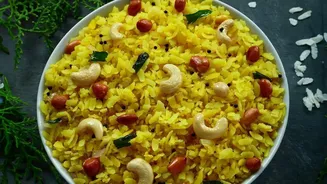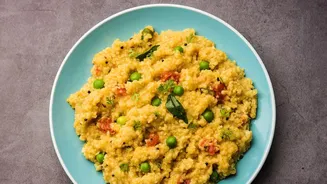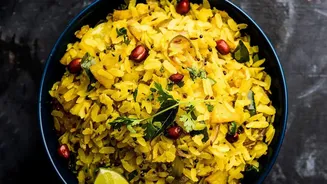


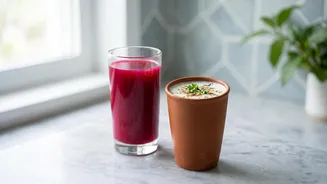

When you think of poha, your mind likely goes to the savoury breakfast staple, bustling with onions, peanuts, and spices. But there's a sweeter, equally enchanting version waiting to be discovered, one that promises warmth, comfort, and simple joy.
Beyond the Usual Kanda Poha
For
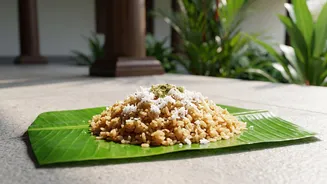
many across India, poha (flattened rice) is the go-to breakfast, a quick and nutritious start to the day. The most famous version is perhaps Kanda Poha, a Maharashtrian classic with onions, or its many regional savoury cousins. But poha’s versatility extends far beyond the savoury realm. Known as Vella Aval in Tamil Nadu or Gud Poha in other parts, the sweet variant is a beloved dish that transforms flattened rice into a comforting dessert or a wholesome snack. It’s a no-cook, or minimal-cook, recipe that brings together some of India's most cherished flavours in a single bowl.
The Holy Trinity of Flavour
The magic of sweet poha lies in its three core components. First, the jaggery ('gud' or 'vellam'), an unrefined cane sugar, lends a deep, caramel-like sweetness that is more complex than plain sugar. Next, fragrant green cardamom ('elaichi') provides its signature warm, aromatic notes that permeate the entire dish. Finally, freshly grated coconut adds a rich texture, subtle sweetness, and a delightful chewiness that rounds out every bite. Some recipes also call for a spoonful of ghee, which adds a layer of richness and helps bind the flavours together beautifully.
A Dish Steeped in Tradition
Sweet poha is more than just a quick snack; it holds cultural and religious significance. It is a popular 'prasadam' (devotional offering) during festivals, especially Krishna Janmashtami or Gokulashtami, which celebrates the birth of Lord Krishna. According to mythology, flattened rice was a favourite of Lord Krishna, and a simple offering of poha from his childhood friend Sudama is a well-known tale of friendship and devotion. This connection makes sweet poha a mandatory dish in many households during the festival, a symbol of simple, heartfelt offering.
Crafting Your Own Sweet Poha
Making sweet poha is remarkably simple. The first step is to prepare the poha itself. It's best to use the thick variety, which holds its shape better. Rinse the poha under cool water a couple of times until the water runs clear, then drain it completely. Avoid soaking it for too long, as it can become mushy. While the poha softens, you can prepare the sweetener. Some recipes involve melting powdered jaggery with a tiny amount of water to create a thick syrup, which is then strained to remove impurities. Others follow a 'no-cook' method, simply mixing high-quality powdered jaggery directly with the softened poha and grated coconut. Once the jaggery and poha are combined, the cardamom powder and fresh coconut are stirred in. The moisture from the coconut and the jaggery syrup will be absorbed by the poha, making it soft and flavourful.
Tips and Delicious Variations
To elevate your sweet poha, consider a few simple additions. A pinch of edible camphor can lend a divine, temple-like aroma, perfect for when you're making it as a festive offering. For extra texture and richness, you can add cashews and raisins fried in ghee until golden. You can also add other nuts like almonds or even sesame seeds for a nutty crunch. The key is to use fresh ingredients, especially the coconut, as its natural moisture is crucial for softening the poha in no-cook versions. Whether you follow a cooked-syrup method or a quick-mix approach, the dish comes together in minutes, offering instant gratification.