






The 2027 Milestone: What to Expect
Railway Minister Ashwini Vaishnaw has announced that trial runs for the country's first high-speed train are expected to begin by May or June 2027. These crucial tests will initially take place on a section of the corridor in Gujarat, where construction
is most advanced. The first stretch likely to see these trials is between Surat and Bilimora. Following a testing period of two to four months to ensure all systems are functioning perfectly, the first commercial services could be inaugurated. While the 2027 trials represent a huge step forward, it's important to note this is part of a phased rollout. The initial service will operate on a completed portion of the line, with the full 508-kilometre route between Mumbai and Ahmedabad expected to become fully operational at a later date, projected around 2029.
A Glimpse of the Future: The E5 Shinkansen
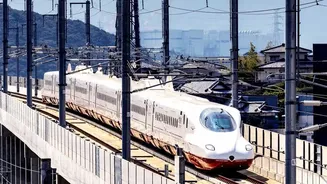
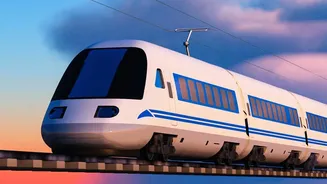
The trains running on this corridor will be based on Japan's famous E5 Series Shinkansen technology, renowned for its safety and punctuality. While the trains are capable of hitting 350 kmph, they are expected to operate at a speed of 320 kmph. This will dramatically slash travel time between Mumbai and Ahmedabad to just under two hours for limited-stop services, a journey that currently takes several hours by conventional rail. The sleek, aerodynamic design of the trains features a distinctive long nose to minimize noise and air resistance. Inside, passengers can expect modern amenities, ergonomically designed seating, and a quiet, comfortable ride. The trainsets for India will feature both executive and economy class configurations, with special provisions like extra-spacious toilets for wheelchair users and multi-purpose rooms.
Forging Ahead: Construction and Progress Update
The National High Speed Rail Corporation Ltd. (NHSRCL) is executing this monumental project, which has faced its share of challenges, including land acquisition and delays. However, work is now progressing at a rapid pace, particularly in Gujarat. As of late 2026, a significant portion of the civil works, including the construction of piers and the placement of girders for the elevated viaduct, has been completed. The Surat-Vapi section has seen all its civil works finished. Work is also advancing on the 12 stations along the route, with structural work completed at major hubs like Sabarmati, Ahmedabad, and Vadodara. In Maharashtra, a key feature is the construction of an approximately 21-kilometre undersea tunnel, a first for the country's railway system. The project utilises advanced Japanese construction techniques, including a specialised ballastless track system for high-speed stability.
Beyond Speed: The Economic and National Impact
The Mumbai-Ahmedabad corridor is more than just a transportation project; it's envisioned as a catalyst for economic growth and a symbol of a modernising India. The high-speed link between India's financial capital and a major economic hub is expected to boost business, trade, and tourism along the entire route. This project also serves as a blueprint for future high-speed rail networks planned across the country, including seven other potential corridors connecting major cities like Delhi, Varanasi, and Chennai. The emphasis on 'Make in India' means that while the initial trainsets will come from Japan, a growing portion of the manufacturing and technological expertise will be domesticated. The project is creating thousands of jobs and developing a skilled workforce capable of building and managing world-class infrastructure, aligning with the vision of an 'Atmanirbhar Bharat' or self-reliant India.