








Meet SOLVE: Gaganyaan’s Safety Testbed
SOLVE, which stands for Sub-Orbital Launch Vehicle for Experiments, is not designed to go into orbit. Instead, it serves a highly specific and critical purpose: to test the parachute system for the Gaganyaan crew module. Developed by the Indian Space
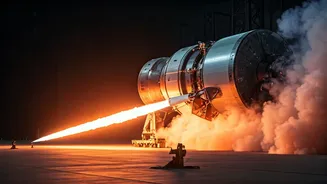
Research Organisation (ISRO), SOLVE is a dedicated test platform that will carry a mock crew module to an altitude of 10 to 17 kilometres. Once it reaches the target altitude, the module will separate and deploy a sequence of ten parachutes to slow its descent before splashing down in the sea. This process is essential for ensuring that astronauts can be brought back to Earth safely. The recent ground test, conducted on July 3, 2026, at Sriharikota, confirmed that the solid motor designed for SOLVE performed exactly as predicted, paving the way for these vital high-altitude drop tests.
Why a Straight Nozzle Matters
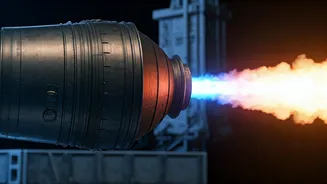
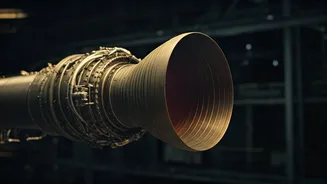
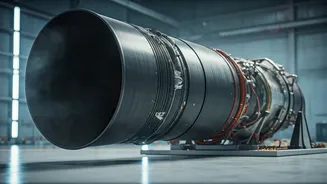
The SOLVE motor is a modified version of the reliable strap-on motors used on India's workhorse rocket, the Polar Satellite Launch Vehicle (PSLV). However, several key changes were made to suit its unique mission, including the use of a "straight nozzle." In rocketry, nozzles are crucial for converting the high-pressure energy of burning fuel into directed thrust. While many rockets use contoured or bell-shaped nozzles to maximize efficiency for orbital flights, a straight nozzle offers a different set of advantages for a test vehicle like SOLVE. This simpler configuration, combined with a slow-burning propellant and a secondary injection system for steering, gives ISRO greater flexibility. It allows engineers to precisely simulate the specific flight conditions and stresses the Gaganyaan crew module will experience during re-entry, ensuring the parachute validation tests are as accurate as possible.
The Special Test Profile Explained
A 'special test profile' refers to the specific set of parameters and conditions under which a component, in this case the SOLVE motor, is tested. The successful static fire on July 3rd was not just about seeing if the motor would ignite; it was about ensuring it could perform under a range of demanding scenarios. This includes achieving the right thrust levels, maintaining a specific burn duration, and operating reliably with its modified propellant. For ISRO, developing SOLVE provides the flexibility to conduct numerous test missions that simulate various potential situations the actual Gaganyaan mission might encounter. By validating the motor on the ground under this specific profile, ISRO gains confidence that the vehicle will perform reliably in the air, creating the right conditions to test the all-important parachute sequence under stress.
A Stepping Stone for Human Spaceflight
The successful SOLVE motor test is more than just an engineering achievement; it's a critical marker of progress for the entire Gaganyaan programme. The Gaganyaan mission aims to demonstrate India's capability to send a crew of three astronauts to an orbit of 400 km for a three-day mission and return them safely to Earth. Before astronauts strap in, every single system must be proven to be reliable, with the crew recovery system being one of the most vital. The SOLVE vehicle and its successful motor test are foundational to this validation process. By providing a dedicated and flexible platform for testing the parachute deceleration system, ISRO is methodically ticking the boxes required to ensure astronaut safety, moving India one step closer to joining the elite group of nations with human spaceflight capabilities.