



A Tale of Two Sugars
At their heart, both white and brown sugar originate from the same plant, typically sugarcane or sugar beets. The journey begins when the plant's juice is extracted, boiled, and purified to create sugar crystals. The key to their divergence lies in a single,
flavourful ingredient: molasses. White sugar, also known as granulated sugar, is pure, refined sucrose. Through a process involving a centrifuge, all the natural molasses from the plant is spun away, leaving behind the familiar fine, white crystals. Its defining characteristic is its neutrality; it provides clean sweetness without introducing other flavours, making it a perfect blank canvas for recipes where other ingredients are meant to be the star.
The Molasses Story
Brown sugar, in its most common form, is not a less-refined version of white sugar, but rather a product of addition. Most commercially available brown sugar is made by taking refined white sugar and adding a specific amount of molasses back into it. This sticky, dark syrup is a natural byproduct of the sugar refining process. The quantity of molasses added determines the sugar's final properties. Light brown sugar contains a smaller amount, around 3.5%, giving it a subtle caramel flavour and a soft, moist texture. Dark brown sugar contains nearly double that, around 6.5%, resulting in a deeper colour, a more robust toffee-like flavour, and even more moisture.
Kitchen Chemistry in Action
The presence of molasses does more than just alter colour and taste; it fundamentally changes how the sugar behaves in your cooking and baking. Molasses is hygroscopic, meaning it attracts and holds onto moisture. This is why brown sugar leads to softer, chewier baked goods, like dense, fudgy brownies or moist cookies that stay soft for days. White sugar, lacking this moisture, contributes to a crisper, lighter texture. Think of the delicate snap of a shortbread biscuit or a light, airy meringue—both are best achieved with white sugar. The slight acidity of molasses in brown sugar can also react with baking soda, providing leavening and contributing to a thicker, denser final product.
When to Use Which
Choosing between white and brown sugar is a decision about the texture and flavour profile you desire. For a crisp cookie that spreads thin, white sugar is your ally. For a thick, chewy cookie with deep caramel notes, brown sugar is the answer. Many chocolate chip cookie recipes famously call for both, seeking the perfect balance of crisp edges and a soft centre. In cakes, brown sugar yields a denser, moister crumb, while white sugar creates a lighter, fluffier sponge. The neutral profile of white sugar is ideal for delicate fruit desserts or vanilla-forward batters where you don't want the sugar's flavour to interfere. Brown sugar, on the other hand, is perfect for robust recipes like gingerbread, oatmeal cookies, or a sticky barbecue sauce where its rich flavour is a welcome addition.
Beyond Light and Dark
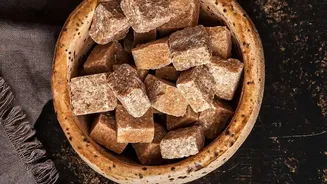
While light and dark brown are the most common varieties, you might also encounter other unrefined or partially refined sugars. Muscovado sugar, for instance, is less refined and retains much of its natural molasses, offering an even stickier texture and a very strong, complex flavour. Turbinado and demerara sugars are minimally processed raw cane sugars with large, golden crystals and a delicate molasses flavour. These are often used as a crunchy topping for muffins and scones or for sweetening coffee and tea, adding a slight hint of caramel that regular white sugar lacks.
Is Brown Sugar Healthier?
It's a common belief that 'brown' equals healthier, but in the case of sugar, the difference is negligible. While the molasses in brown sugar does contribute trace amounts of minerals like calcium, potassium, and iron, the quantities are so minuscule that they offer no significant health benefit. To get any meaningful amount of these minerals, you would have to consume an unhealthy quantity of sugar. Both white and brown sugar are calorically similar and are treated by the body as added sugar. For health purposes, experts advise limiting the intake of all types of sugar, rather than choosing one over the other.