








The Ambitious Global Promise
The "billion-hectare goal" is not a single initiative, but a collection of overlapping international commitments aimed at combating land degradation and climate change. The most prominent of these is the Bonn Challenge, which aims to restore 350 million
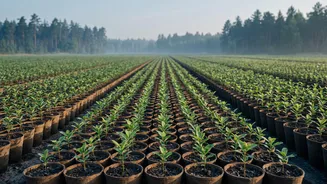
hectares by 2030. Coupled with other regional and national pledges, the total commitment for land restoration now exceeds one billion hectares—an area larger than China. The idea is simple and powerful: restoring forests helps absorb carbon from the atmosphere, protects biodiversity, secures water sources, and supports the livelihoods of over a billion people. Reports suggest that restoring this much land could generate trillions of dollars in economic benefits annually through improved crop yields, watershed protection, and other ecosystem services.
A Reality Check on Progress
Despite the scale of the pledges, the action on the ground is falling dangerously short. According to the UN's recent 'State of the World's Forests' report, while there are commitments to restore over a billion hectares, only a fraction of that is actually happening. As of late 2026, around 206 million hectares are reported to be under restoration, a significant number but far from what is needed. The world continues to lose forests, with a net loss of over 40 million hectares between 2015 and 2025. The UN has warned of a “narrowing window” to get on track, stating that progress is uneven and insufficient to meet global needs. This gap between ambition and reality threatens to undermine global efforts to fight climate change and biodiversity loss.
Why is the Goal So Elusive?
The challenges are as vast as the goal itself. A primary obstacle is a massive funding gap. While the economic benefits are clear, the upfront investment required for large-scale restoration is enormous, and financing for sustainable forest management remains far below what is needed. Another major issue is the complexity of land rights. In many regions, the land targeted for restoration is used by local and indigenous communities who may lack formal legal rights, creating conflict and uncertainty. Furthermore, there's a difference between planting trees and restoring a forest. Many projects have been criticised for favouring fast-growing monoculture plantations, which lack the biodiversity and ecological resilience of natural forests and can sometimes harm local ecosystems, such as grasslands.
From Planting Trees to Growing Forests
Experts increasingly argue that success isn't just about the number of saplings planted, but about their survival and the health of the ecosystem they create. Issues like insufficient seed supply, poor species variety, and a lack of long-term monitoring plague many efforts. For restoration to be effective, it must be about growing resilient, biodiverse forests. This requires a more nuanced approach that integrates scientific knowledge with the local wisdom of communities who live in and depend on these landscapes. Success stories often come from projects that empower local people as stewards of their land, ensuring they have a stake in the forest's long-term health.
India's Role in the Global Effort
India stands as a significant player in this global mission. The country made one of the largest pledges to the Bonn Challenge, committing to restore 26 million hectares by 2030. As of June 2026, India announced it had brought nearly 22 million hectares under restoration efforts, demonstrating substantial progress toward its ambitious target. This progress is part of a broader national strategy to increase forest and tree cover, which is crucial for meeting the country's climate goals and supporting its large rural population. India's experience—both its successes and challenges—provides valuable lessons for the global community on how to implement large-scale restoration in a complex social and economic landscape.