


Why This Glacier Matters
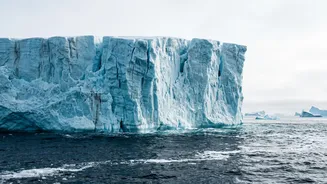
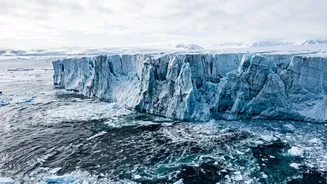
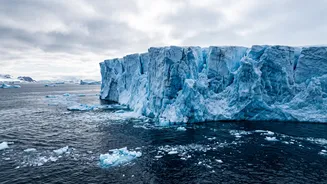
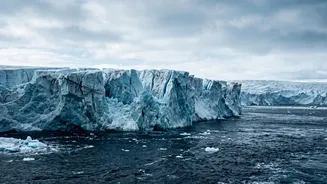
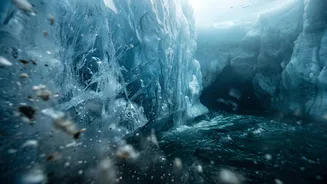
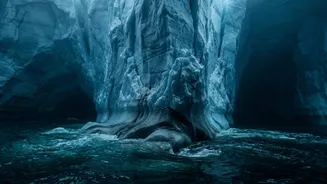
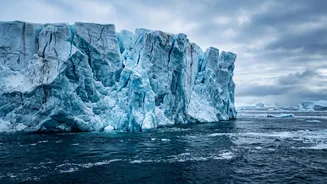
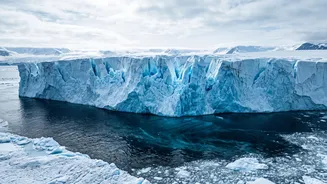
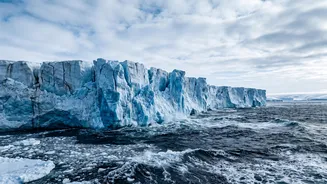
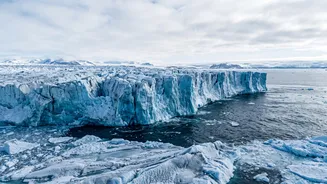
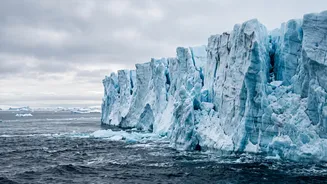
Thwaites Glacier, located in West Antarctica, is one of the largest and fastest-changing glaciers on Earth. Covering an area roughly the size of Florida or Great Britain, it acts like a colossal cork, holding back the rest of the West Antarctic Ice Sheet.
If that ice sheet were to collapse entirely, it holds enough frozen water to raise global sea levels by more than three metres. For this reason, scientists watch Thwaites with intense focus. Its fate is a critical variable in understanding our planet's future. The glacier on its own holds enough ice to raise sea levels by about 65 centimetres (over two feet), and its melting currently accounts for about 4% of annual sea-level rise.
A Doubled Forecast
The latest alarm bell comes from a study published in the journal Nature Communications. Researchers using new, more sophisticated ice-sheet models have found that previous forecasts may have significantly underestimated the rate of melting. The new projections suggest Thwaites could contribute up to 30 millimetres (1.2 inches) to global sea levels by the year 2100. This figure is roughly double what earlier models had predicted for the same period, even without factoring in additional future global warming. The key to this revised forecast lies in a better understanding of what’s happening far below the ice.
Warm Water Intruding Deep
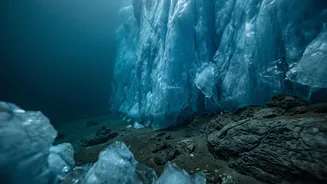
For years, scientists have known that warmer ocean water is the primary culprit, melting the glacier from underneath. The new research, however, reveals this process is more potent than previously accounted for in models. Instead of melting occurring at a relatively fixed 'grounding line'—the point where the glacier lifts off the seabed—ocean tides are actively pumping warm, salty water several kilometres further inland beneath the ice. This 'tidal pumping' creates a much wider 'grounding zone' where vigorous melting eats away at the glacier's base, accelerating its retreat and thinning.
The Danger of Becoming 'Unpinned'
The stability of Thwaites is partly dependent on underwater ridges that act as pinning points, slowing its relentless slide toward the sea. One crucial anchor is the Mouginot Ridge. The new models show that the intensified melting at the grounding zone is increasing the odds of the glacier becoming detached from this ridge. According to the study, there is a 60% chance of this unpinning happening by 2100, a development that could happen as early as the late 2030s. If Thwaites loses its grip on this ridge, its retreat could speed up dramatically as it slides down the sloping bedrock it rests upon.
A Committed Future?
The findings paint a grim picture of a process that may now have its own unstoppable momentum. Other recent research has shown that even if ocean warming were to halt completely, Thwaites would likely continue to lose ice for at least 150 years. This suggests that past warming has already locked in a certain amount of future ice loss. While the total collapse of the glacier is not considered imminent, the acceleration of its melt is a clear and present danger. Every centimetre of sea-level rise exposes an estimated six million more people worldwide to the risks of coastal flooding, erosion, and saltwater intrusion into freshwater supplies. The new forecast for Thwaites underscores the urgency of understanding these complex systems and preparing for their global impact.