





More Than Just Abs: Understanding Your Core
When people say 'core', they often picture a six-pack. But your core is a complex system of muscles that wraps around your entire trunk, including your back, hips, glutes, and deep abdominals. These muscles work together to stabilize your spine, support
good posture, and provide a solid base for almost every move you make, from bending down to carrying groceries. A strong core isn't just for looks; it's fundamental for functional strength, helping to prevent lower back pain and reducing the risk of injury during other physical activities.
The First Step: How to Properly Engage Your Core
Before you attempt a single crunch, it's vital to learn what 'engaging your core' actually feels like. It’s not about sucking in your stomach or holding your breath. Lie on your back with your knees bent and feet flat on the floor. Take a deep breath in. As you exhale slowly, gently draw your belly button toward your spine. You should feel a subtle tightening around your midsection, but you should still be able to breathe normally. This gentle tension is the foundation. The goal is to maintain this engagement throughout each exercise, providing stability where it counts.
Foundational Exercise: The Plank
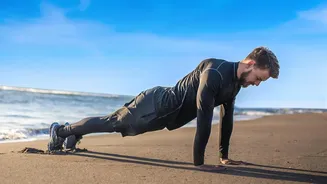
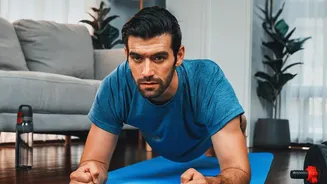
The plank is a classic for a reason: it challenges your entire core. But form is everything. A common mistake is letting the hips sag toward the floor, which strains the lower back and takes the work off your abs. Another is letting your hips pike up too high. To do it right, place your forearms on the floor with your elbows directly under your shoulders. Extend your legs back, creating a straight line from your head to your heels. Keep your gaze down to maintain a neutral neck. Engage your core by pulling your navel in, and squeeze your glutes. It’s better to hold a perfect plank for 20 seconds than a sloppy one for a minute.
For Stability: The Bird-Dog
The bird-dog exercise is excellent for improving balance and stability while strengthening the core, glutes, and back muscles. Start on all fours in a tabletop position, with your hands under your shoulders and knees under your hips. Engage your core to keep your back flat. Slowly extend your right arm straight forward and your left leg straight back, keeping both parallel to the floor. The key is to prevent your hips from rotating or your lower back from arching. Imagine you have a glass of water on your lower back that you don't want to spill. Hold for a few seconds, then return to the start with control and switch sides.
For Posterior Strength: The Glute Bridge
Your glutes are a huge part of your core, and the glute bridge is one of the best ways to activate them. Lie on your back with your knees bent, feet flat on the floor about hip-width apart, and your arms by your sides. Engage your core, then squeeze your glutes and press through your heels to lift your hips toward the ceiling. Lift until your body forms a straight line from your shoulders to your knees. Avoid arching your back at the top; the work should come from your glutes, not your spine. Pause at the top for a moment, squeezing your glutes, before lowering back down with control.
The Secret Ingredient: Your Breath
Breathing is not just for survival; it's a tool for core stability. Holding your breath during an exercise can increase pressure and instability. Instead, coordinate your breath with your movement. A good general rule is to exhale on the effort—the hardest part of the movement—and inhale during the easier phase. For example, in a glute bridge, exhale as you lift your hips and inhale as you lower them. This pattern helps to naturally engage your deep core muscles, like the diaphragm and transverse abdominis, making each repetition more effective and safer.