



A Sudden Growth Spurt
On October 14, 2026, French surveyors announced that Mont Blanc’s official height is now 4,807.47 metres. This marks a substantial increase of 1.88 metres from its last official measurement in 2023, when the summit was recorded at its lowest modern height of 4,805.59
metres. The announcement, made by the chartered surveyors of the Haute-Savoie region, has sparked curiosity, especially against a backdrop of warming climate trends. The new measurement was taken during an expedition in mid-September 2026, involving a team of 32 people who ascended the peak with high-precision satellite technology and even drones to create a detailed model of the summit.
It's All in the Snow Cap
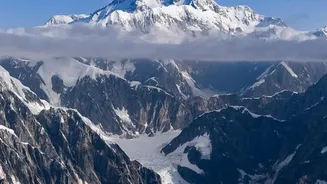
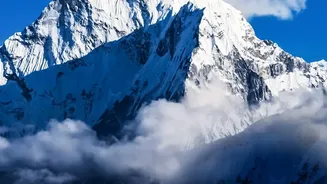
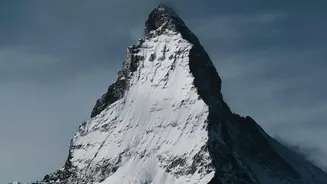
So, is the mountain itself actually growing? The short answer is no. Mont Blanc’s rocky peak sits at a stable altitude of around 4,792 metres. The variation comes from the thick cap of snow and ice that covers the summit. This 'soft' summit is in a constant state of flux. Its height is shaped by a battle between weather patterns: the amount of snowfall during winter adds mass, while summer melt, temperature changes, and wind patterns can reduce it or redistribute the snow. This recent growth spurt is attributed to higher-than-usual snow accumulation over the past couple of years, which has piled more snow onto the peak than has melted away.
A Decades-Long Fluctuation
This isn't the first time the mountain's height has fluctuated. Since measurements began in 2001, the summit has seen a series of peaks and valleys. In 2007, it reached its highest recorded altitude of 4,810.90 metres. By 2021, it had shrunk to 4,807.81 metres, before dropping to its 2023 low. The new 2026 height brings it back to a level close to what was recorded over a century ago in the 1890s. According to Jean des Garets, chief surveyor for the region, these biennial measurements are crucial. He notes that while each individual reading isn't a story in itself, together they create a valuable dataset for future generations of scientists to understand long-term trends.
What About Climate Change?
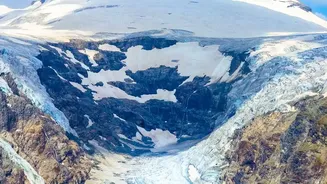
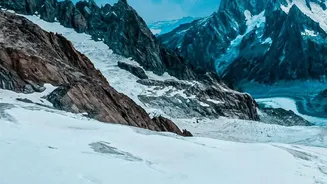
It might seem counterintuitive for a mountain's ice cap to grow at a time when Alpine glaciers are visibly retreating due to climate change. Experts are quick to caution against drawing simple conclusions. They stress the importance of distinguishing between the summit's surface altitude and the overall ice mass of the mountain and its glaciers. An increase in summit height due to snowfall over one or two seasons does not contradict the well-documented, long-term trend of glacier melt at lower altitudes. Glaciologists note that the effects of climate change are profoundly visible across the Alps, with some Swiss glaciers losing a significant percentage of their volume in just the last few years. However, at the extreme altitude of Mont Blanc's summit, temperatures are so cold that direct melting is less of a factor, and changes are more influenced by precipitation and wind.