



Why Cast Iron Needs Special Care
A cast-iron pan's biggest enemy is moisture. Unlike stainless steel or non-stick pans, cast iron is made of a porous iron alloy that can react with water and oxygen, leading to rust. This is why you should never let a pan soak in the sink or leave it to air-dry
on a rack. The protective layer on a cast-iron pan, known as "seasoning," is formed by oil that has been baked onto the metal. This layer is what gives the pan its non-stick qualities and acts as the first line of defense against moisture. Proper care after cooking preserves this seasoning and prevents rust from ever getting a foothold, ensuring your cookware remains a reliable kitchen workhorse.
Step 1: The Art of Drying
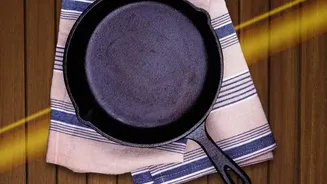
The most critical step after washing your cast-iron pan is to dry it immediately and thoroughly. Water is the primary cause of rust, and even a few drops left behind can lead to orange spots. While a vigorous towel-drying is a good start, it often isn't enough to remove all the moisture from the pan's porous surface. For a guaranteed bone-dry finish, place the towel-dried pan on a stovetop burner over low heat for a few minutes. You'll know it's completely dry when any lingering dark spots from moisture disappear and the pan has a uniform, dull grey or black appearance. This heat-drying method evaporates any residual water trapped within the iron's microscopic pores, making it ready for the next protective step.
Step 2: Applying a Maintenance Coat of Oil
With the pan clean and completely dry, it's time for a light oiling. This isn't the same as the initial, heavy-duty seasoning process that involves baking the pan in an oven. Instead, this is a quick maintenance step that creates a moisture-proof barrier to protect the iron until its next use. Choose a neutral cooking oil with a high smoke point, such as grapeseed, canola, or vegetable oil. Pour a very small amount—no more than half a teaspoon—into the warm pan. Using a paper towel or a lint-free cloth, rub the oil all over the interior cooking surface, creating a very thin, even coat. Then, take a clean paper towel and wipe out any excess oil. The goal is to leave a beautiful sheen, not a greasy, sticky residue which can become rancid over time.
Common Mistakes to Avoid
Even with the best intentions, it's easy to make mistakes. The most common error is letting the pan soak or air-dry, which is a direct invitation for rust. Another is using the dishwasher, as the harsh detergents and prolonged exposure to hot water will completely strip the seasoning and cause immediate rusting. Applying too much oil is also a frequent misstep; a thick layer doesn't offer more protection and will instead become a sticky, gummy mess that attracts dust. Finally, storing the pan incorrectly can cause issues. Avoid stacking pans without a protective layer, like a paper towel, to prevent scratching the seasoning. If you use a lid, don't seal it completely; allow for some airflow to prevent moisture from building up inside, especially in humid climates.